



The yearly battle to grow a “perfect” lawn is a fiscal and logistical nightmare for many condominiums. Managing expectations around weed growth, mysterious brown spots, and the realities of pest damage is close to impossible despite best efforts by landscapers to fertilize, over-seed and top-dress. Add to this the financial burden of adequate watering to keep lawns as green-as-can-be, and it is easy to understand why the landscaping contract is one of the “big ticket” items in any condominium budget.
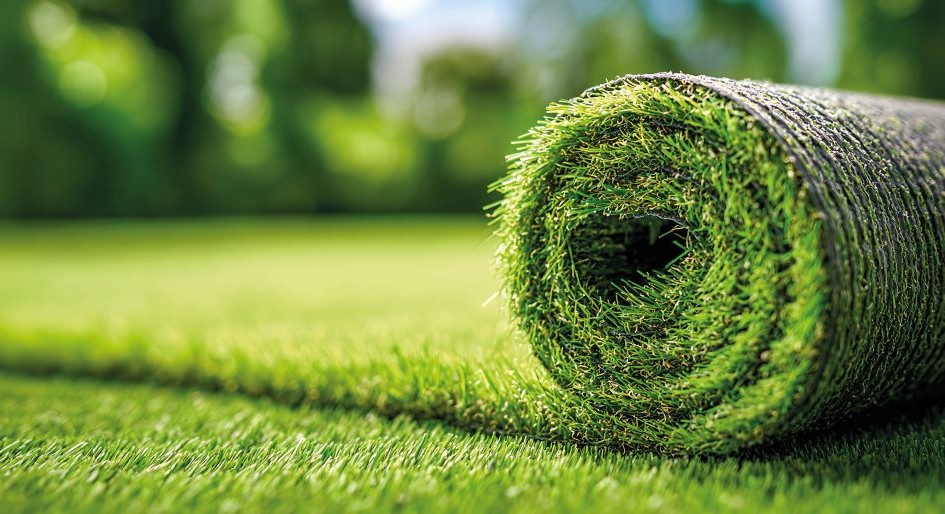
Once viewed as an asset to property value, natural grass is increasingly being seen as a maintenance liability. As an alternative, properties choosing to install artificial turf can effectively remove the entire lawncare portion of their landscaping budget. While traditional seasonal landscaping upkeep requires seven to eight months of a strict mowing and fertilization regime, artificial turf requires minimal labour, making it a tempting prospect for boards looking to reduce budget costs while providing a durable solution to turf care.
High quality artificial turf is designed to withstand severe weather conditions, including heavy rain, snow and hail, without becoming waterlogged or damaged.
Engineered for Ultimate Drainage
“Modern turf systems have evolved enormously over the last decade and are now engineered to outperform the drainage capabilities of natural grass,” says Bran Lakoseljac, President of Toronto-based Lazy Lawn®, who notes that a well-installed lawn can last up to 20 years.
“A professional installation involves excavating three to four inches of soil and replacing it with ‘high-performance bedding”—a specific type of porous stone. This bedding creates a base as stable as concrete but with a drainage rate of approximately 60 inches per hour,” Bran explains. “This system ensures water stays on-site and filters through the stone rather than overwhelming municipal sewer systems.”
The turf is anchored using 10-inch non-galvanized nails around the perimeter. These nails are designed to rust once underground, creating a permanent bond with the earth that firmly fixes the turf in place, even in areas of heavy foot traffic.
Beyond the Regular Blade
Advances in the design of the grass itself have helped with historical issues with heat retention. Models like “Lemongrass®” have adopted a specialized W-shaped blade which ensures that as the sun moves, the blade casts a shadow on itself, keeping the surface significantly cooler than traditional, flat-bladed products.
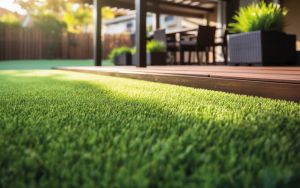
Modern turf is also built for resilience, with blades manufactured to be thicker in the middle ensuring they spring back to an upright position after being compressed. After a heavy winter season, maintenance is simply a matter of “combing” the lawn with a brush machine or broom once the snow has melted away.
Safety and fire code compliance are also of high importance in building envelopes. While the turf itself is plastic, it is engineered with fire retardants to meet building and fire codes.
“If a lit cigarette is dropped, the turf will melt at that particular site, but will not ignite or spread flames,” Bran says.
For many properties, the first consideration of artificial lawns has been in areas designed for pet-friendly spaces, where natural grass is easily damaged. Artificial turf features an antimicrobial sand infill which helps neutralize ammonia in pet urine, reducing unpleasant odours associated with pet-relief areas. For contained areas, specialized scented washing systems are available.
Introducing “Awesome” Artificial Grass
Transitioning to artificial turf does not require a total site overhaul. A phased rollout method allows boards to target high-impact areas first. Lazy Lawn® recommends a three-step implementation strategy:
- High-Traffic Areas: Focus on “nuisance” areas first, specifically parking lot medians and common areas where pet traffic is concentrated.
- Developer Integration: For new builds, artificial turf integration during the construction phase using heavy machinery already on-site reduces mobilization and excavation costs.
- Selective Preservation: Maintain natural grass for low-traffic areas while converting smaller high-maintenance locations to artificial turf.
Looking ahead, Bran envisions large-scale turf installations which serve as filtration beds, purifying water within the stone bedding and redirecting it back into the building for non-potable uses like plumbing or plant irrigation.
“Particularly in cases such as schools or universities with large, open sports fields, I believe these institutions will be able to hold water underneath those fields, purify that water and send it back into the school,” Bran suggests.
By utilizing the stone bedding beneath artificial turf installations to purify and redirect water for non-potable building uses, condominiums can transition their landscapes into a sustainable asset that supports the building’s overall efficiency.
Lazy Lawn® offers a 25-year warranty on the artificial turf product, providing long-term security for boards considering the investment.
To learn how artificial grass can transform your landscaping, visit www.lazylawn.ca