



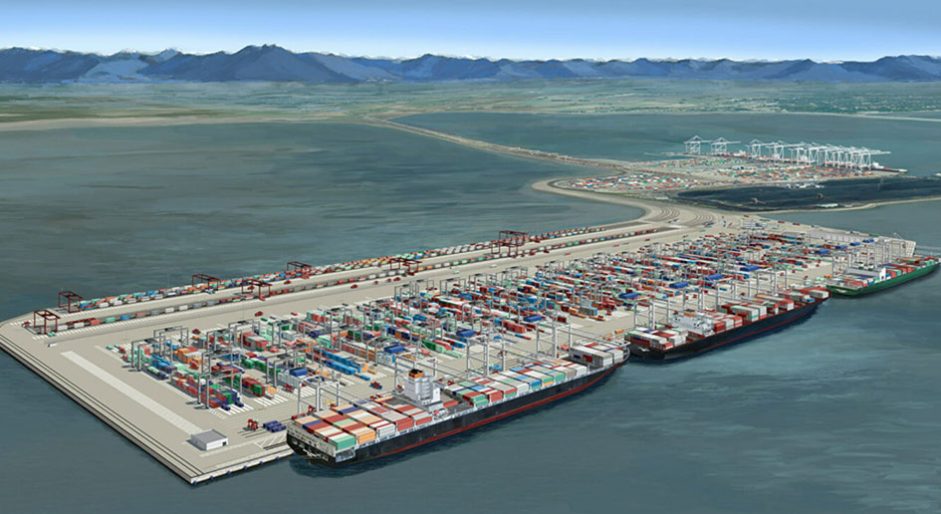
The Vancouver Fraser Port Authority has issued an RFQ to find a qualified team to progress construction planning and build the landmass and wharf components of the Roberts Bank Terminal 2 Project.
As part of a competitive selection process for the landmass and wharf component of the project, the port authority has selected a progressive design-build procurement with target price model. An independent fairness monitor has been appointed to oversee the fairness of the process.
“To meet Canada’s needs in today’s quickly evolving trade landscape, we have accelerated our efforts to deliver Roberts Bank Terminal 2—a project that will strengthen Canada’s economic security and deliver trade resilience,” said Victor Pang, CFO at the port authority. “The terminal will be a catalyst for economic transformation nationally—from supporting Prairie grain exports and B.C.’s forestry sector, to communities who depend on reliable and affordable access to essential goods on store shelves.”
The contract includes the delivery of an approximately 100-hectare marine landmass, 35-hectare widened causeway, 1,300-metre wharf structure and berth pocket, and expanded tug basin.
To support the port authority’s award-winning environmental plan, the contract also includes the construction of a marine terminal fish passage to support juvenile salmon migration, and the civil works for onsite habitat enhancement and the South Arm Jetty Tidal Marsh Project—a priority project for First Nations to benefit fish and wildlife.
The request for qualifications marks the first step in the procurement process. Interested construction teams must provide an interim submission confirming their interest by September 18, 2025, and submit details of their qualifications by September 25, 2025. The port authority will shortlist three teams this fall, who will then be invited to submit a proposal.
The selected team will have extensive experience in collaboratively delivering major marine infrastructure projects with comparable technical, logistical, environmental and regulatory requirements, as well as a proven ability to deliver on First Nations’ commitments.
Additional procurement opportunities will be made available in the coming years, including specialist sub-contracting and material supply for the landmass and wharf sub-contracts, and a terminal concession procurement in the late-2020s to select the operator that will build, equip, and operate the new terminal.
Construction is planned to begin in 2028, and the terminal is expected to be in operation by the mid-2030s.