

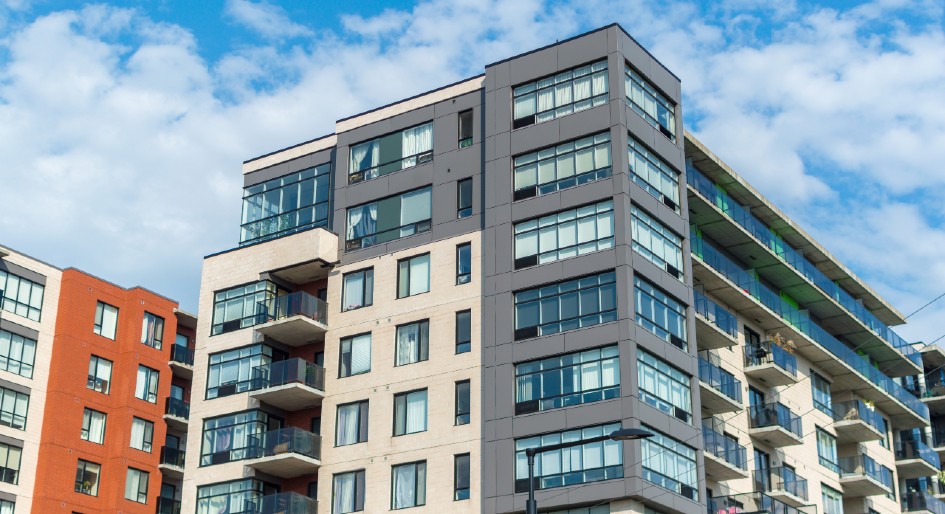
The slowdown in Canada’s condo market is expected to endure. New analysis from Canada Mortgage and Housing Corporation (CMHC) found that sales declined by 75 per cent in Toronto and 37 per cent in Vancouver over the past three years. Growing inventories have also led to reduced sale prices for buyers and lower rents as condo owners compete for rental cashflows.
Between 2022 and 2025 (Q1), average resale condo prices declined by 13.4 per cent in Toronto and 2.7 per cent in Vancouver. Two years prior they had risen by more than 19 per cent in both locations.
Tim Syrianos, Toronto broker and owner of RE/MAX Ultimate Realty, says that buyers are experiencing advantages they haven’t seen in years.
“With growing inventories, sellers and builders are more open to negotiation, offering incentives and price reductions not seen in over a decade,” he says. “Smaller condos offer the greatest opportunity for first-time buyers, as they represent the easiest and most affordable entry point into the market.”
While buyers and renters currently have more negotiating power in Canada’s two most expensive condo markets, CMHC warns this temporary relief will put a strain on new supply.
“Given the national and global economic outlook, there is little evidence to suggest that price and rent declines are likely to quickly reverse,” CMHC states. “As a result, project cancellations and reduced construction activity are also likely to continue in the near term, hindering efforts to increase housing supply over the long term.”
Challenges with funding condo projects have some developers shifting to purpose-built rental unit construction programs that offer potential financing. Yet other developers are still cancelling an increasing number of condo projects.
Between 2022 and 2024, the number of cancelled units in Toronto and Vancouver increased five- and ten-fold, respectively. In Toronto, 55 per cent of pre-construction units went unsold in the first quarter of 2025, marginally below the record high of 56 per cent at the end of 2024. CMHC says this level of unsold units presents a significant challenge for developers seeking funding for their projects. Lenders usually require a pre-sale threshold of 70 per cent before releasing funds.
“There are many reports of rising inventory, but not enough emphasis is being placed on the lack of new construction.” says Syrianos. “Whether projects are cancelled or shifted to purpose-built rentals, there will come a point when supply once again reaches record lows.
“Some investors are purchasing units in bulk, with several already seeing success. While this trend reflects condos being bought at a discount due to failed original transactions, it also suggests that inventory may be absorbed faster than currently projected.”
After the first quarter of 2025, he has seen growing supply create downward pressure on rents in Toronto. “While this has further strained affordability for investors, the market appears to be finding balance, as leased transactions are now outpacing new lease listings.”
REMAX Canada’s 2025 Commercial Real Estate Report, released last week, also reveals shifting priorities. It states that investors are capitalizing on opportunities that allow for strategic repositioning, adaptive reuse and targeted investment, amid escalating global trade tensions, economic concerns and evolving market conditions. Multi-family and industrial were the top-performing asset classes.
“Development has stalled in cities such as Vancouver, where high interest rates and elevated construction costs have upended the value proposition and the viability of previously planned projects,” the brokerage stated. “More stimulus is required against a backdrop of increased distressed sales of condominium development.”
The report, which analyzed Q1 activity across 12 major Canadian commercial real estate markets, highlights that purpose-built rentals are pushing through a condo downturn in the Greater Toronto Area. Falling land values in Vancouver have developers adjusting, weighing the prospect to sell at a loss or hold until values recover while servicing mortgage debt and absorbing negative cash flow.
Don Kottick, REMAX Canada President, said that land is now about present performance rather than future potential. “It’s about cash flow,” he said. “Increasingly, investors value properties that deliver steady rental income to help portfolios weather market volatility and economic uncertainty.”