Articles Archive - Page 657 of 929 - REMINET
REMI

Grant awarded to study workplace ergonomics

Michael Holmes, the assistant professor in Brock University’s Department of Kinesiology, was awarded a grant of nearly $100,000 by the Canada Foundation for Innovation (CFI)’s John R. Evans Leaders Fund to study workplace ergonomics and making work a safer place.

The grant will go towards three sophisticated machines and some smaller equipment to help Holmes study how people sit, stand and use their muscles on the job by tracking muscle activity and body movements.

“The equipment is fundamental to everything we do, so the John R. Evans Leaders Fund is a really important program,” said Holmes, in a press release. “There are very few funding avenues in Canada that allow you to purchase large, expensive pieces of equipment.”

The equipment will be located in the new Neuromechanics and Ergonomics Lab at Brock. Among the equipment is a motion capture system, which is similar to the devices used in the development of gaming, animation and cinema. It consists of nearly a dozen cameras to record participants’ postures and body movements as they perform a variety of simulated workplace tasks. The cameras emit infrared light that is picked up by small reflective markers on the person.

Other equipment includes a haptic wrist robot to allow researchers to look at how the forearm muscles control the hand, and an electromyography system, which evaluates and records electrical activity produced by skeletal muscles. The combination of the three machines will give Holmes and his research team a complete picture of workplace movement, which can then be used to better design workplace tools and objects or change workstations to help prevent repetitive strain injuries.

Holmes was awarded a Canada Research Chair in Neuromuscular Mechanics and Ergonomics, an achievement that was announced near the end of 2016. Holmes aims to understand why some people are afflicted with workplace injuries such as carpal tunnel syndrome, while others doing the same job do not.

“This research will lead to workplace and tool design strategies that make occupational tasks safer and more efficient,” he said. “It will impact the lives of working Canadians because work shouldn’t hurt.”

New Cushman & Wakefield HQ promotes engagement

Cushman & Wakefield recently unveiled its new Canadian headquarters. Located in downtown Toronto at Bay and Front Street, the new space brings together employees from two separate locations into one open-concept office.

Cushman & Wakefield’s new HQ spans two floors and provides workplace flexibility through movable walls, sit-to-stand desks, focus rooms outfitted with soft seating, and several collaborative spaces with touchscreen SMART Boards. The office encourages more mobility through the interconnecting stairwell, while strategically designed key intersection points help fuel employee interaction across teams. The office also doubles as event space.

Promoting flexibility and employee engagement were top of mind when designing the new office space, said Chuck Scott, CEO, Canada. “We wanted a workspace that was less siloed and more inviting for employees to engage with one another. One size doesn’t fit all, and the same rings true for how people work. As a firm, we felt it important to create a space that offered flexibility to our employees in both the physical space and how they choose to work.”

“We now have a space that supports our high performing culture with enhanced technology, greater ability to collaborate while supporting alternative ways to go about your work day,” added Stefan Teague, executive managing director, market leader, Greater Toronto Area. “It’s this type of work environment that keeps our employees at their best and is a dynamic culture where young professionals want to work.”

Upon entering the new office space, guests walk past a 35-foot embossed Cushman & Wakefield logo in the lobby hallway that sits adjacent to a five-screen digital showcase. A front-of-house concierge welcomes guests with beverages, snacks and comfortable seating while they wait. Clients are offered plug and play capability to work anywhere throughout the office, including the Café and Lounge areas, focus rooms, collaboration spaces or the high top seating options throughout the office.

Internal digital screens recognize the company’s successes, including high performers, key wins and other achievements. Healthy snacks and premium coffee, espresso, lattes and more are available to everyone while they work, while easy-to-use meeting room technology and flexible workstations create a more enjoyable experience for employees.

The entire project was lead, managed and implemented by Cushman & Wakefield’s in-house expertise, including the lease transaction, facilities management, and project and development services overseeing design and construction. The team was supported by vendor partners Gensler, Marant Construction, Haworth and DTS.

Plenary Health partners with CAMH on development

Plenary Health has been selected to design, build, finance and maintain the next phase of the Centre for Addiction and Mental Health (CAMH)’s Queen Street Redevelopment Project-1C. This phase will see the construction of CAMH’s two signature hospital buildings in downtown Toronto, as well as the extension of Stokes Street through to Shaw Street and the enhancement of Shaw Park.

“This will be the largest and boldest phase of CAMH’s redevelopment project to date,” said Dr. Catherine Zahn, CEO of CAMH, in a press release. “Two light-filled and environmentally-friendly buildings will open the doors to our community even wider. They will create dignified spaces for our patients to receive care and support for recovery.”

This fall, Plenary Health will begin construction on the facility, which will provide room for a total of 235 beds for patients with acute and complex mental illness. Research and education spaces will be located within the clinical care environment to provide opportunities for discovery and collaboration that will help advance treatment for patients in the future.

The development includes an eight-storey Complex Care & Recovery building, which will also act as the entrance to CAMH at Queen St. West and Ossington Avenue. This building features a ‘therapeutic neighbourhood’ for patients, a culinary-grade training kitchen, a Patient and Family Mental Health Resource Centre, a 300-seat auditorium, a brain stimulation centre, a simulation training centre, and 110 patient beds, among other services.

The Crisis & Critical Care building, a seven-storey building on Queen St. West between Gordon Bell Road and White Squirrel Way, will house 125 acute care beds, CAMH’s 24/7 Emergency Department and urgent care clinics, the Partial Hospital Program, Transitional-Age Youth Day Program, and more.

Both buildings in the development will feature public art to enhance therapeutic and other spaces and to engage visitors. They will also house retail spaces at street level. Occupancy is expected to begin in 2020.

Plenary Health is a consortium of various companies, including designer-builder PCL Constructors Canada Inc., architect Stantec Architecture Inc., and facility manager ENGIE Services Inc.

“As design-builder and equity investor as part of the Plenary Health CAMH team, PCL is honoured to build CAMH’s vision for the third phase of its bold redevelopment project that will transform the way care is delivered and influence the future of mental health and addictions treatment,” said Bruce Sonnenberg, vice-president and district manager of PCL Constructors Canada Inc. (Toronto).

Citron Hygiene acquires Workplace Essentials

Citron Hygiene has acquired Workplace Essentials, a washroom and workplace hygiene company, headquartered in the Boston suburb of Billerica, Massachusetts.

This is Citron Hygiene’s second acquisition since its ownership change last April when Birch Hill Equity Partners acquired it in partnership with President and CEO Peter Farrell.

Last September, Citron Hygiene acquired Sani-Service Inc., a Canadian national service provider of washroom hygiene and commercial warewashing systems from Serruya Private Equity Inc.

“We are delighted to welcome Workplace Essentials to the Citron Hygiene family,” said Farrell. “As the largest washroom service provider in the U.S., this acquisition is a powerful first step in our overall North American and global build. Their reputation as an innovative and high quality service provider in the U.S. market is second to none, and as such, we are so pleased to have them join our business. For the time being, Workplace Essentials will continue to operate under its existing tradename and its leadership team will continue to manage the US business”.

Linda Pace, president and chief executive officer of Workplace Essentials, said the brand will expand its product and service offerings under the Citron Hygiene umbrella

“Peter and I have also known each other for many years and we both share the same passion for the business and respect for employees and customers. Choosing the right company to sell to was of paramount importance to me – Citron Hygiene was our perfect fit,” said Pace.

“We will continue to be acquisitive in Canada, the US and strategic global markets”, added Farrell. “We are excited to expand into key geographies as well as add great employee partners and customers to our business. This is a very exciting time for our company”, he added.

Salaries linked to maintenance skills shortages

Inadequate remuneration is a significant contributor to skills shortages in the retail facilities management and maintenance sector. A newly released membership survey from the Professional Retail Store Maintenance Association (PRSM) reveals that more than two-thirds of their recent departing employees had done so because they got better offers elsewhere, while 37 per cent specifically attributed moving on to inadequate salary or bonuses.

Survey respondents unanimously report that finding qualified candidates is their top recruitment challenge. The maintenance skills shortage translates into particular demand for project and construction managers and trades such as HVAC technicians, electricians, plumbers and mechanics.

The PRSM Supplier Talent Acquisition & Retention Benchmarking Report concludes that employers’ profile in the market and social media proficiency can help to attract jobseekers, while lengthy hiring processes can alienate job candidates and/or push them to openings with other employers. It includes a checklist of best practices for retaining staff, covering topics such as compensation and benefits, manager-employee communication, career development and workplace culture.

“From a supplier’s standpoint, we all have different companies, but we are all faced with a very similar problem: how we recruit people and how we keep good employees,” observes Amanda Holup, co-chair of PRSM’s benchmarking committee and president of Low-Slope Solutions, a roofing maintenance and repair company.

Increasingly, prospective employees are found via social media, which is now a predominant job-search venue for young and experienced workers alike. Survey results indicate that 86 per cent of salaried, non-management positions were filled using social media, with LinkedIn ranked as the top recruitment vehicle followed by Facebook and Twitter.

Beyond directly posting job openings, the PRSM report highlights the value of promoting a company’s brand and workplace culture. “Social media is a great way to spread the message about what your company is all about and what you do for employees,” Holup notes.

PRSM also urges employers to consider the talent pool coming available as military personnel leave the service. “Veterans have the proven ability to learn new skills and concepts. The complex missions the military must accomplish teach the value of teamwork and the confidence to overcome adversity,” maintains PRSM chief executive Bill Yanek.

Many condo insurance claims arise from liability

Condominium corporations present claims against their insurance policies for a wide range of reasons. Although, it is important to note that current trends in claims are not necessarily unique to condominiums.

That said, multi-unit residential dwellings and communities continue to present some unique claims challenges for insurers across the country. Experience as an insurance broker specializing in this segment shows that the majority of claims arise from liability — specifically slip, trip and fall injuries, water damage, and theft of funds.

Slip, trip and fall injuries

Liability imposes a legally enforceable obligation for which individuals and entities purchase liability insurance to compensate injured parties. As occupier of the common elements, the condominium corporation has a legal obligation to ensure that people entering and leaving the premises do not encounter hazards that could result in injury to themselves or their property. Generally, for legal responsibility to apply, it must be demonstrated that the corporation was negligent (it either acted contrary to or failed to act how a reasonable and prudent person would in a given situation).

According to Aviva Canada, one of Canada’s leading insurers, between 2002 and 2004 slip and fall incidents in Canada represented more than 50 per cent of all injury hospitalizations and more than 10,000 in-hospital deaths. It is the second leading cause of accidental death and disability after automobile accidents.

More challenging from an insurance perspective is that every claim, whether genuine or fraudulent, carries investigation and defense costs, even when no judgments are awarded. Zurich, another insurer, reserves at least $1 billion in North America to pay for slip, trip and fall claims.

Slips, trips and falls are a leading cause of insurance claims for condominium corporations. These incidents are mainly caused by slippery driveways, parking lots and walkways during winter, slippery floors, and trips due to uneven surfaces or objects on the ground.

It is true that accidents are unavoidable. However, a condominium corporation and its property manager can reduce the risk of a lawsuit through good risk management. One effective way is to transfer the risk by contract to a reputable, insured contractor.

Standard practices of such a contractor include regular snow and ice clearing based on needs. It’s important that the contractor logs the times and dates when services are performed, as this information is crucial in defending claims. Condominium corporations are commonly named as additional insured on the contractor’s insurance policy for liability arising out of the contractor’s operations.

All owners and property managers should take responsibility for quickly identifying and eliminating hazards, such as wet floors, deteriorating surfaces and ice buildup. It’s important for condo residents to remember that a lawsuit against the condominium directly affects them as owners of the corporation. For example, reporting an unusually slippery surface around the community mailbox and having salt applied promptly can eliminate an imminent accident and possible lawsuit.

Water damage

Water is the new fire. Water claims represent a significant cost to insurers, which in turn affects the premiums condominium corporations pay. Historically, fire has been the biggest risk to property insurance with respect to severity. Due to improved fire safety and building code requirements, the frequency and severity of fire claims have diminished, notwithstanding the recent catastrophe in Fort McMurray, Alberta.

Factors such as changing weather patterns, aging infrastructure and human error, among others, have made water the leading cause of property insurance claims. Alarmingly, these events are not only more frequent, but have increasingly become more severe. The flash flood in Toronto in July 2013 was estimated to have cost the insurance industry $1 billion. Who can forget the images of stranded Go Train riders or the $200,000 Ferrari submerged and abandoned in waist-high floodwater! Just prior to that, Alberta was devastated by severe flooding causing approximately $1.7 billion in insurable damage.

Experts warn that such events will become the norm. Changing climate due to global warming has been blamed for the changes in weather patterns that result in these types of incidents. As the insurance industry incurs claims due to severe weather, the cost of flood coverage inevitably increases and is passed on to consumers. In some neighbourhoods, flood insurance coverage has disappeared altogether. It has been argued that the climate change experienced globally is irreversible and the best that can be done is make changes that will slow down the negative impact. However, there are aspects of water damage that can be controlled.

Sewer backup, which can cause severe damage and major insurance claims, can be effectively managed. One strategy is to upgrade storm water systems and replace old infrastructure, especially in urban areas where population density adds undue burden on storm sewer systems. For their part, residential homeowners can install backflow valves, which stop water from flowing back into basements. Another way to reduce the possibility of sewer backup damage is to install sump pumps and ensure they are operational. Also, the simple act of cleaning eaves troughs regularly and directing water away from foundations is yet another way to reduce claims arising from water damage. Some insurers even extend discounts to homeowners who take such preventative measures, recognizing their positive impact on claims.

Water damage is also caused by human errors such as overloading washing machines, neglecting to maintain appliances (e.g. dishwashers), and negligent workmanship during repairs. By being aware of these mistakes and paying attention to prevent them, condo residents can reduce claims and the resulting impact on insurance premiums.

Theft of funds

Theft of funds by board members, property managers and others with access to the condominium corporation’s funds is another leading cause of insurance claims. Recently, sensational news from the Burlington and Hamilton area told the story of a property manager who was found to have embezzled a total of millions of dollars from at least 10 corporations. Less sensational stories that go unnoticed because they don’t make the news can involve theft of various amounts, which have significant financial implications for condominium corporations.

Insurers offer fidelity coverage of varying limits, which a corporation may claim against in the event of theft. However, condominiums can adopt various checks and balances to reduce or eliminate the chance of being victimized by what is often a crime of opportunity. Such checks and balances include using cheques, preauthorized payments or third party collections instead of cash, and keeping paper trails. It’s good practice to require at least two signatures for cheque payments and have board members initial payments handled by property managers, as well as general oversight of invoices and financial records.

By proactively implementing risk management strategies, condominium corporations can effectively reduce the impact of these major causes of claims.

David Outa, BA, CIP, CRM. is a commercial account executive at Cowan Insurance Group Ltd. David has more than 13 years of experience in commercial and residential insurance. He specializes in insurance for condominium corporations at Cowan. David currently serves as a director of The Canadian Condominium Institute – Golden Horseshoe Chapter. He can be reached at [email protected].

Industry launches Building Energy Innovators Council

Gordon Hicks, chief executive officer of Brookfield Global Integrated Solutions (BGIS), has announced the launch of the Building Energy Innovators Council (BEIC), an industry-driven initiative to accelerate the collaboration, innovation, and adoption of clean building technologies across Canada.

The BEIC will provide input to federal and provincial governments related to the types of incentive programs and policies required to increase adoption of new energy efficient building technologies and renewable energy solutions.

“Building technologies that improve energy efficiency and reduce carbon emissions are in high demand and we recognize the importance of creating awareness of new, clean technologies and enhancing the economic viability for their adoption within the real estate sector.” said Hicks, who will chair the BEIC. “The BEIC is made up of an innovative group of industry leaders, representing the information and communications technology, building services and construction, and renewables and clean technology sectors, committed to making this change happen.”

The BEIC will support utilities and governing bodies such as the Independent Electricity System Operator (IESO), with the promotion of their renewable energy and energy efficiency incentive programs and ensure they are effectively communicated industry-wide and adopted by owners and occupiers of real estate.

The Council will consist of up to 25 founding members across the industry. For the first year of operation, organizations holding a seat include:

  • Brookfield GIS
  • Enwave
  • Morgan Solar
  • Brookfield Renewable
  • Forum Equity Partners
  • NRStor Inc.
  • Carma Industries
  • Geosource Energy
  • Philips Lighting
  • Cisco
  • MediaEdge
  • Schneider Electric
  • Ecobee
  • Mitsubishi Electric
  • Stantec
  • EnerNOC
  • Modern Niagara
  • University of Waterloo

Luum Textiles’ Starting Point wins design awards

Luum Textiles’ Starting Point collection, designed by Suzanne Tick, recently won Good Design and Green Good Design Awards. Presented annually by The Chicago Athenaeum: Museum of Architecture and Design, Good Design Awards recognize the most innovative industrial, product and graphic designs from around the world. Green Good Design Awards, sponsored by The European Centre for Architecture Art Design and Urban Studies and The Chicago Athenaeum, recognize important examples of sustainable design.

“We believe that design is most successful when the creative process is paired with a clear performance intent,” said Suzanne Tick, creative director of Luum Textiles, in a press release. “Whether it’s a problem to be solved or an objective to be met, design is a forward-looking pursuit. We are therefore very excited that Luum’s inaugural collection, Starting Point, earned both Good Design and Green Good Design awards.”

The collection is inspired by the art of hand weaving and focuses on performance luxury. Upholstery from the collection includes two large-scale fabrics for use on collaborative seating, as well as two smaller-scale performance patterns. Three vertical fabrics provide different textures for walls and panels, while two multi-purpose fabrics use long colorlines to coordinate with the other patterns in the collection.

The Starting Point collection includes Angulo, Point to Point, Perilune, Substance, Percept, Complement, Twining, Carreaux and Soft Ridge. All fabrics in the collection either meet or exceed heavy-duty contract requirements, including three bleach-cleanable patterns. The fabrics are all highly durable, with three patterns at 100,000 double rubs.

B.C. celebrates the best in wood innovation

Wood Works! BC celebrated the best in wood leadership and innovation at the annual Wood Design Awards in Vancouver.

There were 114 nominations in 13 categories for the 2017 awards – a record number – with nominations from all over the province, as well as some national and international project submissions from as far away as Shanghai, China. All projects showcase distinctive and unique qualities of wood such as strength, beauty, versatility, and cost-effectiveness in a wide range of projects and a variety of wood uses.

The Wood Champion Award was presented to Dana Westermark, Oris Consulting, Richmond, who was one of the first to establish wood as the best material for five- and six- storey mid-rise wood frame residential construction.

Fast + Epp, Vancouver, was the recipient of the Engineer Award. The firm’s project, Grandview Heights Aquatic Centre, Surrey, was cited in the nomination for its unique undulating roof structure.

The Architect Award was presented to HCMA Architecture + Design, Vancouver.  The firm has been a leader in supporting the movement toward using wood as a first choice in design and construction.

The Wood Innovation Award was Iain Weir-Jones, Weir-Jones Group, Vancouver, for Shoreline by MGA in Vancouver. The jury felt that the wood created a contemporary design with unique warmth and character to stimulate and promote a healthy office and shop environment.

The Vancouver Coastal Health Authority was presented with the Environmental Performance Award for Bella Bella Passive House, Bella Bella.  

“With wood now recognized for its ability to significantly reduce carbon impacts in our built environment and increase construction efficiency, it is playing a leading role in a design and building revolution. The relentless exploration of new frontiers with wood is the foundation of our awards program,” said Lynn Embury-Williams, executive director of Wood WORKS! BC.

Winners in the wood design categories include:

Residential Wood Design: Bo Helliwell and Kim Smith, Helliwell + Smith | Blue Sky Architecture, West Vancouver – Arbutus House, Victoria

Multi-Unit Residential Wood Design: Innovation Building Group Ltd., represented by: Ron Nadeau, Whistler – Solana, Whistler

Commercial Wood Design: Chris Jacques, Read Jones Christoffersen Ltd., Vancouver – Tsawwassen Mills, Tsawwassen

Interior Beauty Design: Rod Windjack, HDR | CEI Architecture Associates Inc., Vancouver – Mulgrave Senior School Addition, West Vancouver

Institutional Wood Design – Small: Shelley Craig, Urban Arts Architecture, Vancouver – UBC Engineering Student Centre, Vancouver

Institutional Wood Design – Large: Patkau Architects, represented by: Patricia and John Patkau, Vancouver – Audain Art Museum, Whistler

Western Red Cedar: Franc D’Ambrosio, D’AMBROSIO architecture + urbanism, Victoria – Cadboro Bay Residence, Saanich

International Wood Design: Michael Green, MGA | MICHAEL GREEN ARCHITECTURE, Vancouver | Steve Cavanaugh, DLR Group, Chicago, IL, U.S. – T3, Minneapolis, Minnesota, U.S.

Jury’s Choice award: Kengo Kuma, Kengo Kuma and Associates, Minato-ku, Tokyo, Japan – Shaw Tower Teahouse, Vancouver


Photo Credit: Wood WORKS! BC – 2017 Wood Design Awards in B.C.


Ontario offers unequal electricity cost cuts

The Ontario government is unsure how many small manufacturers are newly eligible for the Industrial Conservation Initiative (ICI) since the minimum threshold for their participation was lowered last week. “Unfortunately, we don’t have these numbers,” acknowledges Natasha Demetriades, a spokesperson for the Ministry of Energy.

However, it is clear how many commercial customers have been included in the program expansion. None.

Ontario’s promised electricity cost cuts come with other unknowns for commercial customers. Premier Kathleen Wynne’s message was directed almost entirely at residential ratepayers last week as she outlined a plan to refinance some elements factoring into the Global Adjustment — which, in recent years, has accounted for as much as 80 per cent of the commodity cost of electricity — but the expanded perk for the industrial sector will shift a greater share of the Global Adjustment burden onto commercial customers with monthly electricity loads less than 1 megawatt (MW).

Industrial customers with an average peak energy demand of at least 500 kilowatts (kW) will now be eligible for the program, while the minimum requirement for commercial customers remains at 1 MW. Conservation and demand management (CDM) specialists are surprised after the provincial government’s September 2016 move to open up the program more evenly.

“This will just add a layer of confusion,” suggests Scott Rouse, an engineer and managing partner of the consulting firm, Energy@Work. “After everything the commercial sector has done to help the province in contributions to the goals of the Long Term Energy Plan, and energy and water benchmarking and reporting, why not include commercial?”

The ICI program is a scheme for allocating the Global Adjustment prorated to participants’ consumption during the five hours of a designated 12-month period, from May 1 to April 30, with the highest system-wide demand for electricity. The Ontario government does not forego any revenue through the program, but, rather, simply realigns how it is collected.

Customers who can anticipate and curb demand during these five peak hours will have a favourable mathematical factor for calculating their electricity bills, locked in for one year. Customers who don’t qualify for the program pay the Global Adjustment as a straightforward add-on per kilowatt-hour (kWh) of usage.

“Lowering the threshold for program participation will allow more energy-aware customers to reduce use and cost,” says Andrew Pride, a consultant specializing in energy management and strategic conservation planning. “The balance of the Global Adjustment costs will have to be absorbed by those who don’t qualify or participate in the ICI program so, again, this reinforces the need for energy consumers to conserve as much as is practical.”

New regulation in development

A one-line “quick fact” in the Ontario government’s March 2 overview of its electricity relief plans states: “Ontario is expanding the Industrial Conservation Initiative (ICI) program by reducing the threshold from 1 MW to 500 kW and targeting more small manufacturing and industrial consumers.” A follow-up statement from the Ministry of Energy, issued March 6, explains that the target is exclusively focused on industrial customers.

“We are working to develop proposed amendments to O.Reg. 429/04 that — if accepted by Cabinet — would enable eligible electricity consumers in the manufacturing sectors (i.e. NAICS codes commencing 31, 32 and 33) with average peak demand greater than 500 kW and less than 1 MW to benefit from ICI participation,” it confirms.

Many of Ontario’s 70+ local distribution companies will need to prepare as well. “Utility rate structures aren’t set up to differentiate small industry from small commercial so an extra layer of administration will be required from the utility sector,” Pride notes.

Both the newly designated small manufacturers and the commercial and industrial operations that gained entry when the threshold for participation was dropped to 1 MW last fall have until June 15, 2017 to officially opt into the program. (Although the base period begins May 1, the peak hours typically occur in the summer or, occasionally, winter months.) Given that large commercial office towers and retail malls typically have monthly energy loads in excess of 1 MW, many building owners/managers have about three months to make a decision, recognizing that an influx of industrial newcomers could further burden non-participants, who are, perhaps fittingly, categorized as Class B customers.

“If you’re Class B, I would be concerned,” Rouse says.

Some of the existing participants have reaped hundreds of thousands or millions of dollars in annual savings since the program was first introduced in 2010 for customers with a monthly electricity load of at least 5 MW, but it’s not expected be so easy for commercial enterprises. Industrial customers have much more flexibility to pull back or shut down production during periods of peak electricity demand, whereas demand on office towers’ HVAC systems tends to be in sync with peak periods.

This reality arguably makes commercial customers more aligned with the objectives of Ontario’s Conservation First Framework and associated goal to reduce province-wide electricity consumption by 7 million megawatt-hours (MWh) by 2020 since ingrained energy efficiency will have to be a key component of their strategies to reduce peak demand. It’s unlikely to be accomplished through five hours of strategic shutdowns.

Global Adjustment contents remain vague

The panoply of costs buried in the Global Adjustment make it difficult to parse out where Ontario’s promised electricity cost cuts will come from. In pledging a 25 per cent hydro bill reduction to residential customers, Premier Wynne pointed to a $50-billion investment in generation, transmission and distribution assets between 2005 and 2015 and reported that these costs would be amortized over a longer period rather than wholly flowing through to current ratepayers.

“Over time, it will cost more and it will take longer to pay off, but it is fairer because it doesn’t ask this generation of hydro customers alone to pay the freight for everyone before and after,” she said.

Other Global Adjustment components will be moved to different funding envelopes. “A number of important programs such as the Ontario Electricity Support Program and the Rural or Remote Rate Protection program would now be funded from provincial revenues instead of by electricity consumers. This will provide savings to industrial (and commercial) customers, who currently fund a portion of these programs,” the Ministry of Energy statement reiterates.

Still, many non-residential customers expect the Global Adjustment will continue to represent a significant chunk of their electricity costs. Antithetically to the Ontario government’s conservation goals, building owners/managers might be prompted to run energy-intensive systems longer than necessary to boost their monthly energy loads over the required threshold for ICI participation.

Entry into the program does not guarantee a Global Adjustment reduction, however. Customers with energy-efficient operations, and the expertise to accurately predict the five peak hours and respond accordingly, will be the main beneficiaries.

“It is going to open up for a lot more participation, but participants should be careful,” Rouse advises. “I strongly urge commercial customers to start looking at this issue well before June 15.”

Barbara Carss is editor-in-chief of Canadian Property Management.

New $479-million T.O. office tower begins to rise

Construction has begun on a new 32-storey office tower at 16 York Street in downtown Toronto, one city block away from Union Station.

Cadillac Fairview (CF) and the Ontario Pension Board (OPB) have partnered on the project that will rise at the southwest corner of York Street and Bremner Boulevard and connect to the PATH system, close to the Gardiner Expressway and Toronto’s waterfront.

Slated to open June 1, 2020, the building will target LEED Platinum specifications and WELL certification, and include three underground parking levels with 289 parking stalls and ground level retail space. About 879,000 square feet of first class office space is expected, along with a one-acre, green roof, elevated 40 feet above street level and an expansive courtyard adjacent to the building

CF is proceeding with site construction without first securing a major anchor tenant.

“I’m very proud that CF has played a key role in the evolution of the south core, and that we are now adding 16 York to this dynamic mixed-use district,” said CF President and CEO John Sullivan. “Ten years ago, when the area was vacant parking lots, we introduced its first building, Maple Leaf Square, which was the catalyst for approximately $4 billion of subsequent development.”

Toronto is experiencing near-record-low vacancy rates and CF sees continued demand for commercial office space along with a deep pool of prospective tenants.

“We continue to focus on acquiring real estate assets with innovative designs and leading sustainability features that align with our long-term investment horizon,” said OPB President and CEO Mark Fuller. “We are confident that 16 York will attract prime tenants and will provide us with an excellent return on our investment.”

Wayne Barwise, CF’s executive vice-president of development said the company isn’t pre-leasing due to market conditions and “superior qualities of the building and its location.” CF is currently in discussions with a number of prospective tenants who have expressed interest.

“Toronto’s class A vacancy rate of 4 per cent is among the lowest in North America and tenants are seeking the benefits that 16 York offers, including sustainability, efficiency, building intelligence, access to major transit options and local amenities,” he added.

Preventative maintenance for pest control

Preventative maintenance of outdoor amenities is essential for effective pest management. By creating an integrated action plan that continues throughout the year, property managers will have a better chance of keeping unwanted critters out, and happy residents in.

Once the winter season changes and the snow begins to melt away, pests can quickly become a pressing concern. The temperature change signals pests to emerge from their overwintering state and become active, looking for food, water and shelter to reproduce and quickly build up their population.

Ensuring the satisfaction of your residents is always top of mind, so don’t think you left pests out in the cold. Having a solid Integrated Pest Management (IPM) program in place is the most effective and environmentally-responsible way to protect your property and residents from pests.

IPM involves taking proactive steps to help prevent pests before they occur by deterring and excluding them out of buildings, structures and landscapes. Persistent pest activity can drive residents to seek new homes if pest sightings become a regular occurrence. To help ensure your property is protected from pests, here are some key aspects to consider:

Landscaping

Inspect the grounds for uneven spots as these holes can provide areas for snow to collect. As temperatures rise and the snow melts, dormant pools of water will be left behind, providing breeding grounds for mosquitoes, gnats and midges, and attracting several other pests that are desperately seeking water at this time. Working on leveling the lawn on your property can drastically reduce pest pressures from mosquitoes, midges and gnats throughout the year. If the lawn is covered with snow, rodents will burrow and move around under the snow, and those burrows will soon be revealed. Inspect the property for any signs of burrows and contact your local pest management provider if you suspect an infestation.

This is also a good time to review which plant species worked well last year and which need to be reconsidered. For example, were stinging insects, birds and rodents a huge nuisance on your property during the summer months? It may be because the plants sown in early spring produced nuts, seeds, flowers or fruits that often attract these pests. Such plants should be avoided or strategically placed in areas that are not congested with residents. Enlist the help of your pest management professional to work with your landscaping team to implement a plan that is both aesthetically pleasing for residents, while still unattractive to pests.

Crawling pests, like ants and rodents, can easily gain access indoors if they are given a bridge from surrounding plants and onto the building’s exterior and foundation. Note which tree branches might be touching the roof or sides of buildings and trim them back. On the ground, avoid planting right against the exterior walls and maintain a 36” gravel strip around the exterior. This barrier not only helps keep burrowing rodents and other pests away, but will also help prevent weed growth and make your landscaping look neat and well-maintained throughout the year.

Exterior maintenance

Preventive maintenance is a cornerstone to any successful pest management program. Performing the following maintenance tasks will go a long way in helping to deter pests from gaining entry to your property and the homes of your residents.

  • Install weather stripping around windows and doors to close off any gaps that pests could enter through. Inspect for worn-out door weather strips and sweeps and replace accordingly.
  • Inspect vents and have them properly screened.
  • Look for cracks and other damages to exterior wall structures. Make the repairs and seal with weather-resistant sealant.
  • Inspect the roof for any cracks or missing shingles.
  • Inspect for openings, voids or easily dug spots in building foundation where raccoons and skunks can dig to nest. Keep them out by sealing off these sites.
  • Consider replacing your current exterior security lights with either high or low pressure sodium lights as these will not attract pests.

Finishing touches

Starting off the year with an integrated pest management game plan will strengthen your defense against pests throughout 2017 – but know that an IPM is not a one-time event, but an ongoing process to help keep pests out permanently. Plus, the most effective pest management programs require the support of your entire staff. Work with your pest management provider to make changes to your program as the seasons change and to help ensure that you and your staff are equipped to reduce and handle pest pressures year-round.

Alice Sinia, Ph.D. manages the Quality Assurance Laboratory for Orkin Canada and performs analytical entomology as well as provides technical support in pest/insect identification to branch offices and clients. For more information, email Alice Sinia at [email protected] or visit www.orkincanada.com.

Pursuing WELL at CBRE’s new office in North York

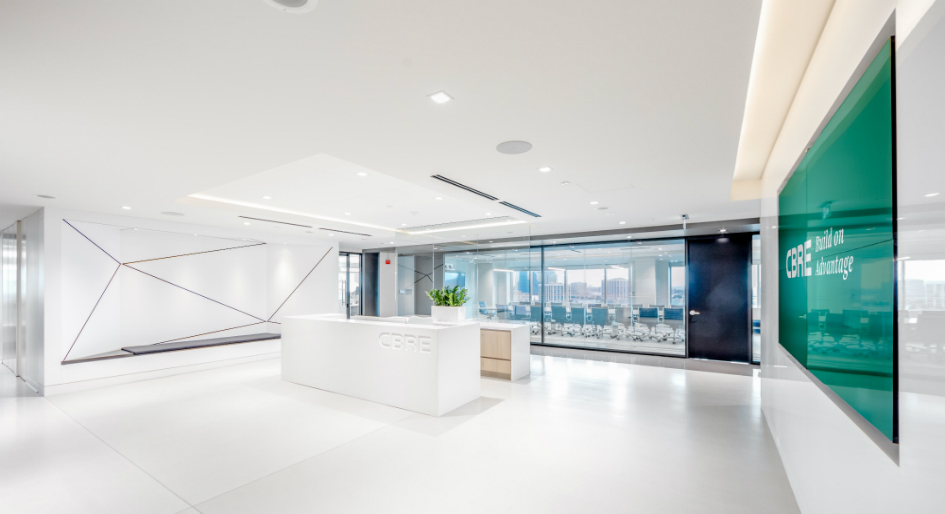
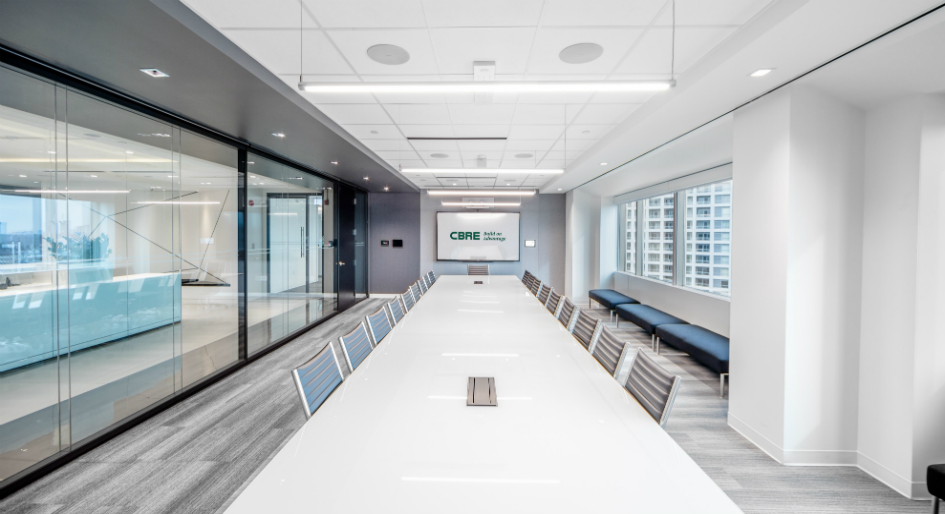
As part of the world’s largest commercial real estate services firm, CBRE Limited (CBRE) guides clients through a market that is often complex and fast-paced. But its brand new Toronto North office reflects a simpler, more easygoing vibe. Clean white interiors and crisp blue accents bring an uncomplicated design and sense of calm to the new space—the fourth and final edition of the company’s 12-month-long GTA office transformation project.

The move up to the eighth floor of an adjacent building at 2005 Sheppard Avenue East also welcomes an abundance of natural light, a feature that helps comply with the WELL Building Standard, a performance-based system that takes a more human-centric approach to health and wellness in buildings. After piloting the program in its LA office, CBRE now has four out of the ten WELL-registered projects in Canada: one in Vancouver and three in the GTA, including the Toronto North office.

“We’re innovating with this new standard, seeing it as important in the evolution of corporate real estate,” says Managing Director of Workplace Strategy Lisa Fulford-Roy. “In going through the process, we now feel like we’re in a position to really advise our clients about WELL.”

Ensuring that all employees sit within 25 feet of natural sunlight and views was key to this process, along with installing a specialized circadian lighting system that automatically adjusts to the level of outside light. The system is designed to minimize the impact of electrical lighting on a worker’s natural circadian rhythm and sleep-wake cycles.

Investments like this increase engagement and attract and retain top talent.

“If our people are feeling better, they’re going to do better work and service our clients better,” adds Fulford-Roy. “From a value perspective, that really resonates with us in Canada and something we want to stand behind as leaders in the real estate service delivery capacity.”
WELL

WELL features

Following WELL guidelines that set out to measure, certify and monitor features related to light, air, water, nourishment, fitness, comfort and mind, the team implemented other elements related to wellness.

Good air quality is necessary to keep employees healthy and energized. In the Toronto North office, the HVAC system provides internal air quality in the top one per cent of offices globally, and sensors automatically pump in fresh air from outside when increased levels of carbon dioxide are detected.

“Employees and visitors consistently remark about the freshness of air,” says Adrian Lee, executive vice-president and Toronto North managing director. “There’s no yawning in meetings and people feel their energy is sustained throughout the day.”

Employees also sit within 30 metres of fresh filtered water. According to a study in the journal Frontiers in Human Neuroscience, thirsty individuals who drink water prior to performing a mental task have a faster reaction time than those who don’t drink water.

Noise cancellation diodes were also installed to create acoustic comfort and prevent background noise, a leading cause of stress and distraction for office workers.

The CBRE office is also one of the first to actually forbid workers from eating at desks. They’re encouraged to relax and connect with co-workers in the RISE café, in an informal setting that lures people away from their screens and keeps bacteria and odours from circulating the workspace. And to further promote physical activity and prevent back and shoulder pain, all employees now have sit-stand workstations.

“People are moving around and circulating more throughout the day, and there are greater levels of connections and casual collisions happening,” says Lee. “The sense of community has improved; there is less sedentary behaviour among leaders at all levels of the organization.”

WELL stakeholders

The WELL process is primarily tenant-driven rather than property manager-driven, but still requires specific engagement with a landlord and many stakeholders, adds Fulford-Roy. It’s different than LEED and more focused on human health and wellbeing. For instance, LEED helps workers gain access to daylight, whereas WELL considers how much daylight there is and how it’s dispersed. Still, some of these stakeholders are similar.

“Thirty per cent of the process involves impacting and integrating with base building systems, from air quality and air freshness to water quality,” adds Lee, adding that due to a three-year compliance and retesting period, a good relationship with the landlord and negotiations around HVAC targets is required, as well as a good relationship with stakeholders who impact the space.

“The most important stakeholder is our own employees,” adds Fulford-Roy. “Going through the WELL process enhanced our ability for change management, and helped us identify key benefits for our employees well in advance of occupancy. We were able to communicate back to them as part of the process, so day one of occupancy brought excitement and enthusiasm in the new space.”
WELL

WELL and existing buildings

All of the WELL-registered offices in the GTA are located in older assets. The Toronto North office is in a building about 30 years old. Even though age means more capital costs to improve existing space, the process isn’t improbable. In this case, all assets had undergone base building upgrades and tout various LEED and BOMA BEST certifications—a definite advantage in terms of capital costs required.

“If you can time a WELL project around capital costs being made in a similar time frame, I don’t think it’s impossible to achieve WELL in an older building,” adds Fulford-Roy. “But capital investment and negotiations with the landlord may be different.”

Canadian Workplace Transformation

Along with wellness, each GTA location was slightly tailored to the local population, but adhered to the unified, national office transformation strategy that involves three other core design philosophies: choice, connection and mobility. Overall this meant pursuing WELL certification, catering to a multigenerational workforce and various working styles, greater collaboration and getting employees working beyond their desks through advanced technology.

A clear vision, with such principles in mind, kept the team on track during the GTA office transformation project, which took less than a year to complete. Still, the strategy allowed for flexibility. A committee was set up to engage workers in planning adjacency or selecting furniture, artwork and finishing palettes to add a touch of personality to the space.

“We wanted to make sure that the employees at each location really felt they put their fingerprint on some of the decisions associated with the office, while keeping a consistent brand and image across Canada and making sure we maintained the values and priorities for a unified employee experience,” says Fulford-Roy.

CBRE had full supervision over the process, which gave them control over project management, construction, planning, executing and the physical relocation of employees, and helped ensure results were delivered on time. Not only does the program impact the health and wellness of employees, but offers clients real-life examples of what can be achieved.

“By achieving WELL in the physical environment, we’re actually impacting 100 per cent of our employees,” Lee notes. “That’s a powerful tool to attract and retain best talent and also increase the level of engagement and energy throughout the day. It’s something our employees will benefit from and, ultimately, our clients will benefit from their energy as well.”


 

Tips for Painting your Commercial Property

Painting the interior or exterior of your commercial building may revive its look, but the job can turn out to be more complicated than you originally anticipated. That’s why it’s vital to choose the right contractor to get the job done correctly the first time.

Mike Benteau, president of paint contractor Elite Trade Painting, provides some tips to keep in mind when considering your property’s next paint job.

A wise investment

“Painting is the most cost-effective form of maintenance for any property manager in that it can revitalize and change the space for the least amount of money,” says Benteau.

If you are looking to attract and retain tenants, a fresh paint job may be the way to go. Benteau, who has 34 years of experience in the industry, has noticed some high-end property managers provide repaints for tenants without an obligation to do so, as a new paint job every four or five years can go a long way in maintaining client satisfaction and convincing tenants to stay for another term.

He notes that property managers usually time this service within one to two years of renewals. A designer colour change, which means having a designer come in for a consult and recommend a specific colour to accentuate a space, helps significantly in renewing a tenant’s contract. Although there is a cost associated with it, it makes an enormous difference in the quality of the results.

When it comes to attracting new tenants, remember that first impressions are important, and a quality paint job is vital to your building’s first impression.

“Space improvements by landlords is often done to attract tenants. Painting is one of the cheapest to do. Having quality work being done for the project is vital to the establishment of long term relationships,” says Benteau. “Many will utilize the best price, with little inspection for quality, which in the end, starts a relationship off with a bad impression.”

Benteau notes that paint can alter how a tenant feels about a space. “Rather than a tenant moving to another spot, sometimes you can change the environment so they have less motivation to find something different,” he says. “It seems to invigorate the staff and the tenants. Painting is probably the lowest-cost renovation that they can do and it has the biggest bang for the buck.”

Protect your property – and your tenants

Maintaining the health and safety of tenants and workers must always be kept in mind during contracting jobs. Benteau says almost all commercial paints used nowadays meet LEED standards and are low- or no-VOC, so they are safe to be used indoors while clients and tenants are present.

“There are still some products that we use that do have nasty smells, but for the most part, those are specialty products that you use after hours or when no one is around,” he says. “The majority of our projects in the last ten years are done while people continue to work. It is important for your contractor to work with your tenants to coordinate the project and to work professionally with consideration at all times to the work environment and being aware of all safety concerns that exist.”

When painting outdoors, paints specific for that purpose are ideal because they are specially formulated for outdoor use. They can ensure the building remains structurally sound and free of moisture and leaks, which is vital due to Canada’s sometimes unpredictable weather.

Cutting costs

One method of cutting costs is painting while tenants are in the space, since after-hours work is always more costly. Benteau recommends fiscally-conscious projects be done in December, January or February, which are all low-demand months in Canada.

For exterior work, it’s best to plan ahead, get quotes and book projects early. Exterior painting is one of the higher demand categories because many painting contractors simply do not do this work. Benteau says that supply and demand dictate how high prices are, so to avoid being swept into a high-cost job, get a quote for your paint job in the low season. Benteau says a client can save up to 20 per cent if tackling a job in the low season.

Finally, choosing the right system for products and undergoing the proper preparation process for your exterior project is vital to the longevity of your painted surfaces, meaning reduced costs in the low run. Although this may not be the cheapest option up-front, it could save a client from doing yearly maintenance, which adds up over a short period of time. Choosing the right system can increase the longevity of painted surfaces by up to 10 years.

Choosing the right contractor

A good contractor will treat tenants like their own clients. Keeping tenants in mind while completing a job ensures all parties will be satisfied once the work is complete.

“We try to make [the tenants] happy so that the property manager doesn’t have to worry about what’s going on with the job site,” says Benteau. “As a property manager, you want a contractor that has that respect and that mindset.”

A good contractor will begin with a consultation followed by a detailed site inspection. After that, they should be able to put together a detailed estimate to avoid any hidden costs for the customer. Contractors should have full worker’s compensation coverage and carry liability insurance in the event of an accident. A contractor that cares about customer service will also be aware of budget, space or time limitations in place and take care to work within those confines. They will end the contract with an inspection conducted by the client and tenant to ensure everyone’s satisfaction is met.

To do your part and ensure the job is done right, completely clean your space before the painters come in, especially during a finishing coat, as dirt and debris can affect the quality of the job. A skilled contractor will follow several steps to ensure a flawless paint job, including sanding and completely cleaning any rough areas; filling in nail holes and smoothing over any blemishes; and caulking all gaps in trip to create a solid seal, to name a few.

When it comes to painting your property, there are ways to save while still getting the results you and your clients both deserve. All it takes is the right contractor.

Visit https://elitetradepainting.com/ for more details.

Elite Trade Painting

John K. Stephenson named OAA president for 2017

The Ontario Association of Architects (OAA) has named John K. Stephenson, OAA, MRAIC, its new president for 2017. In this role, Stephenson is committed to building a strong profession that is empowered to serve the public interest through excellence in design and professional practice.

“[The] key to achieving this goal is recognizing that effective project and risk management is central to the architect’s role today,” he said in a press release.

Stephenson studied at the University of Toronto’s Faculty of Architecture before relocating to Thunder Bay in 1980. In 1986, he started his practice as Kuch Stephenson Architects, which became Kuch Stephenson Gibson Malo Architects & Engineer, both of which are predecessors to his current firm. Stephenson is a founding partner of FORM Architecture Engineering, the largest entirely local architectural practice in Northwestern Ontario. His extensive experience with publicly funded institutional projects has given him the ability to manage the process of design decision making and approvals by a wide range of public and regulatory agencies.

Stephenson joined the OAA Council in 2013. He first served a term in the early 1990s and continued to volunteer with the Association. Since then, he has participated on several committees and served as Senior Vice President and Treasurer for the past two years. During that time, he took part in various new initiatives, many of which continue today, including the review of the path to licensure for interns; the OAA Headquarters Renew + Refresh project; re-imagining the OAA Honours and Awards program; a new media content creation and communication strategy; and the modernization of OAA governance addressing inclusivity as well as reflecting the diversity of the architectural profession.

Stephenson is passionate about continued OAA advocacy and engagement on issues of public interest where the contribution of architects can help make communities a better place for people. Going forward, the OAA will continue to talk about climate change and the benefits of low carbon building design, effective procurement of public buildings, housing affordability, while it starts a new conversation about First Nations community building, among other issues.

Climate data to be revamped for future codes

Historical climate data is losing relevance in Canada’s model national building, energy, fire and plumbing codes as severe storms, drought and intense heat waves become more frequent. Researchers with the National Research Council (NRC) have embarked on a new initiative to evaluate and account for weather-related forces that buildings and infrastructure will need to endure into the future.

“In 2017, it is a necessity to start planning to adapt our buildings and infrastructure to withstand new loads,” says Richard Tremblay, the NRC’s general manager of construction.

The project received a $40-million funding allocation in the 2016-17 federal budget, with $20 million earmarked for risk modelling and the development of new guidance documents for buildings and the remainder directed to heavy infrastructure such as roads, bridges and storm water systems. Analysts will be testing assumptions about wind, rain and snow loads, freeze-thaw cycles and forest fire risks among some of the major considerations for climate resilience.

“We are not looking at historical data. We are looking at predictive data,” explains Philip Rizcallah, program director with the NRC. “We are going to be designing our buildings based on the new data.”

This will be particularly important for renovation guides as owners/managers of existing buildings strive to improve resilience and strengthen their competitive position in the market. “What buildings have had to withstand over the past 100 years may not be what they’ll have to withstand going forward,” Rizcallah notes.

The new climate data and guidelines for resiliency are expected to be ready for 2020, although not all the associated specifications will be in the next editions of the model national codes. NRC is concurrently working with CSA/ULC to update the Canadian Highway Bridge Design Code and the Canadian Electrical Code to reflect climate change adaptation.

Tarion wins Stevie Award for customer service

For the second year in a row, Tarion was presented with a Stevie Award for excellence in customer service. Stevie Awards provide global recognition of outstanding performances in the workplace.

Tarion was awarded a bronze medal for helping homeowners and builders deal with the trade strikes that caused construction delays in 2016. In 2015, the company won two bronze awards for customer service excellence.

“This year, Tarion was again nominated for its customer service in regard to the trade strikes in 2016 and how we all rose to the challenge of communicating effectively with both homeowners and builders,” said Howard Bogach, president and CEO of Tarion. “The task of sharing information and problem-solving for homeowners and builders touched almost every department in Tarion.”

The award was presented at the 11th annual Stevie Awards for Sales & Customer Service at a gala banquet, which took place on February 24 in Las Vegas. Other Stevie Awards recognize business development and contact centres.

“This award, coming on the heels of last year’s awards, confirms that Tarion’s culture of customer service is vibrant and truly exceptional,” added Bogach. “This is a terrific accomplishment for Tarion staff.”