Articles Archive - Page 546 of 929 - REMINET
REMI

Concert revitalizing Capital Park in Victoria

Concert and Jawl Properties are working together to complete the Capital Park development, a six-acre master-plan community that is revitalizing an entire city block in the heart of Victoria.

The mixed-use development incorporates rental and condominium homes, as well as office space and retail amenities in a site that will be remarkable for its attractive landscaping, tranquil water features, and extensive walkways that will connect Capital Park to its many onsite amenities and adjacent communities.

“Capital Park is a shining example of our commitment to create vibrant, resilient and sustainable communities that reflect local values and priorities,” adds Brian McCauley, Concert’s president and CEO. “We couldn’t be more pleased with our progress and the public’s response to our efforts to revitalize the area.”

The development of Capital Park has occurred in multiple phases since the site was acquired from the province in 2014. This has allowed for the demolition of aged structures prior to construction as well as for the preservation of five heritage homes, three of which were re-located on site with the other two homes transported by barge to another James Bay location.

To date, Concert and Jawl have completed the construction of a 127,000-square-foot office building fully leased to the Province of British Columbia, 53 rental apartments featuring community-focused amenities, such as a Red Barn Market and a local branch of the Victoria public library, and three heritage homes which have been renovated and converted to rental apartments.

Nearing completion in the heart of Capital Park is an expansive plaza and a Good Earth Coffeehouse. Construction on the site’s second 120,000-square-foot office building is underway.

The final phase of the development, Capital Park Residences, will offer a total of 113 homes in four and five-storey buildings, along with a limited collection of distinctive townhomes.

“Capital Park, when completed, will bring new life to a key block that links the James Bay community with the downtown core,” says McCauley. “We look forward to completing this exceptional project and delivering on a long-term vision of revitalizing an integral area that has been somewhat of a missing puzzle piece of this community.”

Montreal home sales up 11 per cent annually

In October 2018, the Montreal Census Metropolitan Area (CMA) recorded 3,731 residential sales, an increase of 11 per cent compared to October 2017, according to statistics released by the Greater Montreal Real Estate Board (GMREB). This figure also represents a new sales record for the month of October, and is the 44th consecutive increase in transactions.

According to the statistics, all six main areas of the Montreal CMA reported strong sales increases last month. Laval led the region’s sales increases, seeing a jump of 17 per cent, while Saint-Jean-sur-Richelieu recorded an increase of 16 per cent. In the North Shore, sales climbed 14 per cent, while the South Shore saw increases of 12 per cent year-over-year. Both the Island of Montreal and Vaudreuil-Soulanges saw sales rise eight per cent.

When split by property category, the condominium segment continued to be the most active in October, logging 1,361 transactions, an increase of 22 per cent. Sales climbed six per cent for single-family homes (1,971 transactions) and five per cent for plexes with two to five dwellings (395 transactions).

“The condominium segment is booming. Thanks to strong sales and a sharp decrease in listings, the number of months of inventory has dropped significantly over the past year, falling from 10.2 months to seven months,” said Nathalie Begin, president of the GMREB Board of Directors, in a press release. “This segment has moved from a buyer’s market to a seller’s market in just one year.”

Average home prices in the Montreal CMA also increased, with single-family homes and condominiums both experiencing price increases of four per cent, climbing to $329,250 and $265,000, respectively. However, this price increase is still below those experienced in October 2017. Meanwhile, the median price of plexes jumped 11 per cent to reach $525,000.

In October, there were 21,515 active residential listings in Montreal, down 17 per cent on an annual basis.

CMHC predicts housing market activity to moderate

According to Canada Mortgage and Housing Corporation (CMHC)’s recently published 2018 Housing Market Outlook, housing markets in Canada should see a moderation in both housing starts and sales in 2019 and 2020, while home prices are expected to reach levels that are more in line with economic fundamentals such as income, job and population growth.

On a national basis, CMHC’s outlook for 2019 forecasts total housing starts to trend down, ranging between 193,700 and 204,500 with the decrease expected for both single and multi-unit starts. MLS sales are expected to range between 478,400 and 497,400 units annually, while MLS prices are predicted to range between $501,400 and $521,600.

In British Columbia, housing starts and MLS sales are expected to moderate as economic and population growth slows, while MLS Average Prices are predicted to see slower growth through 2020. In Metro Vancouver, the region’s resale market should see lower sales, higher inventories of homes for sale and lower home prices compared with recent market highs over the next two years. So far this year, demand and home prices moderated across all market segments and local regions.

The Prairies have seen buyers’ market conditions in both Alberta and Saskatchewan, but these are predicted to gradually shift to a balanced market with gradual improvement in economic and demographic fundamentals.

In Calgary, various factors will impact housing demand in 2019 and 2020. Calgary’s economy is expected to experience stronger population and employment growth, which will help support demand and lift home sales over the next two years. However, the average MLS price will continue to face downward pressure, but is expected to stabilize in 2019 and increase slightly in 2020. Meanwhile, balanced market conditions are expected to continue in Manitoba.

Ontario’s housing market saw slower activity in 2018. Existing home sales and starts are predicted to partially recover in 2019. Buyers are expected to re-enter the market following stronger than expected job growth and an increased number of people moving into the province before the downward trend in starts and sales resumes in 2020.

In Toronto, balanced conditions in the GTA have led to the prediction of moderate sales growth and home prices increasing in line with inflation over the coming years. The rising costs of home ownership will cause strong rental demand, while new supply will add some upward pressure on vacancy rates. Toronto home buyers should expect to see more housing choices as builders concentrate on new high-rise projects.

Housing starts and sales of existing homes are predicted to remain level in Quebec, however, slower economic growth and rising borrowing costs will slow activity through 2020, finds CMHC. Starts will continue to be dominated by the apartment market segment, while demand for resale single-detached homes is expected to remain relatively strong.

In 2018 and 2019, rental housing demand is predicted to increase slightly faster than supply in Montreal, which will put some downward pressure on the vacancy rate. Demand will be maintained by rising net migration over the coming years.

The Atlantic provinces are expected to see sustained activity, notably in Nova Scotia, where existing home sales and average prices should trend higher while rental demand drives growth in apartment construction.

“Our key takeaway from this year’s outlook is moderation in Canada’s housing markets for 2019 and 2020,” said Bob Dugan, CMHC’s chief economist, in a press release. “Housing starts are expected to decline from the higher levels we’ve seen recently. We expect resales in 2019 and 2020 to remain below recent peaks while prices should reach levels that are more in line with economic fundamentals such as income, job and population growth.”

Competition for most energy-efficient design ideas

Designers, builders and developers are being challenged to make energy-efficient buildings more affordable for British Columbians. The challenge is part of the provincial government’s new Better Buildings BC program.

“Every new building and renovation is an opportunity to save energy and reduce costs for British Columbians,” said Michelle Mungall, Minister of Energy, Mines and Petroleum Resources. “Our government is challenging designers, builders and developers to get creative and show us their innovative ideas.”

The challenge was presented to students and faculty at the University of British Columbia, including engineers and architects taking part in the school’s master of engineering leadership in high performance buildings curriculum.

The Better Buildings BC program will accelerate the design and construction of multi-family, commercial and institutional buildings that are super energy efficient. The program is built around a design competition, with up to $390,000 given to the most cost-effective demonstration of net-zero energy-ready buildings.

Net-zero energy-ready buildings are designed to be so efficient that they could meet all or most of their own energy consumption requirements with renewable energy technologies. They are more comfortable, durable and quieter than conventional buildings, and help make life more affordable by saving owners and tenants money through reduced energy bills.

“Over the past 20 years, UBC has demonstrated leadership in green buildings and has used its campus as a testbed for innovative and cost-effective approaches to energy efficient design and measures to significantly reduce greenhouse gas emissions that advance the campus towards its zero carbon emissions target,” said Michael White, associate vice-president, campus and community planning at UBC. “UBC is excited to see the launch of the Better Buildings BC program as it will help catalyze momentum toward net-zero energy-ready buildings.”

Designers, builders, and developers can apply by visiting: www.efficiencybc.ca/betterbuildings

Applicants must submit an expression of interest by Nov. 30, 2018. The winning projects will be announced in spring 2019.

Modern makeover for optometry office

Transforming a dark and outdated optometrist office into a modern and elegant environment earned Cutler interior designer Tiina Vahtola the inaugural Interior Designer of the Year Award at IDIBC’s 2018 Shine Awards of Excellence. The project also earned an Award of Excellence in the retail and kiosk category.

“I’m honoured to receive the first of this award,” says Vahtola. “I feel lucky to work with such a supportive and creative team at Cutler, the backbone that brought this project to fruition. I’m really proud to be a registered interior designer and hope that this new award category at the IDIBC Shine Awards encourages other interior designers to work toward the same designation to help strengthen our profession.”

The goal for Boardwalk Optometry, a long standing family business in Surrey, was to rejuvenate the space with a design concept that embraces traditional Japanese principles like simplicity, space and connection to nature. The result is minimalist and zen with an emphasis on natural materials and textures supported by a neutral backdrop. The limited colour palette encourages focus on the product being displayed rather than creating any unnecessary visual clutter, according to Vahtola.

A material palette was developed using natural concrete floor finishing, pale wood tones, with clean white walls and ceilings that marries both modern aesthetics and Japanese design principles.  Natural elements were used to blend in the Japanese heritage of the logo using: sho sugi ban, a traditional Japanese charred wood paneling on a feature wall, a black harmonious watercolour wall graphic, a preserved moss wall installation and a slab of natural stone on the reception desk facade.

“Integrating the company’s existing logo of Japanese heritage into the new design was an important element to maintain and was the inspiration behind the design concept,” notes Vahtola.

The front of house space was focused on the retail component with two cozy waiting areas developed closer to the back. Custom pieces are designed throughout using light and simple forms that maintain a spacious and airy feel, while maximizing product display and customer interaction.

Highlights include the custom consult tables featuring an integrated small drawer that holds tools for glass fittings or adjustments in a discreet manner. The joinery details complement the Japanese influence of the overall design, and the cut-out in the top of the table lined in felt to showcase and protect a pair of glasses emphasizes the special experience of purchasing.

While developing the design concept, it was also important to the client to maintain elements that their clientele had become familiar with over the years. The unique must-stay requests included oversized decorative eyeglass frames and a gecko tank.

These elements were integrated into the space thoughtfully by creating areas specifically for them. The gecko tank became part of the millwork, while the large eyeglasses were displayed together as art on a wall, adding a playful nod to the otherwise minimal environment.

“Finding unique ways to integrate the old with the new for this project, while challenging, was really satisfying,” says Vahtola. “Every element was integrated into the design harmoniously, resulting in a cohesive, well-balanced space.”

Construction of the six month project had to be phased so that the existing space could remain operational, while the new neighbouring space was being built, and then closed briefly to be renovated.

“Pulling the two together was a challenge but executed beautifully by our dedicated general contractor,” says Vahtola.

By using custom millwork and pieces, Cutler was able to create a welcoming and functional space that is uniquely the owners. The success of the transformation has been met with positive feedback from the client and their loyal customers.

Cheryl Mah is managing editor of Design Quarterly.

New GTA condo prices climb 11 per cent in Q3-2018

New condominium apartment sales in the Greater Toronto Area (GTA) rose four per cent year-over-year to 4,738 units in Q3-2018, reaching the third-highest Q3 volume in the past decade, according to Urbanation Inc.’s Q3-2018 condo market results.

To date this year, there have been 14,055 unit sales in the GTA, a decline of 46 per cent from the record high of 25,839 sales recorded during the same period last year. Resale condominium apartment sales climbed two per cent year-over-year in Q3-2018 to 5,253 units, representing the first annual increase since Q1-2017.

Unsold inventory of new condos currently in development was up two per cent compared to Q2-2018 and 22 per cent on an annual basis to 9,927 units, although this figure remained 33 per cent below the 10-year average of 14,806 units. Unsold inventory equaled 5.2 months of supply, compared to 5.1 months in the last quarter, and 3.0 months one year ago.

Despite this increase in supply, the average sale price for all actively marketing projects in Q3-2018 increased by 11 per cent year-over-year to $745 per square foot, with asking prices for unsold units up by 19 per cent to an average of $972 per square foot. In new projects that opened for pre-sale during Q3, prices climbed 33 per cent year-over-year to an average of $745,416. The average size of a new unit launched in Q3-2018 was 714 square feet, resulting in average per square foot prices for newly launched units surpassing $1,000 for the first time (reaching $1,044 per square foot).

Meanwhile, average resale condominium prices increased by 6.5 per cent year-over-year to $690 per square foot, or $577,000 based on an average unit size of 837 square feet. This figure represents a strong deceleration from the 27 per cent annual pace recorded in Q3-2017.

Construction started on a record-high 8,150 new condominiums in Q3, increasing the total number of condominium units under construction to a new high of 67,581 in 236 buildings. On average, projects under construction were 95 per cent pre-sold.

Quarterly new condo sales have reached a relatively steady pace in recent quarters, following chaotic levels in 2017. However, it appears as though the market may receive a boost in the remaining months of this year as a significant number of new units launch for pre-sale, which should be met by strong demand, given current trends.

The average opening quarter absorption rate for new launches has remained over 55 per cent for 11 straight quarters, since Q1-2016 (averaging 58 per cent in Q3-2018). This was not solely a reflection of increased investor activity, as projects with a mix of buyers, as well as those focused primarily toward end-users, have been achieving high absorption rates upon opening.

However, not all projects are selling quickly, as eight of 17 projects launched in Q3-2018 sold less than 30 per cent of their units, compared to only one of 15 launched one year ago, which Urbanation finds points to increased price sensitivity, a dispersion of new projects across the GTA and the importance of a strong marketing campaign. Urbanation suspects that, going forward, high price points in the current new condominium market should prevent another sustained resurgence in sales activity in the immediate future.

“The condominium market has performed exceptionally well during its transition from an overheated 2017,” said Shaun Hildebrand, president of Urbanation, in a press release. “Low supply and stabilized demand should continue to provide structural support for prices. However, signs of a slower pace of price growth ahead from factors including rising interest rates and higher completions should be factored into decision making with respect to purchasing investment units.”

Higher winter maintenance costs anticipated

Private property owners in Ontario, including condo corporations, could find themselves paying a premium to keep their walkways safe this winter.

Rock salt is expected to be less available locally and cost more to source after flooding and a strike hampered output at two out of three major mines, according to Landscape Ontario, a trades association whose members include snow contractors. Tony DiGiovanni, executive director of Landscape Ontario, said that municipalities are at the front of the line to get the allocations they need for road-clearing operations from the mines. And, with only so much salt to go around, he said the snow contractors that service private properties, and their suppliers, have been informed they will need to make alternative arrangements.

DiGiovanni said one option has been to establish new relationships overseas and pay higher prices upfront to have salt shipped in from Chile, Egypt and Morocco before the St. Lawrence River freezes. But he added that some contractors may need help from their clients to come up with the financial resources and storage space to pursue this route, and those who do may still find themselves coming up short.

“There are two issues,” said DiGiovanni. “One is the extra cost. Two is even with the barges coming in, there is not going to enough supply, depending on the weather, because the inventory that was in place was knocked out with the late winter storm we had this year.”

Anticipating surcharges, stretching supplies

Landscape Ontario has been trying to get the word out about the shortage in salt inventory so snow contractors and their clients can plan accordingly.

One condo management company has responded by encouraging condo corporations to consider buying enough bagged salt and other de-icers to fill as much as an extra skid each. That way, staff can take steps to prevent slips and falls while waiting for snow contractors to service their properties following precipitation.

“Depending on the terms of [their] landscaping contract, corporations should also be prepared for the budget impact,” Crossbridge Condominium Services advised recently. “Surcharges of $30/ton are anticipated from landscapers. As sites can use as much as 10 tons a month, the incremental costs could mount.”

These figures suggest condo corporations may face a monthly premium of up to a few thousand dollars, assuming their snow contractors are able to satisfy that level of demand for salt on their site. But the question of cost will become academic if supplies run out before the end of the season.

Landscape Ontario has also outlined a number of strategies for stretching limited supplies. They include calibrating equipment, mixing salt and sand, reviewing which parts of properties require salt coverage, and using other de-icing alternatives, such as beet juice or treated salt.

Courts look for preventative action

Property owners and their snow contractors have a compelling reason to salt generously: to avoid being accused of negligence and getting sued for damages by people injured in slip-and-fall accidents. The de-icing product is generally seen as the best way to melt and prevent the slippery patches that can form on pavement in the winter and pose a hazard.

The Occupiers’ Liability Act imposes a legal duty on property owners to take reasonable steps keep people safe on their premises. During the winter months, plowing and putting down salt and sand after it snows are certainly among the steps that people expect property owners to take, but they alone may not be enough, said personal injury lawyer Matthew Reid.

“The courts have also been looking more and more at whether or not you took any preventative action,” he said.

Reid, an associate at Cohen Highley, cited monitoring the weather and salting before freeze-thaw cycles as examples of preventative action. He added that other precautions could include blocking off and posting signage alerting people to unmaintained areas of the property, and surveying properties ahead of the winter season and fixing gaps in pavement where water could pool and freeze.

Condo corporations generally offload their liability for seasonal slips and falls onto their snow contractors, which Reid characterized as a best practice. But having this type of agreement in place doesn’t absolve property owners and managers of all responsibility. Snow contractors can’t address conditions they’re not aware of, and he noted that condo corporations have to exercise caution in implementing additional measures to mitigate slip-and-fall risks.

“If a condo corporation farms out everything to a contractor, any other action that they take can be seen as basically taking over liability from them,” Reid explained, “so it’s really important, if there are problems, to connect with the maintenance company and let them know: I’ve put down some salt because there’s a bunch of ice, but can you come out and take a look at everything?”

Current model may be unsustainable

The shortage in salt inventory this winter may be a short-term crisis, but one snow contractor suggested that extenuating factors have simply caused a spike in a longer term trend. David Lammers, president of Garden Grove Landscaping, said snow contractors who buy directly from the local major mines have not been able to get enough of the de-icing product to make it through the season without tapping into other sources for the last seven winters.

Lammers said that demand for salt has outpaced supply in recent years, snowballing due to client expectations, frivolous lawsuits and weather patterns. He observed that the current terms of the relationship between property owners and snow contractors, in which contractors bear the full brunt of exposure to slips and falls, is becoming increasingly untenable.

“It’s going to come to a head because guys can still get insurance, but it’s getting harder and harder, and the rates are going up and up, and it’s all because of liability,” Lammers asserted. “Guys have been putting down more and more salt, but that’s consuming too much product.”

In the U.S., the Accredited Snow Contractors Association has been advocating for legislation that would end the practice of property owners asking their snow contractors to hold them harmless in connection with seasonal slips and falls, with success in states including Colorado.

“We’ve got to get to a place whether the property owner’s taking responsibility for the property and the contractor’s taking responsibility for the work they’re doing,” said Lammers.

A catalyst to recalibrate relationship?

The shortage in salt inventory this winter could serve as a catalyst for snow contractors and property owners to recalibrate their relationship.

“Ultimately, it’s the owner and the property managers that are responsible for their properties,” said DiGiovanni. “They transfer that responsibility to their contractor, but if the contractor’s in trouble, everybody’s in trouble.”

Michelle Ervin is the editor of CondoBusiness.

Examining Canadians’ understanding of AMR

Antimicrobial resistance (AMR) occurs when bacteria or other microorganisms develop resistance to antibiotics and other antimicrobial drugs. It can be caused by poor infection control in hospitals and clinics, the overprescribing of antibiotics, patients not finishing their treatment,  and lack of hygiene and poor sanitation.

Only 29 per cent of 1,539 Canadians surveyed by BD, a global medical technology company, consider themselves “somewhat” or “very” knowledgeable about AMR. The recent survey also revealed many Canadians share widespread misconceptions about the threat of drug resistance.

“Antibiotic resistance does not refer to a body’s resistance to antibiotics, but to the bacteria’s response to antibiotics,” clarified Dr. David Patrick, University of British Columbia’s School of Population and Public Health in a press release.

Respondents ranked AMR among conditions that were of least concern, furthermore the survey revealed misunderstandings about whether AMR is something Canadians should even be concerned about. Nearly half (44 %) of the respondents believed AMR to be more of a concern in developing countries.

“Antimicrobial resistance affects everyone, everywhere, and that includes Canada, where it is an increasingly serious concern, ” said Dr. Andrew Morris, Sinai Health System and University Health Network in a press release

According to the World Health Organization (WHO) infection prevention measures such as sanitation, hand washing, food, and water safety, can decrease the spread of microorganisms resistant to antimicrobial medicines.

World Antibiotic Awareness Week (WAAW) held November 12 – 18, aims to increase global awareness of AMR and to encourage best practices among the general public, health workers and policy-makers to avoid the further emergence and spread of antibiotic resistance.

BD is part of an initiative called the Antimicrobial Resistance Fighter campaign to highlight the roles and impact of health practitioners, professional associations, government leaders, non-government organizations, health agencies, advocacy groups and patients in combating AMR. Canadians interested in sharing their story or joining this campaign can visit: antimicrobialresistancefighters.org.

New minister picks up condo file in cabinet shuffle

There’s a new point person on the condo file in Ontario’s Progressive Conservative government after a cabinet shuffle yesterday. Premier Doug Ford has moved Todd Smith to the economic development, job creation and trade portfolio and named Bill Walker, MPP for Bruce-Grey-Owen Sound, as the new minister of government and consumer services. Walker was first elected in 2011 and most recently served as government whip.

Feds announce funding for nuclear medicine facility

The federal government is contributing more than $10 million toward the creation of a new nuclear medicine facility at the University of British Columbia.

The Institute for Advanced Medical Isotopes (IAMI) will provide a first-of-its-kind hub in Canada. The new 2,500-square-metre building will house a particle accelerator, as well as research facilities, equipment, laboratories, and office space. By concentrating all aspects of creating, handling, and testing isotopes in one location – from the creation of raw materials to clinical trial work of potential therapies – the IAMI will help Canada stay a leader in the production and research of medical isotopes worldwide.

“The Institute for Advanced Medical Isotopes will be a state-of-the-art facility where industry leaders and academics can work together to push the boundaries of research and discover new ways to protect and improve our health,” said Prime Minister Justin Trudeau.

With contributions from the Province of British Columbia, the University of British Columbia, and BC Cancer, industry partners, academic researchers, and clinicians will work together to advance medical isotope production, drug development, cancer therapy, clinical imaging, and radiopharmaceutical research – advancements that have the potential to help thousands of Canadians who suffer from illness.

This project will provide students and local researchers with access to a modern educational facility with innovative spaces for instruction, research, and laboratory work. It also provides TRIUMF and its network with the opportunity to develop new educational programs, increase research capacity, and attract new students from across Canada and around the world.

EFCG announces CEO of the year

Golder Global’s president and CEO Hisham Mahmoud was honoured as the CEO of the Year by the Environmental Financial Consulting Group (EFCG) for demonstrating outstanding leadership in the industry.

Mahmoud was presented the award at the 29th annual EFCG CEO Conference held in New York City.

Founded in 1990, EFCG is an advisory and financial consulting firm focused exclusively on the Architecture, Engineering / Consulting, and Construction industry (A/E/C). They help companies become more business and financially efficient so that they can improve global infrastructure and sustainability,

“We selected Dr. Mahmoud based upon his extraordinary leadership in the key executive positions he has held over the last two decades. Specifically, his leadership and impact on Golder’s performance, since he took over three years ago as the company’s first externally-appointed CEO, has been nothing short of tremendous, creating a lot of value in a short period of time,” said Paul Zofnass, EFCG President.

“While it is easy to focus solely on the financial success of the business, we realize that such performance improvement is impossible without significant cultural alignment, which in our view only comes from strong leadership, starting with the CEO.”

Photo (from left to right): Paul Zofnass, President of EFCG and Hisham Mahmoud, Global President and CEO of Golder. 

Continuing education prescribed for condo managers

Some condo managers who want to renew their licences next year will have to pass a multiple-choice test to demonstrate their knowledge of new legislation regulating the profession as well as recent changes to Ontario’s condo laws. General licence holders who completed mandatory courses and exams ahead of those changes, which started to roll out on Nov. 1, 2017, will have to watch three webinars as part of a new continuing education requirement for 2019.

Minister of Government and Consumer Services Todd Smith prescribed “Continuing Education for Condo Manager General Licence Renewal (2019)” before picking up a new cabinet assignment yesterday. The move responds to the fact that general licence holders who completed mandatory courses and exams before Nov. 1, 2017, studied past versions of Ontario’s condo laws.

“It is important that condo managers operating with a General Licence have up-to-date knowledge of the recent condo law changes and understand their new obligations and responsibilities as condo managers,” the ministry stated in an email message announcing the requirement.

Nov. 1, 2017, is when the Condominium Management Services Act introduced mandatory qualifications and licensing for the profession. That’s also the date when the ministry began to phase in significant changes to the Condominium Act, introducing everything from new mandatory information certificates to new meeting notice requirements.

The Association of Condominium Managers of Ontario (ACMO), which developed the mandatory courses and exams condo managers must complete to obtain a general licence, will provide the new continuing education. A fee of $125 plus HST will give general licence holders 24 weeks to study the webinars and write the test. If condo managers don’t pass the test on their first try, they will have to pay $40 plus HST for each additional attempt.

General licence holders who are subject to the new continuing education requirement should fulfill it in a timely fashion, the Condominium Management Regulatory Authority of Ontario (CMRAO) advised in an email.

Slate undertakes major renovation of Calgary tower

Slate Canadian Real Estate Opportunity Fund is undertaking a major renovation of former Scotia Centre in downtown Calgary. The 40-storey tower at 700 2nd Street has been renamed Stephen Avenue Place.

The acquisition and renovation of Stephen Avenue Place is part of Slate’s growing investment in Calgary. In the past 18 months, Slate has increased its footprint in Calgary to 2.3 million square feet with the purchase of 21 office properties, including 12 downtown.

Designed by Zeidler Partnership Architects, the tower will undergo a significant renovation from its public-access ground floor to exclusive tenant amenities and top-floor restaurant. Stephen Avenue Place offers 620,000 square feet of rentable space and the renovations will reposition it as a modern hub for energy, innovation, business, dining and shopping. Renovations are scheduled for completion in early 2020.

“We are thrilled to acquire and develop such a high-quality property in downtown Calgary that offers businesses, diners and shoppers the very best in location, amenities and access,” said Slate founding partner Blair Welch. “Stephen Avenue Place will undergo an extensive renovation to fully reflect the way we work and live now, while respecting and celebrating its history and future as a Calgary landmark.”

Slate also announced that it has partnered with Oliver & Bonacini Hospitality and Concorde Entertainment Group to create three innovative and inspired dining destinations in Stephen Avenue Place; a world-class restaurant on the top floor, an eclectic food hall and a high-energy restaurant, bar and patio on the street level.

Stephen Avenue Place has direct connection to the Stephen Avenue Walk pedestrian thoroughfare, the Core Shopping Centre, the “Plus 15” system of pedestrian overpasses and is adjacent to Light Rail Transit. Amenities will include a club-quality fitness facility, an expansive conference centre, a tenant lounge and games lounge.

The benefits of hydrogen peroxide cleaners

Several years ago, a contract cleaner said she was pleased with the cleaning solutions her company was using and had no interest in switching to any others.  “I was very happy with the products and the pricing,” said the contractor.

But, she finally did try another cleaning solution, and it turned out to be an eye-opener.  “We decided to sample an oxygen cleaner at one of our sites [and] we were very pleased with how well it worked…. Plus, it was less expensive than what I was using, so we began to switch all our products over.”

The “oxygen cleaner” this cleaning contractor was referring to is a type of hydrogen peroxide cleaner.  For those that are not familiar with these cleaners, they are made of water (H2O) with an added oxygen atom, creating H2O2.

This extra oxygen atom boosts the cleaning effectiveness of the cleaner and allows it to work very effectively on a wide range of surfaces, such as glass, floors, walls, carpet, protein-based stains on desks, chairs, grout, and in shower areas where it helps eradicate mold, mildew soap scum and odors.

To clean all these types of surfaces, only the dilution needs to be adjusted. Cleaning professionals can find specific ratios on the product label.  For instance, for cleaning glass, mopping floors, or extracting carpets, a mixture of one-ounce hydrogen peroxide to one U.S. gallon of water is all that is necessary.

For more soiled areas and surfaces that need restoration such as tile and grout, a more powerful mixture may be necessary, as much as 48 ounces of the hydrogen peroxide to one U.S. gallon.

Some facilities now use hydrogen peroxide cleaners because they tend to be safer for the user and the environment.  In fact, some of these cleaners are certified green, recognizing both their safety and effectiveness.

Here are some more benefits of hydrogen peroxide cleaners:

  • They work well in cold water; along with saving energy, when mixing some cleaning solutions with warm water, there is always the possibility that fumes will be released. This is not a concern with hydrogen peroxide.
  • They are designed to clean and deodorize in one step.
  • They are low in volatile organic compounds (VOCs), helping to protect indoor air as well as the environment.

Charlotte Products is a manufacturer of cleaning products with manufacturing facilities in Canada and the U.S.

Purpose-built student housing set to soar

Canada’s purpose-built rental market has seen its share of healthy investment activity over the years, yet one asset class – student housing – has historically struggled to keep up. Look no further than a Colliers investment survey from 2016, which found that no Canadian investors among the 600 participants had plans to put money in these much-needed residences, preferring to stick with shopping centres, office space, industrial facilities and other commercial real estate ventures known for their steady returns.

Not the case in the U.S. or the U.K, where the market is far more developed. In fact, globally, the purpose-built student accommodation sector (PBSA) represents a $200 billion segment.

So when will investors in Canada start to take notice?  According to Alignvest Management’s new dedicated student housing REIT, “ASH REIT”, the answer is, they already are.

Launched in July, 2018,  ASH REIT opened with over $65 million in capital commitments and describes itself as “a proven global investment strategy with a substantial first-mover advantage to consolidate and professionalize student housing in Canada.”

“Currently, only about 3 per cent of Canadian university students live in off-campus purpose-built student accommodation compared to 10 per cent in the U.S. and 12 per cent in the U.K.,” said Sanjil Shah, ASH REIT Managing Partner. “We are 10 to 15 years behind those markets, even though our student population is growing at a much higher rate fueled by both domestic enrollment and our increasing share of international students.”

Before launching the REIT, Shah and his team spent three years researching the student housing industry and found that the limited funding to Canadian universities was affecting their ability to provide enough beds to meet the increase in demand. As a result, the group recognized that a unique market opportunity was upon them to acquire, build and operate high-quality, institutional-grade PBSA assets.

“We believe that there is a need for a professional owner/operator of purpose-built student accommodation in Canada,” he said. “Canadian universities are well-respected around the world. Our objective is to ensure that the total student experience, including their residential component, is very positive. We believe that we can provide this positive experience with a strong understanding of the industry and at the same time generate attractive returns for our investors.”

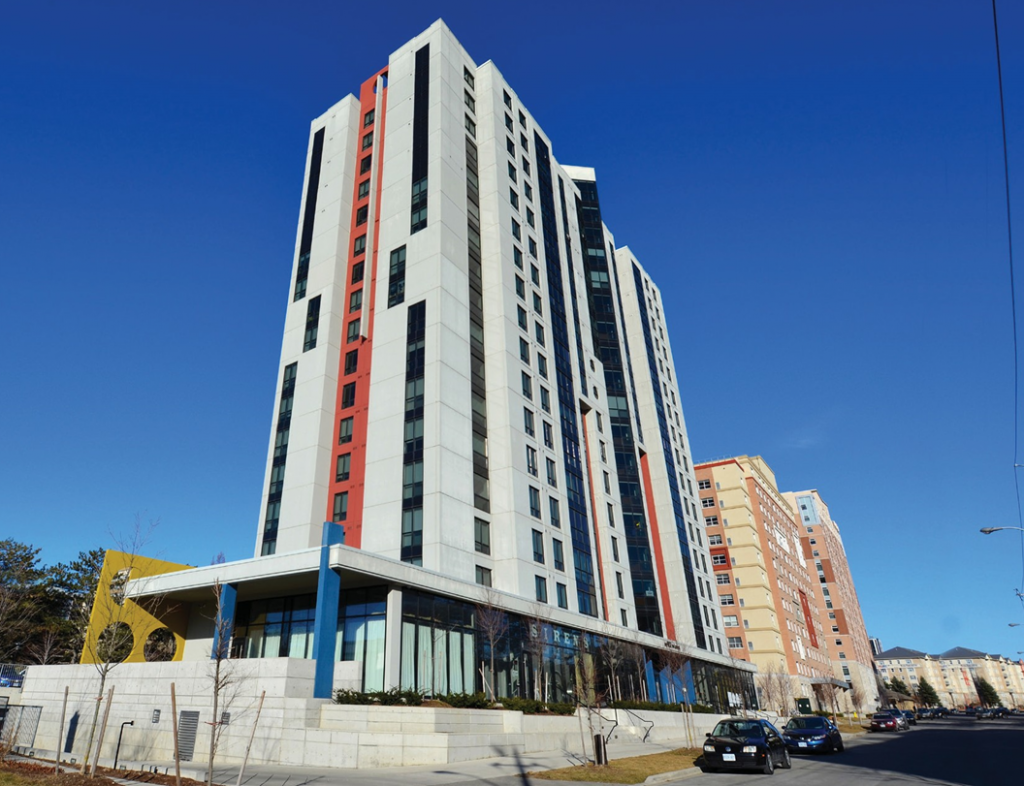
181 Lester Photo

Acquiring student housing assets

In August, less than a month after announcing the REIT’s official launch, ASH REIT completed its first purchase of a purpose-built student residence located at 181 Lester Street in Waterloo, Ontario.

“This building represents a cornerstone of the Alignvest Student Housing acquisition and operating strategy,” said Jonathan Turnbull, Managing Partner. “We believe this asset represents the high-end offering discerning students expect, and a performing investment our investors expect.”

The Lester Street property is four years old and strategically located within 500 metres of both the University of Waterloo and Wilfrid Laurier University. Combined, the two universities have over 54,000 students and have experienced a 25 per cent growth in student population since 2010 (including a 161 per cent increase in international students). The 18-storey building has 455 beds in fully-furnished suites, and offers high-end student-oriented amenities.

Just last week, ASH REIT announced it had purchased its second PBSA asset, a three-year-old property located at 111 Cooper Street in Ottawa, known as “1Eleven”.  The 16-storey building is within 400 metres of the University of Ottawa and a 10-minute commute to Carleton University.

In keeping with these acquisitions, Shah said ASH REIT intends to offer institutional and high-net worth investors the opportunity to invest in a diversified portfolio of PBSA and participate in the profits derived from them. “The goal is to deliver an attractive quarterly distribution to our investors and generate long-term capital appreciation with targeted returns of 15 per cent plus,” he said.

Targeting a student tenant-base: myths and stereotypes debunked

Anyone who’s ever stepped foot in a student housing residence knows that these buildings operate differently than generic rental properties. For starters, students require unique amenities and live a more socially connected lifestyle than the average renter.

“Student housing is not a passive real estate investment,” remarked Shah. “It is an operationally intensive business. Students are not long-term tenants. We expect a 40 per cent turnover on an annual basis. Also, students expect student-oriented amenities and services, such as study lounges and high quality internet. To deliver these, we incur substantially more operating expenses versus standard residential apartment buildings.”

That said, Shah is quick to point out that the negative reputation students often get slapped with isn’t necessarily true, and nor is the perception that managing student properties is more fraught with challenges than other rental buildings.

“There is a general misconception regarding students,” Shah said. “The common thought is that students are bad tenants; that they have poor (or no) credit and that they will likely trash the property. In reality, with guarantees from parents who can afford the cost of university tuition, the credit quality of our tenants is actually quite strong. In addition, students are respectful. As tenants who are at university to obtain an education, they are not abusive of the premises and we incur very little property damage.”

Contending with shortages

Aside from the occasional bender and pizza sauce slopped on the floor, the bigger concern when it comes to student residences is the massive shortfall of beds – especially in cities like Toronto and Vancouver where affordable rental housing is already scarce, and thousands of students are joining the masses on wait-lists with seemingly no end.

In September, the University of British Columbia revealed plans for a new 1,000-bed residence, which will break ground in the spring of 2019 for a targeted 2021 move-in. But still more is needed.  With a city-wide vacancy rate hovering just below 1 per cent, and student enrollment steadily on the rise, the City of Vancouver has taken meaningful steps to help bolster purpose-built rental development – including streamlining the slower-than-molasses permitting process.

In the meantime, Shah and his team at ASH REIT intend to satisfy at least some of that growing backlog…while turning a hefty profit in the process.

Why investing in student housing makes sense:

1. Students have financial backing from their parents, meaning they aren’t a credit risk.
2. Students are more willing to share space with each other (i.e. bathrooms and amenities) than other renters.
3. During periods of recession, undergraduate students tend to stay in school longer, while many graduates return to upgrade their skills, thus increasing demand for student housing.
4. Canadian universities are respected institutions all over the world. Domestic and foreign enrollment is growing at a rate much higher than other countries, meaning the tenant pool is constantly being replenished.
5. Given the high cost of tuition and rent, students are respectful of their surroundings and neighbours, unlike their stereotypes might suggest.

Devimco selected for Montreal mixed-use project

Devimco Immobilier has been selected by Club Sportif MAA, a health and fitness facility, to develop a mixed-use condominium project on Peel Street, just south of Sherbrooke Street in Montreal. Once complete, the 33-storey condominium will feature a revitalized Club Sportif MAA.

“We are proud to have been selected to develop this project of great historical significance and, above all, to oversee the very first mixed-use project of this type in Quebec,” said Serge Goulet, president of Devimco Immobilier, in a press release.

The $150 million project will feature over 300 condominium units, ranging from studios to 7,500-square-foot penthouses, designed to upscale hotel standards, an indoor pool, 31 residential floors and 45,000 square feet allotted for Club Sportif MAA.

A budget of $20 million is being set aside for the construction of Club Sportif MAA. The building’s façade on Peel Street will undergo extensive restorations in order to restore it to its original appearance. The fitness club’s 2,800 members will be relocated during construction or will be given the option to cancel their membership.

“We chose Devimco because of its expertise in urban real estate development and mixed-use projects,” added Pierre Blanchet, president and CEO of Club Sportif MAA. “This developer also offered the fastest timeline for Club Sportif MAA’s relocation, thereby ensuring a smooth transition for our members.”

Condominium units are set to go on sale in February 2019, with construction slated to begin in August 2019.

Sodexo Canada honoured for dedication to diversity

Sodexo Canada has been presented with WEConnect International’s 2018 Corporation of the Year Award in Canada for its commitment to diversity, inclusion and focus on gender equality. This award is presented annually to a corporation that has demonstrated exemplary support for the inclusion of women-owned businesses in their supply chains and innovative approaches to creating new opportunities for inclusion in Canada.

“Through its policies and programming, Sodexo Canada has demonstrated a firm commitment to ensure supplier diversity and inclusion is top of mind across its organization,” said Chelsea Prescod, country director for WEConnect International in Canada. “Sodexo’s focused training and education programs that highlight the importance of developing inclusive procurement strategies with women-owned businesses vaults the company into a leadership position.”

An example of how Sodexo has worked to support women-owned businesses includes rolling out its first virtual “meet the member event”, which works to engage and expand its supply chain across Canada.

“This award is a result of our relentless effort to measure and track the work we do to ensure women-owned businesses are included in sourcing opportunities across Canada,” added Elizabeth Auceda, supplier diversity manager at Sodexo Canada. “We have more work to do to support and mentor other companies. We look forward to partnering with WEConnect International to continue the momentum.”

Auceda was recognized in 2017 as one of Canada’s most influential women in human resources and diversity by DiversityCan Magazine.

Photo (from left to right): Chelsea Prescod, WEConnect International and Elizabeth Auceda, Sodexo Canada.