Articles Archive - Page 541 of 929 - REMINET
REMI

Squamish Nations approve Woodfibre LNG Project

The Squamish Nation Council announced that it had voted and approved three agreements regarding the Woodfibre LNG Project. The three agreements are with Woodfibre LNG Limited, FortisBC, and the Province of British Columbia. These agreements mean Squamish Nation has given approval for the Woodfibre LNG Project to proceed.

Woodfibre is a $1.6 billion project planned for the site of the old pulp mill in Squamish, which will process and liquefy natural gas shipped by pipeline from northern B.C. for export to Asian markets.

Similar to other levels of government that benefit economically from the project, the Squamish Nation as a government will share in the economic benefits this project offers. The agreements include annual and milestone payments totaling about $226 million, a cultural fund and cash for employment opportunities.

The Squamish Nation sought to ensure that the Nation’s environmental standards are being met. The project proponents are doing this by satisfying the Nation’s 25 environmental conditions issued under the Squamish Nation’s environmental assessment process.

Byng Giraud, vice president, corporate affairs, Woodfibre LNG Limited, said the company is pleased to have fulfilled another key condition of the project. “The Woodfibre LNG Project is the first industrial project to undergo Squamish Nation’s groundbreaking environmental assessment process – and is the first industrial project in Canada to be awarded an environmental certificate by an Indigenous government.”

Next steps will be holding the proponents accountable through the construction, operation and decommissioning of the Woodfibre LNG Project. This includes environmental, cultural, employment, and training conditions. As agreed by the proponents, the First Nation will be co-developing management plans for the project and will have its own monitors on the ground to report any non-compliance with the conditions.

Partnership to support workplace psychological health in Sask.

Through the Saskatchewan Workers’ Compensation Board (WCB) partnership with University of Fredericton (UFred), Saskatchewan employers will have access to resources to help establish systems and programs that protect the psychological health and wellness of their employees.

WCB and UFred have signed an agreement to increase access to training and resources for Saskatchewan employers. Among these resources include online psychological health and safety certificate programs at the basic, advanced and manager level. In addition to the resources in psychological health and safety, the partnership between UFred and the WCB will also provide course modules focused on enhancing workplace resiliency to cope with and manage common stressors.

According to a press release, the WCB has seen a 75 per cent increase in the number of psychological claims accepted over the last three years. While psychological claims only equate to a small percentage of all workplace injury claims accepted, the increase in the rate of acceptance is concerning.

 “Our focus at WorkSafe is to prevent injuries from happening in the workplace,” said Mooney. “One of the ways that we do this is by connecting employers with resources that will help to build a culture of safety – both physical and psychological.”

The resource-rich content of the resiliency course provides practical approaches for employees to lead a psychologically safe work environment and identify how to respond and manage situations where an employee is struggling.

“When we think about resiliency, we often think about the usual factors such as sleep, diet and exercise,” said Kevin Mooney, director of prevention at the WCB in a press release. “The UFred resiliency course addresses these factors and provides other practical self-help tools related to cognitive behavioural therapy, emotional intelligence and positive psychology.”

For UFred, working with the Saskatchewan employers will help to expand the university’s body of research around psychological health and safety in the workplace.

“Since the launch of the National Standard for Psychological Health and Safety in the Workplace in 2013, UFred has been actively engaged in developing educational programs that help Canadian employers protect the psychological safety of their workers,” said Dr. Sheri McKillop, vice-president of academics at UFred.

In addition to its new partnership with UFred, WorkSafe is hosting a one-day learning event in Saskatoon on Dec. 5., to bring together mental health expertise from across the country, the speaker lineup includes Mary Deacon, Chair of Bell Let’s Talk, and Dr. Rakesh Jetly, Head of the Centre of Excellence in Mental Health.

“This event, paired with the resources being made available by the University of Fredericton, will serve as a foundation for employers in the province to become educated on the importance of a positive workplace environment for employees and provide the tools to establish and promote a psychologically healthy and safe workplace,” Mooney said.

Addressing Condensation in Condo Properties

‘Tis the season for snowy days, cold nights, and weather effects that can play havoc with condo properties. And while winter can bring all manner of property maintenance issues, few can cause as many headaches (or large repair bills) as unchecked condensation.

“You’d be surprised what condensation can do if it isn’t looked after,” says Jack Albert, Associate at RJC Engineers (RJC). “Once that moisture is present, it can damage finishes, drywall, flooring, and even lead to health concerns in extreme situations.”

Condensation occurs when interior humidity levels combine with winter exterior conditions at cold surfaces, most often windows and doors. The quality of the windows, as well as the details at the window perimeters where they transition to adjacent systems (e.g., precast concrete or brick), is often a large contributing factor. Air barriers and thermal control layers are used to protect these connecting points but can fail over time or be improperly installed.

Moreover, condensation can happen all year round but is especially pronounced in colder seasons. One reason is that air conditioning equipment is no longer removing humidity from the environment. Another is that condo owners will often use humidifiers to combat cold and dry air, and enhance comfort. Additionally, in the shoulder season (particularly, the fall), condensation often shows up as nighttime temperatures are dropping but interior humidity levels are still high, particularly with ERV systems.

Condensation can be a common issue in older buildings with less thermally efficient windows. It can also show up in newer buildings where poor building envelope detailing or lack of dehumidification can cause problems.

“It is something that we address all through the year, but typically get much more calls about condensation in the winter when the conditions are more extreme,” notes Albert.

Combating condensation

condensationAppropriate window detailing will often prevent condensation. In the absence of that, however, residents have a few techniques at their disposal. They include opening blinds to allow heat to get to the windows, using exhaust fans when cooking and washing, and generally monitoring humidity levels throughout the season.

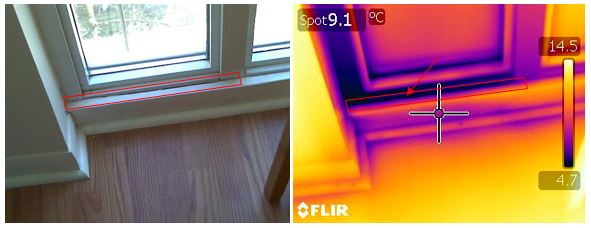
That’s all well and good for preventing condensation, says Albert, but in cases where condensation has taken root over long periods of time, or the above steps are not eliminating the condensation, it pays to call on professionals: “This isn’t something you want to leave unchecked over a long period of time, because the repairs will add up.”

To that end, building envelope professionals like Albert will work with mechanical engineers to evaluate those HVAC systems to make sure they’re both working properly and working in concert with the building envelope system. They can also perform infrared thermography scans, conduct air leakage tests, carry out thermal reporting, and review building designs to find the root cause of the issue.

“There’s always the possibility that the walls or windows weren’t constructed properly to begin with, in which case we’d move to a repair or retrofit,” Albert notes, adding, “Of course, being proactive about condensation is a better bet. That’s why we also work with developers in the early stages of a development to assist in design detailing and specification during the design phase to reduce the risk of condensation in the first place.”

Condensation may not look like much of a problem at first glance. Still, like all building performance issues, it pays to take notice before the problem spreads.

Jack Albert is an Associate with RJC Engineers’ Building Science and Restoration. Learn more about RJC’s Building Science practice at rjc.ca.

CDC warns of exotic ticks spreading across the U.S.

Asian longhorned ticks, which are known to carry a variety of pathogens, are spreading across the United States (U.S.), according to the Centers for Disease Control and Prevention (CDC).

Nine states have reported finding the tick on a variety of hosts, including people, wildlife, domestic animals, and in environmental samples. The states include New Jersey, Arkansas, Connecticut, Maryland, North Carolina, New York, Pennsylvania, Virginia, and West Virginia.

The CDC said it is investigating how the fast-multiplying tick spreading could impact the U.S.

“The full public health and agricultural impact of this tick discovery and spread is unknown … We are concerned that this tick, which can cause massive infestations on animals, on people, and in the environment, is spreading in the United States,” Ben Beard, deputy director of CDC’s Division of Vector-Borne Diseases, said in a statement.

Health officials do not know whether the longhorned tick is capable of transmitting Lyme disease, but it has been shown in Asia to spread other serious diseases such as SFTS virus and the pathogen that causes Japanese spotted fever. In other parts of the world where the Asian longhorned tick is common, it is a serious threat to livestock. In some regions of New Zealand and Australia, this tick can reduce production in dairy cattle by 25 per cent.

Visit the CDC’S website to learn what you need to know about Asian longhorned ticks and how to protect against tickborne diseases.

Photo courtesy of Centers for Disease Control & Prevention. 

Flood recovery in four steps

Immense flooding occurred across Canada this summer. The Greater Toronto Area experienced heavy downpours, while cities in central and northern Alberta were evacuated due to flooding. These are just a few examples of the increasing severity of natural disasters.

Whether a result of global warming, urban expansion or inadequate city planning, one thing is clear: the potential for water-related disasters is real.

But it doesn’t take big storms to cause major problems for a residential condo tower. In fact, smaller scale events such as fires, burst pipes, or power outages can be extremely challenging for a number of reasons.

Perhaps most important is the leadership structure in residential towers. Condos typically don’t have the same type of central management as office buildings, nor are they guided by the same regulations. This can create a great deal of confusion when it comes to developing and maintaining emergency response processes.

So, how can these situations be handled in condo buildings? There are four basic steps that those responsible for a property need to take to help manage disasters effectively to get residents back into their units as soon as possible.

1. Establish leadership

Every good military and police operation has a strong central command, because it helps control the flow of information and the allocation of resources. Good disaster response is no different.

Defining jurisdiction will help prevent paralysis following a flood and improve the chances of effective management of the recovery process. When a condo building’s parking garage is flooded, who manages the disaster? Is it a property manager? The condo board? Or is there a separate committee that deals with these situations?

Before a condo is hit with an unexpected event, establish who is responsible for managing what. Then clearly communicate this to residents to streamline the response process. Also, make residents aware of where the building’s responsibility ends, and the unit owner’s responsibility begins.

2. Develop and test plans

Office buildings are mandated to develop emergency preparedness plans and conduct evacuation drills. But that’s not always the case for condo buildings. Condo buildings are required to test and maintain a working emergency alarm — nothing more.

A working bell is inadequate preparation in the event of a flood. Often, the elevators will be shut down, and residents — confused and panicked — will stampede down the stairwells. This is an extremely dangerous situation, especially if elderly or residents with accessibility needs are unable to make it down the stairwells unassisted. Keep an up-to-date list of residents detailing their requirements in the event of an evacuation.

Developing and testing an emergency preparedness plan is undoubtedly in the best interest of both the property manager and residents. With this prepared and tested, when a disaster hits, condo buildings should immediately put that plan into action. This includes issuing clear evacuation orders to residents and enabling the flow of people out of the building in a safe, controlled manner.

3. Communicate next steps

The first thing to break down during an emergency is communication. Having clear and strong leadership helps, but much more can still be done.

Residents should know what will happen after an evacuation order is issued and who to contact about next steps. The condo board, the property manager, or whoever is in charge, needs to distribute news via their website, newsletters, social media, or some other agreed upon vehicle so that residents are aware of the situation in their building. Also, pre-determine alternate meeting places so residents know where to get in contact with management.

4. Mobilize resources

After a disaster hits a condo building, specialized resources should be quickly mobilized to properly mitigate water damage such as mould and start a safe and healthy path to recovery. Depending on the size of flood, these resources could include professional technicians with water pumps, power generators, and dehumidifiers.

Management should have a professional restoration provider on speed dial who will arrive immediately, assess the situation and enact an emergency mitigation plan. The sooner this process begins, the sooner residents can begin returning home. The best scenario is having a partnership with a disaster restoration company already in place.

Failure to bring in specialists could result in individuals taking incorrect actions such as using electricity in a flooded unit, possibly endangering residents as well as lengthening the recovery timeline. Often, these professional service providers will be able to map out and track the progress of the damage, therefore speeding up the insurance claim process.

When it comes to disaster management in condo buildings, the mandated minimum is far from good enough. By establishing leadership, developing and testing plans, communicating next steps and mobilizing resources, condos will be far better equipped to respond to disaster and restore their properties.

Also: Share flood preparation tips with residents

Although flooding usually occurs in basements, it can also affect the individual units of a condo. Share these tips with residents to help mitigate flood damage in their unit:

  • Raise large appliances onto wood or cement blocks. If possible, raise electrical panels, switches, sockets, wiring and heating systems — or otherwise protect them with a floodwall or shield.
  • For extra precaution, install a water alarm for early warnings about the accumulation of water.
  • Turn off the electricity in flood-prone areas of the unit if a flood is expected in the area.
  • Create a bug-out bag. A change of clothes, bottled water, non-perishable food, first aid kit, and cash are a few things that residents should pack in case of an evacuation.
  • Talk to condo owners about flood insurance to ensure they have adequate coverage. Standard insurance may or may not cover floods caused by water overflowing from lakes, rivers and other bodies of water (called overland flooding) but could be available separately.
  • Stay informed. Follow the latest public weather alerts for the area at https://weather.gc.ca/warnings/index_e.html.

As with any disaster, preparation is key.

Margo Malowney is vice president of marketing and communications at FirstOnSite Restoration, a leading Canadian disaster restoration services provider, providing remediation, restoration and reconstruction services nationwide, and for the U.S. large loss and commercial market. With over 1,100 employees, 37+ locations and 20 affiliate partners, FirstOnSite serves the residential, commercial and industrial sectors.

Arthritis takes toll on workplace productivity: study

New research from Arthritis Research Canada (ARC) shows that systemic autoimmune rheumatic diseases (SARDS) place a significant economic strain on the paid and unpaid workforce in the form of excess productivity costs.

The study specifically focused on three types of SARDS: systemic lupus erythematosus (SLE), systemic sclerosis/scleroderma (SSc) and Sjogren’s syndrome (SjS) and found that those with SLE, SSc, and SjS were predicted to incur an additional $4,494, $3,582, and $4,357, respectively, in lost productivity costs each year, over-and-above a similar person without a SARD.

“Approximately two-to-five per-1,000 Canadians have a SARD, which can lead to systemic inflammation, organ damage, and an array of physical and neurocognitive manifestations that can reduce their ability to function, overall health, and ability to perform at work,” said Natalie McCormick, a research trainee at ARC.

According to the recently published study, many working-age participants were not in the paid workforce at all due to issues with their health and of those who were, most productivity costs were the result of working while sick and not from missing work due to illness.

“This means they did not miss any more work than people without one of these diagnoses, but they worked less efficiently,” McCormick said.

McCormick conducted this research as part of her PhD thesis and makes several unique contributions in highlighting the societal burden of SARDs, relative to the general population.

ARC is the largest clinical arthritis research centre in North America.

John Hart wins outstanding CHA project award

The John Hart Generating Station Replacement Project has earned SNC-Lavalin and BC Hydro the Outstanding Project award from the Canadian Hydropower Association (CHA). Numerous elements contribute to a project’s success, and in this case, the sum of all the outstanding and innovative attributes set this hydropower project apart from others.

“SNC-Lavalin and its partners are thankful for BC Hydro’s trust in taking the innovative route of building an underground power station that leaves a small footprint on the environment,” said Royden Heays, vice-president, operations and senior project manager, SNC-Lavalin. “We applied our best engineering, utilized best practices in tunnelling, and employed innovations from the hydro and construction worlds to ensure a successful outcome that leaves a clean energy legacy for generations to come.”

Environmental protection was a primary driver. The original plans had a more traditional surface powerhouse that would require an extensive steel lined section of the power tunnel. Instead, the project now consists of an underground power tunnel over eight metres in diameter, an underground powerhouse that is as tall as a 10 storey building and as long as a football field, and an underground tailrace tunnel and outlet structure.

Operations are now underground which allows for the removal of the three penstocks and the old station from the surface. The 1.8 kilometre long penstock corridor will be returned to a forest setting. Restoration significantly reduces the project’s environmental footprint.

The John Hart project near Campbell River is North America’s first public-private partnership (P3) project in the hydro sector. SNC-Lavalin created a special purpose general partnership (“InPower BC”) to enter into a project agreement with BC Hydro to partially finance, design, build a new generating facility and maintain it for 15 years.

St. Regis Hotels and Resorts marks Canadian debut

The opening of Toronto’s newest luxury hotel – the St. Regis Toronto – on Nov. 28, marks the luxury brand’s debut in Canada. Owned by Innvest, the new hotel is located in the former Toronto Trump Tower.

The 65-story hotel features 258 guest rooms, designed by Chapi Chapo Design. One hundred and twenty-four of the rooms are luxury suites – the most suites of any luxury hotel in Canada – according to a press release. The luxury hotel also houses Astor Lounge, a lobby-café counter and living room-style space and a two-storey grand bar and restaurant offering a menu of contemporary American cuisine with French technique called LOUIX LOUIS. DesignAgency designed the ground floor lobby, cafe and Astor Lounge, and LOUIX LOUIS, the 31st-floor restaurant.

The hotel also features a spa that includes an infinity-edge saltwater lap pool with panoramic views of the Toronto skyline and state-of-the-art fitness centre featuring a movement studio for yoga and pilates. The hotel’s 12,000 square foot event spaces can accommodate gatherings of all kinds, from executive meetings to extraordinary celebrations.

“The St. Regis Toronto will offer guests unmatched accommodations, personalized service and incredible amenities in one of the world’s most exciting destinations,” said Tim Terceira, general manager of The St. Regis Toronto. “Enriching the local luxury hospitality landscape and introducing a new era of glamour, The St. Regis Toronto looks forward to sharing the St. Regis experience with both guests and locals.”

The St. Regis Toronto is the 62nd St. Regis hotel in the world.

CSLA ratifies commitment to climate adaptation

The nine regional, provincial and territorial associations that comprise the Canadian Society of Landscape Architects (CSLA) have ratified the International Federation of Landscape Architects’ (IFLA) historic Global Accord on adaptation for a changing world.

Initially ratified by the IFLA World Council (comprised of representatives from 76 national associations from the IFLA World Regions: Americas, Europe, Africa, Middle East and Asia-Pacific) the Accord establishes three guiding principles for planning and design decision-making and encourages collaboration across disciplines and geographic and national boundaries.

The CSLA was the first national association to ratify the Accord, and is also the first to have completed ratification by all its regional, provincial and territorial components including:

  • Alberta Association of Landscape Architects
  • Association des architectes paysagistes du Québec
  • Atlantic Provinces Association of Landscape Architects
  • British Columbia Society of Landscape Architects
  • Manitoba Association of Landscape Architects
  • Northwest Territories Association of Landscape Architects
  • Nunavut Association of Landscape Architects
  • Ontario Association of Landscape Architects
  • Saskatchewan Association of Landscape Architects

“The CSLA component associations’ approval of the accord is a clear demonstration of Canadian landscape architects’ commitment to climate adaptation,” said Colleen Mercer Clarke, chair of both the CSLA’s Committee on Climate Adaptation and the IFLA Climate Change Working Group.

“Canadian landscape architects understand that our greatest contributions to ensuring a prosperous future are vested in the creation of human societies characterized by an enhanced capacity for resilience, a willingness to transform to a better state, and a commitment to ensuring the long-term sustainability of environments, cultures and well-being.

The IFLA promotes the landscape architecture profession collaborating with allied built-environment professions, and demanding the highest standards of education, training, research and professional practice.

As a leading international body, IFLA is dedicated to the promotion of a globally sustainable and balanced living environment and the enhancement of well-being in human communities. Through the Global Accord, IFLA will provide leadership to demonstrate the human capacity for innovation in facing the challenges of today while preparing for an everchanging future.

REMS announces launch of sustainability program

Colliers Real Estate Management Services (REMS) has announced the launch of a sustainability program, GreenSpace.

Developed by the REMS sustainability team, the program offers clients, occupants and staff a holistic solution to all their sustainability needs. With buildings contributing up to 35 per cent of Canada’s carbon emissions, GreenSpace affirms its commitment to helping reduce carbon, waste, and water footprints.

“We could not be happier with the launch of GreenSpace. This new program is a testament to Colliers’ commitment to sustainability and focuses on improvements and awareness for our staff, occupants and clients. We are very excited to grow the GreenSpace brand within the commercial real estate community and continue positioning ourselves as leaders in the industry,” said Phillip Raffi, national energy & sustainability manager, Real Estate Management Services.

According to a company statement,  while pursuing LEED certification, Upper Harbor Place I and II in Victoria, B.C. implemented lighting upgrades and HVAC optimization that cut operating costs by $65,000 per year. “Sustainability isn’t just about reducing our impact on the planet. It also translates into significant cost savings.”

The sustainability team plans on launching an internal change management platform, along with a monthly corporate health and wellness newsletter, as part of the GreenSpace program.

Canderel appoints Brett Miller as CEO

The Canderel Group of Companies has appointed Brett Miller as chief executive officer, effective February 18, 2019. Miller is stepping into the role vacated by Jonathan Wener, founder and CEO of the company for 44 years. Wener will remain actively engaged with the firm as principal shareholder and Chairman.

“We are extremely pleased to welcome Brett back to Canderel,” said Wener, in a press release. “Brett is a true entrepreneur and has a remarkable track record in growing real estate companies. I am convinced that he is the right leader to continue to develop the company.”

Miller has nearly 30 years of global experience working with real estate and entrepreneurial firms. He started his career at Canderel, where he held various executive roles dealing in all aspects of real estate. From there, he moved into positions in London, England and Paris, France, before bringing his talents to CBRE, where he served as executive vice president and regional managing director. Most recently, Miller served as CEO of JLL since 2012.

“I am grateful to Jonathan, who has always been a mentor, and I am excited to go back to Canderel where I started my career in real estate,” added Miller. “Canderel has a great pipeline and strong presence in the market. I am looking forward to working with its talented management team to build on this strong foundation.”

$700-mil mixed-use development set for Montreal

Devimco Immobilier, the Fonds immobilier de solidarité FTQ and Fiera Properties have partnered to develop the largest mixed-use real estate project in Montreal’s Quartier des spectacles. The $700-million project, MAESTRIA, is set to rise on the former site of Le Spectrum de Montreal.

MAESTRIA will be comprised of two towers, rising 51 and 53 storeys, and will have access points on Jeanne-Mance, De Bleury and Sainte-Catherine streets. Marketing of the approximately 1,000 condo suites and 500 rental units, ranging from 300 to 2,500 square feet, will begin in February 2019, with construction scheduled to begin by the end of next year.

“We are proud to be building a distinctive, avant-garde property that will help enhance the urban fabric of this booming arts and culture district,” said Serge Goulet, president of Devimco Immobilier, in a press release. “With this landmark project, we intend to maintain the Devimco tradition of creating a living environment with mixed uses that will serve project residents as well as visitors to this highly popular part of Montreal.”

Designed in collaboration with architectural firm Lemay, the development’s design was inspired by the artistic and cultural vibe of the Quartier des spectacles. According to Daniel Arbour, senior partner at Lemay, the building’s design is, “a nod in the direction of the Quartier des spectacles, a project with a powerful identity and a unique signature, with the two tall towers seemingly in motion, like a pair of tango dancers.” He continued: “The design includes, at the 25th-storey level of the towers, the highest walkway between two buildings ever to be built in Montreal, where residents will enjoy a prime view onto every major event held in the Place des Festivals below.”

MAESTRIA’s other amenities include 512 interior parking spaces, green spaces developed to promote urban biodiversity, a semi-Olympic indoor pool with swimming lanes, an outdoor pool with spa, a full Scandinavian thermal pool and spa circuit, a 4,800-square-foot fitness room, a virtual golf room, a games room for children, a library and business centre, a movie theatre, multipurpose room and games room, music rehearsal studios and creative studios. The development will also feature a 51,000-square-foot mini-plaza with retail space, featuring restaurants, cafes and shops, and two sky lounges with terraces and a SkyBox, which will overlook the entire Esplanade des Festivals/Place des Arts complex and connect the two towers.

Along with the project, Devimco Immobilier, the Fonds immobilier de solidarité FTQ and Fiera Properties also plan to contribute to the community, but according to Goulet, discussions are underway to determine how to best use the space, for example, as recording studios or arts and culture presentation venues. In addition, the partners made donations totalling $100,000 to promote children’s welfare.

Demand for rental housing continues to rise

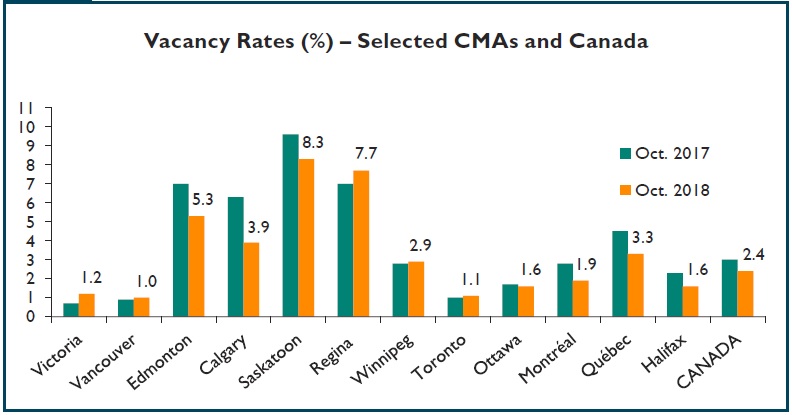
Demand for rental housing across Canada continues to rise according to CHMC’s latest Rental Market Report, released annually in November. This growth in demand stems from a variety of factors, including increases in international migration and youth employment, as well as the changing needs and housing choices of an aging population.

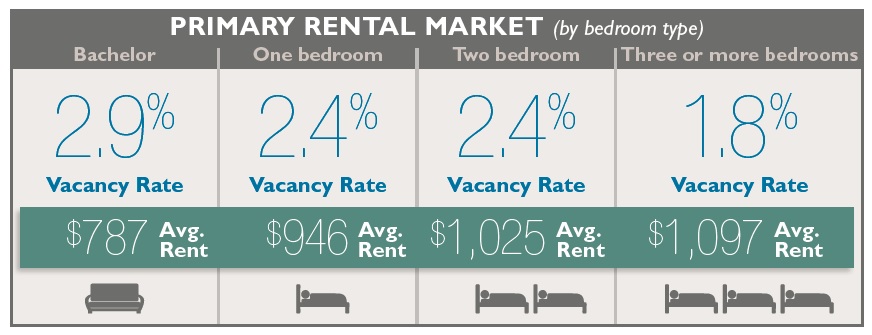
With growth in demand outpacing growth in supply, the overall vacancy rate for rental apartments in Canada fell to 2.4 per cent. Regionally, vacancy rates fell in Quebec, Alberta, Saskatchewan and the Atlantic region, while in Ontario, British Columbia and Manitoba, they rose slightly.

“The decrease in vacancy rate was attributable in part to the strong increase in international migration,” said Aled ab lorweth, Deputy Chief Economist. “This factor combined with the growth in youth employment and the aging population drove up demand for rental housing.”

vacancy rates Canadian cities

Vacancy rates decrease in most provinces

In Quebec, the vacancy rate fell significantly, from 3.4 per cent in 2017 to 2.3 per cent in 2018. Because of Quebec’s large rental housing stock compared to other provinces, the decrease there contributed greatly to the decrease in the national rate.

Meanwhile, in the oil-producing provinces of Saskatchewan and Alberta, rental markets continued to recover from the 2014 oil crisis. In both provinces, rental demand was boosted by stronger net migration. This greater demand, combined with the weaker growth in supply in these two provinces, drove down vacancy rates. In Alberta, vacancy rates went from 7.5 per cent in 2017 to 5.5 per cent in 2018. In Saskatchewan vacancy rate went from 9.3 per cent in 2017 to 8.7 percent in 2018.

In the Atlantic region, all provinces saw their vacancy rates fall. In Newfoundland and Labrador, though, while the vacancy rate fell from 6.6 per cent to 6.0 per cent, this represented a decrease of only about 20 units. Such relative stability was due to steady supply and demand, reflecting stagnant economic activity and moderate employment growth.

Ontario (1.8 per cent versus 1.6 per cent in 2017) and British Columbia (1.4 per cent versus 1.3 per cent in 2017) saw their vacancy rates increase slightly, while remaining amongst the lowest in the country.

Manitoba, for its part, experienced a small increase in its vacancy rate, which rose from 2.7 per cent in 2017 to 2.9 per cent in 2018.These increases, however, were not enough to offset the downward national trend.

National Averages:

2018 avergae rents across Canada

Source: CMHC 2018 Rental Market Report. Download the complete report here.

FRPO announces 2018 MAC Award winners

The Federation of Rental Providers of Ontario (FRPO) announced the 2018 MAC Award winners at its sold-out gala in Toronto last night.  With a record 1,050 guests in attendance, the MAC Awards is the largest event in Canada celebrating achievements in the rental housing sector.

This year’s MAC Awards winners include:

Lifetime Achievement Award – Eugen Drewlo, Drewlo Holdings

Best Property Management Website – Quadreal Property Group – www.quadrealres.com

Advertising Excellence for a Single Campaign – Vertica Resident Services – The Livmore

Advertising Excellence – Social Media – Greenwin Inc.

Best Lobby Renovation – CAPREIT – 18 Panorama Court, Toronto

Best Curb Appeal – Starlight Investments – 77 Parkwoods Village Drive, Toronto

Best Suite Renovation under $15,000 – Briarlane Property Management – 265 Dixon Road, Toronto

Best Suite Renovation over $15,000 – Timbercreek Communities – 165 Bathurst Street, Toronto

Rental Development of the Year – Medallion Corporation – 2 Vena Way, Toronto

Amenities Excellence – Shiplake Properties – 99 Davisville Ave & 118 Balliol St, Toronto

Congratulations on behalf of Canadian Apartment and the REMI Network.


How to make social media work for a cleaning business

In a highly competitive (and oversaturated) industry, it’s hard for a cleaning company to get noticed. Gone are the days when a business service contractor could rely on obtaining its clients from just one channel. Today, it’s all about exposure and the best place a cleaning company can be seen is online.

Why?
Because that’s where the majority of prospects are looking for service providers. If a cleaning company doesn’t have a strategy for marketing itself online and leveraging social media, then it is in danger of being left behind.

But how can social media work for, and grow, a cleaning business?
Imagine scrolling through Facebook posts, looking at all the great food and travel photos, and pictures of cute animals and kids doing funny things. Then, the company post pops up – a before and after photo of a bathroom that was cleaned. Sure, the cleaning team did a great job. But, given the photo competition, it’s not compelling enough to stop Facebook users from scrolling past it, which is the whole point of the social media post – to get people to notice the company, take the time to read about its endeavours and interact with the business.

STOP THE SCROLL
One of the biggest issues with marketing cleaning businesses online is that owners often think people are fascinated by the great cleaning results achieved. Sorry to be the bearer of bad news but they are not. There is nothing sexy about the cleaning business. People don’t wake up in the morning excited about finding or hiring a cleaning company. All they care about is a clean business or facility. Once a business service contractor understands what people aren’t looking at, then it can market much more effectively than its competitors (who are still posting boring before and after pictures that no one wants to see).

So, what’s the secret to getting noticed?
It’s focusing on the client – their problems, frustrations and concerns. Knowing the company’s ‘ideal’ client is especially useful in this situation.

All cleaning business owners want to grow their client list because it translates into increased revenue. The main way to attract more clients is through effective and compelling marketing. Since marketing is expensive, it’s important to ensure the right message is conveyed to the people who are most likely to buy what the company is selling. These same prospects often turn into repeat customers, refer the business to family and friends, and spend more money than a ‘typical’ client.

IDENTIFY THE ‘IDEAL’ CLIENT
The main reason a client chooses to do business with a particular company is to fulfil their (unmet) wants or needs. Accordingly, an astute business owner will find out what they are and how to best satisfy them. To do this, it’s important to ask questions and really listen to the responses. This will provide a clear, concise understanding of the wants and needs of the ‘ideal’ client, which is necessary to plan effective social media posts that are aimed directly at prospects for maximum impact online.

What is the ‘ideal’ client looking for?
This will obviously vary depending on the client. A facility manager, for example, is responsible for ensuring the building and its services meet the needs of the people that work in it, so a post on how to put a stop to restroom complaints will be well-received. The article not only focuses on their duties but tackles a real-world issue and provides a possible solution.

STAY CONSISTENT
What is posted is not only important; the frequency is, too. If engaging prospects on Facebook and LinkedIn (the two social media platforms that should be used at a minimum), it’s ideal to post on each once per day, if possible. The ‘lifetime’ of a post is quite short, so posting just once per week won’t leave a lasting impression nor will it maximize engagement. On the flipside, posting too often runs the risk of becoming a nuisance.

But remember, content quality is more important than quantity, so don’t post for posting’s sake. Instead, create a realistic social media posting schedule, with specific days of the week and times that content will be placed online, and stick to it. If a cleaning business can remain focused on reaching and engaging its ‘ideal’ client, social media activities will soon pay off.

Lisa Macqueen has more than 20 years’ experience working in the cleaning industry. Her business, Cleaning Marketer, coaches cleaning business owners on how to attract more prospects, make more sales and keep customers longer using modern ideas and strategies specifically developed for the cleaning industry. Lisa is also director of sales and marketing at Cleancorp, a commercial cleaning company based in Sydney, Australia.

A spectrum of possibilities

The 1980s was a decade during which the beauty industry boomed. Makeup sales rose thanks to the trend toward dramatic eyes, heavy foundation and highly contoured cheeks, and hair colouring became an acceptable practice. Not surprisingly, what was in favour in one industry affected another, and carpet dyeing became just as popular as changing the hue on one’s head; at least, that was the case south of the border.

“It was a great way to refresh the look of what was already underfoot and it cost 20 per cent of new carpet,” explains Spectrum Building Services’ founder and CEO Fred Rosen, who lays claim to introducing the service to the Canadian marketplace.

The former stockbroker latched on to the concept while visiting the U.S. in 1990. Looking to take his career in another direction, Rosen was on a quest to find the next best service offering.

“Carpet dyeing was all the rage down there so I thought it would catch on here in Canada,” he says.

Shortly after returning home, Rosen set out to spread the word about his new-found venture – Spectrum Building Services. Armed with his winning business personality, can-do attitude and a trained carpet dyeing and cleaning technician, he literally went door-to-door to appeal to potential clients. Rosen’s efforts soon paid off and his fledgling company attracted much interest from the condominium and hotel sectors.

“I did some extensive carpet dyeing for the Royal York (now the Fairmont Royal York) to begin,” recalls Rosen, who has provided carpet cleaning services to the luxury downtown Toronto hotel for upwards of 25 years now. “The hotel had more than 1,000 bleach stains on its high-end wool carpet, likely caused by inadvertent or incorrect use of a cleaning product, which the Royal York just wasn’t going to replace.”

Despite successfully carving out a niche for himself, Rosen soon realized that the company’s key service offering wouldn’t sustain Spectrum in the long-term. So, like any astute entrepreneur, he reprioritized, relegating carpet dyeing to a specialty service so that he could focus more attention on the carpet cleaning side of the business.

“Carpet dyeing just wasn’t going to revolutionize the industry like I had originally thought,” says Rosen reflectively.

“But what it did do,” he continues, “was get me in the door to show clients our high level of service, both in terms of quality and reliability, which then led to subsequent carpet cleaning work.”

With time and experience, Spectrum expanded its offerings to become a full-service flooring maintenance and emergency restoration company. Its growing team of highly trained Institute of Inspection Cleaning and Restoration Certification (IICRC) approved specialists are equipped to tackle just about any property crisis – floods, fires, mould, hoarding, grow-ops and trauma – on top of providing professional carpet cleaning, and flooring installation, upkeep and repair.

“It was a natural progression,” says Rosen, noting 35 per cent of the business is now geared to emergency service work. “Our existing clients felt comfortable with me and others knew of the company’s reputation for getting things done right the first time.”

As a result, Spectrum’s existing client base has grown, too. While the majority of work still comes from the condo and hotel sectors (70 per cent), the company also provides services to multi-residential, industrial, office, retail and other commercial facilities, as well as institutions (hospitals, schools, student residences and seniors’ centres). Today, the building service contractor can be found in more than 800 buildings across the Greater Toronto Area and beyond.

With little sign of slowing down, Spectrum is expected to open two new offices in Ottawa and London, Ont., in the near future to accommodate growing consumer demand.

“Business is great – we’ve grown 20 per cent a year over the last 10 years – but we’re looking for more,” says Rosen.

That includes adding fan coil maintenance to its list of services since these HVAC components are a breeding ground for mould. Though Rosen hasn’t yet committed to this offering, he says it would complement the company’s existing mould remediation program, which “went from nothing eight years ago to well over $1 million in yearly revenue.”

THE GIVING TREE
Despite his success, Rosen has remained grounded and true to his convictions, one being to “treat others as you would want to be treated.” This pertains not just to clients but also staff, and accounts for why his original employee is still part of the Spectrum team.

Another long-held belief is that companies should give back to the environment to help ensure a sustainable existence for all.

Early on, Rosen committed to sourcing and using 100 per cent natural, biodegradable cleaning products, such as Benefect, Ecogent and Chemspec. Benefect is a disinfectant made purely from plant extracts that effectively kills 99.9 per cent of all germs. The antimicrobial action of Benefect’s essential thyme oils also prevents germs from building up a resistance to them. Ecogent is a line of non-toxic, general-purpose cleaning products made from renewable substances that clean to a scientific standard to promote public health. Chemspec is a green certified, detergent-free, minimal-residue carpet cleaner.

In 2003, the company partnered with Tree Canada, a leading national tree planting charity that’s taking concrete steps to fight climate change and preserve the country’s green spaces. Through its Grow Clean Air program, citizens and businesses can offset their carbon pollution. Participation has allowed Spectrum to obtain a net zero carbon footprint, making it the first and only certified carbon neutral cleaning company in Canada.

“Carbon pollution is a serious threat,” says Rosen. “To reduce harmful greenhouse gas emissions, we use vehicles powered by a four-cylinder engine and have introduced an electric car to our fleet.”

Tree Canada determines the number of trees needed to be planted to reach carbon neutrality by calculating how many tonnes of carbon dioxide are emitted by a company’s activities. This involves accounting for all direct and indirect emissions, including paper usage, waste disposal and outsourced activities.

To date, the organization has planted more than 82 million trees thanks to the support of eco-conscious businesses like Spectrum.

SUCCESS FOR ALL
Looking back on the past 28 years, Rosen credits Spectrum’s success to his strong yet fair leadership style, strong work ethic and perseverance, and the company’s ability to provide exceptional customer service in a timely manner, foster long-term relationships and remain ahead of the curve.

“You have to be able to find innovative, technologically sound solutions to customers’ problems,” he says, noting Spectrum utilizes a unique dual-process carpet cleaning methodology that is designed to revitalize carpets by removing stains from deep within the pile, strengthening the carpet fibres and prolonging the life and durability of the product.

Rosen also acknowledges that while he was the brainchild behind Spectrum – the name chosen to reflect the wide range of services he planned to offer, but has since come to reflect the business’s diverse clientele and various backgrounds and skillsets of its employees – the company wouldn’t be where it is today without its dedicated staff.

“I invest in training and development because it not only ensures a high quality of work, but it makes employees feel valued and appreciated,” says Rosen, noting each staff member must partake in and pass a 60-day intensive in-house training program before going out in the field. “The goal is to foster a desire among employees to want to stay with the company a long time, which is necessary as they’re an invaluable part of the Spectrum team.”

Clare Tattersall is the editor of Facility Cleaning & Maintenance.

Photos by Robyn Russell.