Articles Archive - Page 234 of 928 - REMINET
REMI

Mississauga reports surge in building permit approvals

Incoming data from the City of Mississauga reveals 1,088 building permits were issued for new construction in the first quarter of 2023, which totals 2,171 residential units.

The news comes on the heels of Ontario’s plan to tackle the housing crisis, along with a record-setting number of permits approved in 2022.

“We’re doing everything we can to make it easier for the building industry to get shovels in the ground and cranes in the sky,” said Mayor Bonnie Crombie. “Mississauga is ready and willing to grow, and as we do, we’ll keep working with our development partners to ensure we deliver walkable, livable, communities that meet the needs of those moving to Mississauga for the first time – and those who have been living here for many years.”

The City said it approved about 80 per cent of all development applications in the last three years and currently has 39 cranes in the sky. Most of the permits from 2022 are for residential homes, but there was a big jump in non-residential construction due to the strength of Mississauga’s economy.

As it stands, the permits approved/issued for new buildings in 2022 include: 6,491 residential units; 8 commercial buildings; 25 industrial buildings; and 4 institutional buildings (hospitals, schools, churches, etc.).

Andrew Whittemore, Commissioner, Planning and Building, expects activity to continue as the city rolls out Growing Mississauga, the recently approved housing plan that supports provincial targets by outlining five goals and 23 actions to get more affordable homes built and streamline approvals.


Stéphan Déry takes helm at Canada Lands Company

Stéphan Déry has been appointed president and chief executive officer of Canada Lands Company. He began a four-year term at the helm of the federal crown corporation on April 12, bringing extensive experience in managing public real property to the role.

Most recently, he was the assistant deputy minister of real property services at Public Services and Procurement Canada (PSPC), overseeing property services for federal departments and agencies. He is the current president of The Workplace Network, a global association of senior executives in public sector real estate, and sits on the board of directors of the Canada Green Building Council.

He’ll now be overseeing the Canada Land Company’s two business arms, as a real estate developer and the manager/operator of “uniquely Canadian” attractions such as Toronto’s CN Tower and the Old Port of Montréal. That includes responsibility for the implementation of a new strategic plan with an eye to financially sustainable growth, addressing climate change and the corporation’s mandate to make a Canada-wide social impact.

“His depth of expertise and knowledge will serve our organization well as we continue to work in the best interest of our shareholder, the government of Canada and Canadians,” says Kaye Melliship, chair of Canada Lands Company.

B.C. to pilot digital permit process in 2024

The Government of British Columbia is investing in digital permitting and the construction industry to make the process quicker and more collaborative.

“Faster approvals and builds will unlock more homes for British Columbians sooner, easing some of the pressure on our strained housing market,” said Ravi Kahlon, minister of housing.

The Ministry of Housing, with support from the Ministry of Citizens’ Services, is working on digitizing the BC Building Code and the building permitting process with pilots in select local governments in 2024.

The BC Building Code is currently only available in print or PDF format. The digitally enhanced code will include features that will make it faster and easier for builders and building inspectors to understand and interpret the information. It will also allow for more automation during building permit reviews.

The building permitting process currently varies widely across local governments: some use digital tools and some rely on paper. The provincial government’s work to digitize the process will include working with local governments.

The province is also investing in Digital, previously known as the Digital Technology Supercluster, with a $9-million, three-year grant to accelerate the development and adoption of innovative technologies in the construction sector.

Digital is a B.C-based independent, not-for-profit organization that focuses on the development, adoption and deployment of Canadian-made digital technologies through a unique collaborative model that brings together Canadian small and medium-sized enterprises (SMEs), multinationals and academia.

“Utilizing technology is vital to cutting wait times and making government more effective. We are pleased to see these further efforts being made across the province. Vancouver recently moved over to a fully digital permit system, where builders can apply, pay and receive their permit electronically through our ePlan system. Vancouver is proud to be a leading government in embracing technology, and we are excited to see other jurisdictions doing so as well,” said Ken Sim, mayor of Vancouver.


Calgary Stampede Trail breaks ground

The Calgary Municipal Land Corporation (CMLC) and the Calgary Stampede, partners in the delivery of the Rivers District Master Plan, announced the redevelopment of Stampede Trail (formerly Olympic Way) has broken ground.

The $20M project, funded through CMLC’s Community Revitalization Levy, will be built in two phases to enable ongoing operations at the venues on Stampede Park as well as construction at the BMO Centre expansion. Crews will build Phase 1 between 14 Ave and Agriculture Trail in 2023, and will build Phase 2 between 12 Ave and 14 Ave S.E. in 2024. The project is expected to be completed in late 2024.

One of the principal urban strategies outlined in the Rivers District Master Plan, Stampede Trail will connect 12 Ave S.E. to the forthcoming 17 Ave S.E. extension, and is envisioned as the primary retail corridor of The Culture + Entertainment District. It’s a flexible corridor that serves day-to-day traffic needs and an urban place that prioritizes people, place, entertainment, retail and active transportation. This ‘festival street’ can also be closed to traffic to function as an urban community space for special events.

“This is an important investment in The Culture + Entertainment District, adding to the more than $600M in major city-building projects already underway, and it’s an exciting next step toward realizing the vision set out in the master plan,” said Kate Thompson, president and CEO of CMLC. “We envision Stampede Trail as the heart of The C+E, the place where guests at the BMO Centre, the future BMO Convention Centre hotel, the Saddledome and other future developments will come to connect after a conference or to celebrate before the big event. It’s a critical connector and a gathering place all in one.”

The road is uniquely designed to enable its many different purposes, including day-to-day pedestrian, cycling and vehicle traffic, high-volume traffic access for major events, and pedestrian-only special event use. Interlocking brick pavers provide both an elevated user experience and a sense of place, catenary lighting delivers ambience that distinguishes the road from other city streets, and rolled curbs enable a smooth transition from daily use to festival condition for special events.

“Stampede Trail is yet another key project that will help us welcome the world to Stampede Park, and make it a year-round gathering place for convention goers, event attendees and our community, with world-class restaurant, retail and patio offerings,” said Joel Cowley, CEO of the Calgary Stampede. “The ability to transform the roadway into a pedestrian-only community space gives us the flexibility to host the kind of events that the Calgary Stampede is known for, and that is embedded in the DNA of The Culture + Entertainment District.”


Less paperwork for dual LEED and WELL applicants

A new agreement means less paperwork for applicants pursuing LEED and WELL certification for the same building. The Green Business Certification Inc. (GBCI) and the International Well Building Institute (IWBI) have introduced a streamlined process for submitting documentation.

“It builds upon our shared commitment to driving positive health outcomes across the built environment,” says Peter Templeton, president and chief executive officer of GBCI and the U.S. Green Building Council.”

New guidance documents and online tools highlight the credits that are applicable for both programs and create a pathway for claiming them. WELL version 2 can be matched with LEED version 4 or v4.1 for building design and construction (BD&C) or interior design and construction (ID&C).

“This new pathway strengthens synergies between LEED and WELL,” says Rachel Hodgdon, the IWBI’s president and chief executive officer. “This strategic partnership underscores that human health and planetary health are inextricably linked.”

March data shows rent growths are reaccelerating

The average asking rent for vacant units in Canada shot up 10.8 per cent from a year ago, according to March data from Rentals.ca and Urbanation. Average asking rents were up 1 per cent month over month (the first monthly increase since November) pushing the year-over-year percentage growth back into double digits.

“Spring arrived with a highly competitive rental market in Canada, driven by a record population increase of over 1 million people in the past year and low homeownership affordability after last year’s spike in interest rates,” said Shaun Hildebrand, president of Urbanation. “With supply unable to keep up with current levels of demand, expect further upward pressure on rents in the coming months.”

Toronto finished second on the list of most expensive cities for March, where average rent for a one-bedroom unit came in at $2,506 and $3,286 for a two-bedroom. Year over year this represents an increase of 22.2 per cent and 19.7 per cent respectively.

For the second straight month, Calgary had the fastest increasing rents among Canada’s largest cities in March for condominium rentals and apartments. Rents rose 24.9 per cent year over year to $1,890.

The March data shows that Vancouver remains the most expensive rental market in Canada, where annual rent growth reached 18.7 per cent to $3,146 for all property types. Meanwhile, average rents in Ottawa, Edmonton and Montreal increased 15.4 per cent, 11.2 per cent and 10.9 per cent respectively for both condo rentals and purpose-built apartments.

Rents by province

Nova Scotia average rents rose 20.8 per cent annually to $2,167 for condo rentals and apartments, taking top spot for fastest growth among the provinces in March. Ontario followed with average rents up 17.1 per cent year over year to $2,401 for both purpose-built and condominium apartments.

Alberta and British Columbia had nearly identical annual rent increases of 13.4 per cent and 13.2 per cent respectively for condo rentals and apartments. Alberta’s average rent in March was $1,461, while British Columbia reached the highest of all the provinces at $2,541.

In Manitoba, average rent rose 12.6 per cent to $1,463 in March while Quebec rents were up 12.2 per cent to $1,839.

Other takeaways:

  • Private room and shared-accommodation rentals have gained popularity as rents have soared over the past year. The average asking rent for single room rentals in Canada was $834 in March, with the highest rents averaging $1,053 in British Columbia and $934 in Ontario. In Vancouver and Toronto, single room asking rents averaged $1,410 and $1,309, respectively.
  • Average rents for purpose-built and condominium apartments increased 10.9 per cent year-over-year and 1.5 per cent month over month to an average of $1,937 in March. For the second straight month, two-bedroom average rents increased the fastest, up 10.7 per cent annually to $2,127, while one-bedroom average rents also saw double-digit annual rent growth, rising 10.1 per cent to $1,749. Average rents for three-bedroom units were up 6.8 per cent year over year to $2,402, while studio average rents increased 4.9 per cent to $1,395.

The National Rent Report charts and analyzes monthly, quarterly and annual rates and trends in the rental market on a national, provincial, and municipal level across all listings on the Rentals.ca Network for Canada. The newly released March data includes single-detached homes, semi-detached homes, townhouses, condominium apartments, rental apartments and basement apartments.

Replacing your HVAC system

Heating and cooling are a big part of facility management, so when it comes time to replace your HVAC system, you need all the information to make the right decision for your building. While the investment certainly pays off over the long haul, it’s a hefty outlay, so it’s crucial that you consider everything carefully before taking that step.

Is replacement necessary?

How old is your current system? The predicted lifespan of a furnace is about 15 to 20 years and air conditioning units last about 10 to 12 years. If your equipment is significantly newer than these numbers, perhaps a repair can be conducted or there’s a warranty you can consult. In this case, it may be worth having an inspection done to confirm that replacement is in fact necessary.

If you’ve ascertained that you do need to replace your unit, there are several factors to consider before making your choice.

What do you need?

Are you sure that the system you have is right for your building? Rather than going back with the existing system, take the time to assess your building’s needs. If you’ve had issues heating or cooling spaces in the past, this may be a sign that your unit is too small for your needs and a larger one might serve you better.

There are a few other changes you may decide to make to help you save money in the long run:

  • Upgrading to a high-efficiency model can reduce your heating and cooling bills and lessen your impact on the environment.
  • Do your homework, checking whether things like dual pumps, variable speed fans (and more) make sense for your building.
  • Adding smart technology to your system may also be something to consider, so you can use data to allocate your resources better.

RELATED: 2023’s top HVAC trends

Protecting your investment

Once you’ve made the investment in a new system, it’s important to put a plan in place to keep it in good working order and extend the life of that investment. Things like changing the air filters seasonally, and scheduling regular assessments and maintenance will help ensure that your system performs at its best for as long as possible.

Manitoba launches review of accessibility law

The Manitoba government is seeking public input on its Accessibility for Manitobans Act as part of a five-year review of the legislation, which took effect in December 2013.

“Accessibility is a basic human right, yet many people in our province still face significant barriers in their communities and workplaces,” said Families Minister Rochelle Squires in a press release. “Our government is committed to increasing accessibility and hearing from the public is an important part of this work.”

The mandatory review will focus on initiatives already taken under the act and the structures that support it. The public engagement will help Sarah Lugtig, a lawyer who is leading the review, report on the effectiveness of the act and make recommendations to the minister.

Manitobans are invited to provide feedback at http://engagemb.ca/accessibility-for-manitobans-act before May 26.

In-person public forums held this spring will provide accessibility measures such as braille documents, ASL, closed captioning and personal care attendants to assist those with lived experience to participate and share perspectives. An accessible virtual forum will be held later in May.

GTA housing market tightens in March

Realtors in the Greater Toronto Area are noticing more competition among buyers as home sales climbed in March. According to the latest data from the Toronto Regional Real Estate Board, the average sales price surpassed the list price for the first time since May 2022.

“Recent consumer polling also suggests that demand for ownership housing will continue to recover this year, said TRREB President Paul Baron in a press release. “Look for first-time buyers to lead this recovery, as high average rents move more closely in line with the cost of ownership.”

There were a reported 6,896 sales in March 2023, down 36.5 per cent compared to last March. Month-over-month, actual and seasonally adjusted sales were up. New listings were also down year-over-year, but by a much greater annual rate. This points to tighter market conditions compared to last year.

“Lower inflation and greater uncertainty in financial markets has resulted in medium-term bond yields to trend lower,” said TRREB Chief Market Analyst Jason Mercer. “This has and will continue to result in lower fixed rate borrowing costs this year. Lower borrowing costs will help from an affordability perspective, especially as tighter market conditions exert upward pressure on selling prices in the second half of 2023.”

The average selling price was down by 14.6 per cent year-over-year to $1,108,606 and up month-over-month on an actual and seasonally adjusted basis.

“As population growth continues at a record pace on the back of immigration, first-time buying intentions will remain strong,” said TRREB CEO John DiMichele. “Because the number of homes for sale is expected to remain low, it will also be important to have substantial rental supply available. Unfortunately, this is not something we have at the present time. We need to see a policy focus on bringing more purpose-built rental units on line over the next number of years.”

Auditors and annual general meetings

As we emerge from the pandemic, some boards of directors are considering a return to in-person annual general meetings (AGM). As such, it is a good time to consider whether the physical attendance of an auditor is necessary and what alternative methods are available to condominiums.

The role of a condominium auditor

As a starting point, it is necessary to close what we refer to in the industry as the “expectation gap” between what a typical owner believes is an auditor’s professional duties as compared to their actual duties under the Condominium Act of Ontario.

Under the law, an auditor’s professional duty is to provide the owners with their opinion on whether the financial statements are materially correct so that the owners can determine whether they can rely on its contents. The auditor has no control over the financial decisions or operations of the condominium as that is the responsibility of the board of directors. The only power the auditor has is over the content of their report. If the financial statements are not materially correct, the auditor has the power to “qualify” or “deny” their opinion. By doing so, the auditor is able to inform the owners and other readers of any inaccuracies that they have observed.

Some mistakenly believe that an audit is supposed to detect all “wrongdoing” and catch every error. That is neither accurate nor realistic. The primary objective of an audit is to provide an opinion on the accuracy of the overall financial statements, but within a material variance.

At the majority of annual meetings, the auditors are requested to attend to speak to their opinions on the audited financial statements. In the context of a condominium AGM, the presentation given by the auditor is usually no more than 10 minutes in length during which they summarize the findings of their report. After their presentation, the auditor opens the floor to questions from the owners of the condominium.

Auditors are often asked questions about foundational financial concepts that are referenced in their report. This is because the financial literacy of the board of directors, management, and owners can be varied. Since an auditor’s responsibilities are technically limited to answering and commenting on their report, they cannot provide advice or guidance in their presentation regarding anything outside of the accuracy of the financial statement. Pursuant to their agreement, it is the management who have been contracted to prepare the books and records of the corporation. Therefore, it is important that technical and detailed questions about the contents of the financial statements be directed at and answered by management and questions about financial choices be directed to the board of directors.

After the auditor responds to all questions, the auditor is excused from the meeting because any other business during the meeting is outside of the auditor’s scope of work. On average, the auditor will be present in the meeting for about 10-20 minutes.

The practical considerations of the format for an auditor’s attendance at an AGM

There has been an explosion in the number of condominiums in the last 20 years. Ontario, more specifically the Greater Toronto Area (GTA), has the largest number of condominiums within Canada. There are over 12,000 condominium corporations in Ontario as of today. As a result of the exponential growth of condominiums, there is also a shortage of essential suppliers required to service the many condominium corporations in Ontario, including certain maintenance contractors and professional managers. There is also a shortage of auditors that specialize in this industry.

I have consulted with several firms that audit a large quantity of condominium corporations in Ontario. There is a common consensus that it is simply not possible for the auditors to attend every annual general meeting in person. The shortage of staff combined with the increased traffic, especially in the GTA, has made it impossible to facilitate an auditor physically attending every AGM.

In light of the above, the following are alternative options that a board of directors can consider in respect to an auditor’s attendance at an annual meeting:

1. Virtual attendance model: During the pandemic, condominium AGMs were conducted virtually. What started out as a forced measure has revealed itself to be the most efficient way for an auditor to attend annual meetings. Given that the auditor is required for only a short period of time at a given meeting, the auditor can easily log on and off at the requested time, and within seconds attend another condominium’s AGM.

2. Hybrid attendance meeting: If there is a desire to have an in-person component to a condominium’s meeting, a hybrid model to the annual meeting should be considered whereby attendees can attend both virtually and in person. This would not only accommodate the virtual attendance of an auditor, but also assist with any issues with making quorum, a common problem that occurs at in-person AGMs.

3. Virtual attendance by auditor only: Even if the meeting is entirely in person, the board of directors or management can provide the option for the auditor to attend virtually by simply setting up a computer for the auditor to present via videoconference. In my experience, this format has worked well in meetings where this has been implemented, as long as the venue has a solid internet connection.

4. Teleconference attendance: Another option is to allow the auditor to call into the meeting on a phone and broadcast their presentation using a microphone. While the owners cannot see the auditor, it is equally as effective at disseminating the short summary of the audit report and providing responses to the owners’ questions.

5. Written or pre-recorded presentation: A final approach is for the board of directors or management to read a written summary of the auditor’s presentation to the owners at the AGM or for the auditor to pre-record their presentation that is shared with the owners at the AGM. Of course, this would mean the auditor would not be able to answer questions in real time. However, the board of directors or management could either attempt to answer the owners’ questions or compile a list of questions for the auditor to answer shortly after the meeting.

If none of the above formats are acceptable to the board of directors, they could still request that the auditor physically attend the AGM to present their report. However, given the difficulties caused by this approach, it is increasingly becoming a standard policy for auditing firms to charge an additional fee for this level of service. The fee is intended to compensate the auditors for the additional time required for travel and the attendance as compared to if an alternative format was implemented.

There are many aspects of our lives that have become a “new normal” in light of the pandemic. If your condominium has an auditor who acts for many hundreds of corporations, they are likely no longer going to be able to physically attend every condominium’s meeting. The board of directors of each condominium needs to start considering well in advance of the AGM how they want their auditor to present their report and subsequently communicating their preference to the auditor so that they can plan accordingly.

Stephen Chesney, F.C.P.A , F.C.A., is a partner with the firm Yale PGC, LLP Chartered Professional Accountants in Richmond Hill and currently specializes in the auditing of Ontario condominium corporations.


 

Updating your condo’s emergency response plan

As spring temperatures arrive and snow and ice finally recede, condominium managers often face property maintenance issues that arise or were neglected during the winter months. In addition to the regular maintenance tasks required to transition your building from winter to spring, this is also an ideal time to review and update your condo’s emergency response plan (ERP).

An annual review guarantees your plan remains relevant and capable of responding to potential seasonal changing emergencies. Adding an ERP review to your spring checklist will also help your condo be prepared for possible extreme weather episodes.

Building disaster resilience includes developing strong emergency response planning at the community level. The annual review of your condominium ERP prioritizes emergency preparedness and promotes the well-being and safety of building occupants.

The goal of your ERP is to avoid or minimize personal loss, extensive damage, disruption of day-to-day living, and the costs of recovery and restoration in the event of an emergency or disaster. An effective plan for emergency response anticipates risks as well as the implementation of appropriate actions before harmful incidents should occur.

Identify, review and verify

Three fundamental observances—identify, review and verify—serve to establish the process for effective emergency preparedness, and to provide the best possible prognosis for an efficient emergency response. Regular auditing serves to fortify the compliancy and capability of the plan.

Modern condominium infrastructures are sophisticated and typically involve intricate networks of technology and human resources. An annual ERP review must analyze fluctuating risks on a variety of fronts, and address operational logistics which are often interdependent.

Securing pre-approved recovery response plans with outside contractors and restoration specialists is critical to reinforcing the practicality and efficiency of ERPs. Improvising or implementing unplanned response actions for out-of-date scenarios can result in inadequate or potentially damaging outcomes.

Emergency response plans also need to be updated annually for accuracy, and to ensure preparedness and effective response measures are adapted to changing variables.

Reviews should include, but are not limited to:

Communication: Verify clear and effective communication channels will remain available to disseminate critical information to all occupants and stakeholders. Re-evaluate current communication and notification systems.

Notification lists: Review contact information lists to update and verify accuracy of email addresses and/or phone numbers, and check that information for new occupants and personnel is included.

Data and computer requirements: Review protocol for computer backups, data restoration and what procedures are necessary to re-establish critical business processes.

Supply chain: In the event primary suppliers are not available, identify and establish connections for alternate resources to assure the availability and delivery of services and supplies necessary to sustain critical building operations.

Equipment needs: Verify availability of necessary equipment and establish processes for continued operations in the event of emergency shutdowns.

Reviews should also include updated information for all collaborative response entities, including but not limited to:

Emergency responders: fire, police, paramedic, etc.

Community organizations: Canadian Red Cross, Salvation Army, weather services, etc.

Government agencies: Emergency response and management resources.

Utility companies: gas, electric, telephone, etc.

Contracted emergency responders: such as a disaster restoration company.

As part of the ERP review, consider implementing new technology, such as web-based response planning systems. Managers responsible for multiple buildings may also wish to create systematic templates for ERP policies, procedures and practices. These could incorporate detailed and site-specific data necessary for effective emergency response.

Emergency preparedness is a year-round responsibility, and having an up-to-date and efficient response plan in place is essential. Adding the ERP review to your spring maintenance checklist will enhance the emergency preparedness and safety plans for your condominium, and provide security and peace of mind for all concerned.

Daniel Loosemore is chief of sales and operations at ServiceMaster Restore Canada. He and his team support over 70 franchises, delivering emergency disaster restoration services from coast to coast. To find out more, visit ServiceMasterRestore.ca

BuildForce Canada’s new program supports hiring

BuildForce Canada has launched Construction Career Pathways, a new program aiming to connect job seekers and employers across Canada’s construction sector.

The program facilitates 16-week, paid, entry-level work placements on construction sites. No prior industry experience is needed for workers, and employers can take advantage of financial incentives to help offset onboarding costs.

“Construction is at nearly full employment in most regions across the country, and demands are growing as project owners continue to invest in new builds and retrofit their existing projects to respond to net-zero imperatives,” said Bill Ferreira, executive director of BuildForce Canada. “Many companies are finding it hard to hire to respond to those demands, however. Labour force constraints are cutting across many industries.

Construction Career Pathways was developed to meet the needs of people looking to explore careers in construction, but who have only entry-level skills and experience. The program is ideally suited to a wide diversity of workers, including women, members of Black, Indigenous, and racialized communities, persons with disabilities, newcomers to Canada, and those who identify as LGBTQ2+; people from equity-deserving groups who want to work in construction; young people seeking work experience; and individuals looking for employment or looking to change careers.

For employers, Construction Career Pathways connects small- and medium-sized companies – those with fewer than 500 employees – find entry-level workers who are looking to begin a career in Canada’s construction industry.

A wage subsidy of up to $2,400 per employee is available to businesses that complete their 16-week work placements, with funding provided by the Government of Canada.

Construction Career Pathways is now accepting applications. Placements are available for up to 1,000 workers, with 50 per cent of the program intake allocated to people from traditionally underrepresented groups in the construction sector.


Making the Move to Mass Timber

Recently, Canada and the world have begun to embrace mass timber as a preferred construction material for large building projects. One reason, according to Tom Tong, associate with RJC Engineers, is that there are many new examples of successful mass timber projects showcasing this substance as a safe, versatile, sustainable substitute for more carbon-intensive materials like concrete and steel.

“Working with mass timber has become a lot easier today, thanks to the growing number of fabricators and the numerous out-of-shelf connectors that have been developed and tested,” Tong said. “In addition, 3D modelling, and CNC machining have made it possible for more complicated geometry and better tolerance control.”

What’s more, several governments have begun to promote wood as an important step on the road to decarbonization. Concerns about climate change, and the building sector’s primary role in altering its course, have led to the urgent need for construction materials that contribute fewer greenhouse gas (GHG) emissions. This, coupled with the innovative ideas coming from structural engineers have helped push the boundaries of what can be achieved using wood.

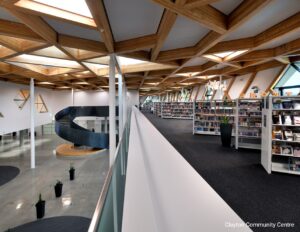
Citing a recent Passive House project in Surrey, BC, Tong pointed out one of the many ways wood’s use in construction has evolved.

Clayton Community Centre“For this project, the innovative structural design pushed the limits of wood-use in the building, proving that mass timber projects don’t have to be as simple as they used to be,” he said. “The wood framing system is typically referred to as a ‘one-way system’ because the wood member is designed and analyzed as a stick frame simply supported on both ends. For the Clayton Community Centre, the desired column grids and architectural intent led us to an innovative scheme composed of a three-member reciprocating wood modular that repeated and expanded in both directions, creating the two-way roof system, and earning the building an award.”

In other words, wood can do a lot more than people think.

TOP 5 BENEFITS

Considering using wood as a construction material in your next building project? Here are just some of the benefits of mass timber:

  1. Energy efficiency – Mass timber in building construction significantly reduces carbon emissions given that wood products and building systems have ability to store large amounts of carbon, unlike other materials.
  2. Speed – Mass timber components can be prefabricated in shops and assembled on-site to speed up the construction compared to the other building materials.
  3. Weight – Mass timber is much lighter compared to concrete, masonry, and steel, meaning the lot the building weight is reduced, which in turn reduces the seismic loading and foundation.
  4. Aesthetics – Wood is universally considered one of the most beautiful, versatile substances.
  5. Increasing safety – Studied and lab-tested, mass timber can achieve required fire resistance due to wood charring, which makes exposed timber structure possible.

Of course, there are still some limitations impacting uptake in large-scale mass timber construction projects. These, according to Tong, include ongoing code restrictions, cost implications, and the need for better methods to protect wood against moisture, shrinkage, and aging. That said, as more successful examples of wood projects continue to emerge, and public knowledge and acceptance of wood as a sustainable, durable building material develop, wood’s popularity will surely rise too.

Find out more about the benefits of wood at RJC.com or contact Tom Tong directly at [email protected]

Adding lawn care to your outdoor maintenance plan

Typically, lawn care officially starts in Canada when we’re sure that there’s no more snow coming, so while that may not always happen in April, it’s right around the corner. Lawn care is an important part of your outdoor maintenance plan; the condition of your lawn affects the impression your visitors get when they visit your facility, so it’s important to get your lawn in great shape for the summer.

RELATED: Why curb appeal matters (and how to create it)

If you have grass or lawn on your property and want to keep it looking nice for your guests and staff, there are a few steps you can take to get it ready in the spring:

  • Light raking is the first step in spring lawn care, removing the dead layer of turf grass (called thatch) that has accumulated over the winter. Break up the thatch with a flexible rake to remove this layer.
  • Assess your soil’s pH in case you need to add soil amendments to get it to an optimal condition to grow grass. Once you know the soil condition, you can add things like limestone to help it get back to its optimal levels.
  • If your lawn has bare spots, consider over-seeding, which means sowing seeds over your existing grass. A starter fertilizer to keep the seeds moist can help seeds germinate and sprout to fill in those areas where the grass is missing. This is a step commonly reserved for the fall, but if your lawn is in desperate need, you can also try it in the spring.
  • Fertilizing is next, but experts recommend a light treatment in the spring and a heavier one in the fall. Your lawn cuttings or mulch can be used as an organic fertilizer at this time of year, or there are several chemical fertilizers available.
  • Weed prevention is also an important part of your lawn care, however, all weeds are not treated the same way. For a preventative approach, you can apply a pre-emergent herbicide, which will form a chemical layer and can prevent the weeds from growing roots. Do not try this if you are seeding, however, as this will also stop the growth of your new lawn.
  • You will need your lawnmower throughout the spring and summer, so be sure that it is in good working order. Check the oil, get a tune-up if necessary, and sharpen the blade so you’re ready when you need to be.

Lawn care is an important part of outdoor maintenance, and staying on top of your lawn will keep it healthy and help to give a good first impression to your facility’s visitors.

Major Port Moody development unveiled

The first Port Moody master-planned residential community in almost two decades is approved and moving ahead.

Construction of Portwood by Edgar Development is anticipated to start this summer. The $1.1 billion project will feature 20 buildings, with most at six storeys, set across five new neighbourhoods with a diverse range of housing, including 138 new market rentals, 328 below-market rentals for BC Housing, approximately 2,000 new market strata, grocery, retail and a new 12,300-square-foot childcare facility.

About 70 per cent of the total development will be green space, including two parks, a 1.5-kilometre walking trail, bike paths and public art.

“We have worked hard to make this a walkable community where pedestrians and green space are prioritized. In a typical development, homes would be fronted by streets and sidewalks. Here instead there will be green space between the buildings, providing common, open areas that will feel like you are living in a park,” ” said Mark Ostry, principal at Acton Ostry Architects.

The 23.7-acre site at 1142 Cecile Drive and 300 Angela Drive will eventually become home to some 4,000 residents and take more than a decade to complete. Unlike most other master planned communities, it will include a rare provision of amenities in the first phase, including the new childcare facility, grocery store, café and 1.5 km multi-use nature trail.

“We’re extremely excited about the plans for this site because people want to live in well-designed, thoughtful communities with access to parks, public art, retail, amenities and recreational facilities and that’s what we are building here,” said Peter Edgar, president of Edgar. “This is a truly complete community with a diverse range of housing, and we believe our collaboration with our many partners can serve as a model for bringing together different housing options in one location while rejuvenating a neighborhood over time.”


Home sales in Quebec City outdo pre-pandemic levels

Condos favoured highly within the residential market for Quebec City last month. Overall, home sales posted above March 2019, with new listings still at historic lows.

According to the Quebec Professional Association of Real Estate Brokers (QPAREB), Quebec City posted 915 residential sales during March, which represents a decrease of 186 transactions or 19 per cent compared to the same period in 2022.

“While the single-family home and plex markets are showing themselves to be slightly more sensitive to the deterioration in financing conditions, the condominium market remains robust, thanks to median prices that are relatively affordable for first-time homebuyers,” notes Charles Brant, QPAREB market analysis director. “The result is a resumption of monthly price growth for condominiums and a significant drop in selling times.”

March highlights

Both Quebec City’s Northern Periphery and South Shore posted a higher decline with 100 and 197 sales respectively. This represents decreases of 26 per cent and 25 per cent. The urban agglomeration of Quebec City experienced a more modest drop of 16 per cent for a total of 618 sales.

Transaction activity is down in all property categories. The small income property category stands out with a drop in sales of -35 per cent. The decline amounts to -23 per cent for condominiums, for a total of 280 transactions. Single-family home sales dropped to 568, a decrease of 15 per cent compared to the same period last year.

A total of 3,201 active listings were recorded in the Quebec City CMA for March, a 32 per cent increase over last year. The single-family category stands out with a 48 per cent uptick in listings. Condos and small income properties follow with increases of 11 per cent and 10 per cent.

Increase in condo prices

The average price of condominiums reached $240,000 in March 2023, an increase of 4 per cent compared to the same period last year. The plex category follows, with an average price of $405,000. Single-family homes remained stable at $350,000.

In the main metropolitan areas of the Quebec City CMA, the dynamic is more variable. The South Shore of Quebec City sits at $340,000 for single-family homes, up 5 per cent from a year ago. The urban agglomeration of Quebec City, reached $350,500. In the Northern Periphery the median price of single-family homes was $355,000, a decline of -13 per cent compared to March last year.


Why flooding season matters for facility maintenance managers

Canada is no stranger to flooding and extreme weather. Even though it’s officially spring, a recent Colorado low system brought a messy week to much of central and eastern Canada, leaving hundreds of thousands in Quebec and Ontario without power after ice storms hit.

While winter’s clutches may still hold firm in some Canadian regions, don’t be fooled; flooding season approaches quickly and without much warning for businesses, residents, and facility maintenance managers.

Canada’s Task Force on Flood Insurance and Relocation states that several million people in Canada are vulnerable to flooding. Overall, flooding has accounted for 40 per cent of weather-related catastrophes in Canada since 1970, according to the Intergovernmental Panel on Climate Change (IPCC).

As a result of climate change, extreme weather is on the rise. In the March 28 federal budget, the government announced new initiatives and a new approach to address the gaps in natural disaster protection and insurance. This is something businesses and organizations, including the Insurance Bureau of Canada, have been clamouring for over the years, with increased intensity.

Spring melt survey

A recent spring melt survey examined Canadians’ concerns, perceptions, and property readiness amid ever-changing weather patterns. It found that fears of flooding and mould are top worries keeping Canadians up at night. Overall, three-in-five people are worried about the damage caused by severe rains and flooding (58 per cent).

As we take a closer look, regional flooding concerns are highest in British Columbia (73 per cent) which endured the historic Pacific Northwest floods in 2021. That disaster saw several communities overwhelmed by rain, rising rivers, road closures, and evacuations. Atlantic Canada, still reeling from Hurricane Fiona, was the second most worried region regarding damage caused by severe rains and flooding (65 per cent). Rounding out the regions were Ontario (58 per cent), Quebec (54 per cent), Alberta (48 per cent), and Manitoba/Saskatchewan (46 per cent).

The survey also asked about disaster-related concerns, and three-quarters of people expressed that they are concerned about the risk of mould after a flooding event, and 24 per cent said their workplace or home has already been affected by mould.

Meanwhile, about one-third of respondents (34 per cent) said the air quality of their workplace is regularly monitored, while about two-thirds (67 per cent) know the places to check for signs of mould in their home or workplace.

Finally, the survey touched on the importance of disaster preparedness. Four-in-five respondents feel all workplaces should have disaster recovery and business continuity plans in place, while only two in five are aware that their workplace has such a plan.

One of the biggest threats to facilities is flooding and water damage. In the spring, when the ground is still frozen, thawing snow and heavy rainfall heighten the risk of water damage to many commercial properties.

Approach to properties and flooding

Leading into the spring melting season, business properties are hit hardest by flooding in the lower levels of buildings where water seeps in through cracks in the foundation that may have developed over the winter. With excess water flowing through sewers and drains, flooding is also a risk from sewer back-ups. Heavy precipitation can result in leaks indoors from the roof while melting ice and snow can create water accumulation in areas above and below ground.

The excess water and moisture caused by spring showers and melting snow can also lead to another hazard – mould growth – especially in dark spaces that are unable to dry naturally. For commercial properties, it is important to be aware of the environmental triggers that feed mould growth. On properties where water damage from spring flooding has occurred, mould growth poses a severe threat to the health and safety of the residents or occupants.

Disaster-preparedness planning

The risk of heavy rainfall during many seasons is a cause for concern and is a constant driver for facility maintenance managers to be more resilient and better prepared for tomorrow. To that end, managers can be central in business continuity and disaster planning to mitigate possible damage, work stoppage, and repair expenses.

RELATED: Plan ahead to protect against flood damage

Today, there is an increased appetite for disaster-preparedness planning from businesses. More organizations are exploring and inquiring about business continuity planning, including flood preparation and response. This is a trend that needs to continue. Strategically partnering with response providers is key in minimizing downtime for any organization.

Jim Mandeville is SVP, Large Loss for First Onsite Property Restoration. He has been onsite mitigating floods and disasters for businesses and homeowners at several catastrophic events in Canada, including Hurricane Fiona, the 2021 BC floods, and the 2018 GTA flood.