Articles Archive - Page 173 of 927 - REMINET
REMI

The future of surface cleaning products

With sanitization and hygiene being in the spotlight so much these last few years, cleaning products have also come under scrutiny, as the global market is expected to reach $18.75 billion by 2033 with an annual growth rate of 5.1 per cent.

This expected growth could be attributed to the heightened focus on sanitation, reducing the spread of germs, and improved indoor air quality, but the increased competition in the marketplace could make it hard for new brands and products to emerge.

Getting greener

As more and more companies set and work towards ESG (environmental, social, and governance) goals sustainable products and practices continue to be a priority. The demand for products that are not harmful to the environment, are biodegradable, and have sustainable packaging continues to rise, as more and more clients get greener.

High-traffic areas are a concern for many businesses, making sanitizing door handles, counters, shared equipment and more, a critical part of cleaning. Because so many people are in contact with those areas each day, there has been a growing desire for cleaners to use more natural and non-toxic ingredients, promoting a greener approach to the environment, as well as prioritizing wellness.

RELATED: Understanding green labels for safety

Increased sanitation

The heightened attention to sanitation has not waned, and trends are emerging to better address the high levels of expected hygiene. Electrolysed water is one such innovation, providing an on-demand supply of disinfectant found to be up to 80 times better at killing pathogens, bacteria, and other microbes. Using technology similar to what’s used in saltwater pools, this practice is also environmentally friendly, without harsh chemicals.

Longer life expectancy

Some companies are looking to protect their investment with cleaning products that cause as little damage as possible, while still cleaning and sanitizing. Salt-free products are becoming more popular, limiting the damage done to fabrics and surfaces that occurs over time with harsh chemicals.

As customers continue to request more frequent deep cleans and the demand for heightened hygiene and sanitation remains, commercial cleaners need to take product trends and client preferences into account to grow their businesses into the future.

PCA welcomes Alberta’s 2024 budget

The Progressive Contractors Association of Canada (PCA), a national association whose member companies employ thousands of Alberta construction workers, applauds the Government of Alberta’s 2024 budget, with its key focus on fiscal responsibility and investments in skills training and infrastructure to support the province’s growing population.

“It’s refreshing to see this government’s commitment to fiscal balance,” said Paul de Jong, president and CEO of the Progressive Contractors Association of Canada. “This is a responsible budget that at the same time makes major investments in health care, education, new apprenticeship spaces and infrastructure to keep Alberta’s economy strong, and growing.”

The United Conservative Party government’s Budget 2024 forecasts a surplus of $400 million in 2024-25 on total spending of $73.5 billion.

PCA is a strong supporter of UCP budget initiatives to address labour shortages, including $102 million in funding over three years to create 3,200 apprenticeship spaces in high-demand areas, and support curriculum development in trades training.

The budget also earmarks $25 billion in capital spending over three years to build critical infrastructure projects from new roads and hospitals to schools. That will support 24,000 direct and 13,000 indirect jobs.

“Alberta is undergoing significant population growth, and this government makes the kinds of investments in critical infrastructure and apprenticeship training to support that growth, attract investment and keep our province and the construction sector competitive,” added de Jong.

Taxing debate awaits Toronto commercial parking

Debate about a proposed surcharge on Toronto commercial parking spaces has been deferred until City Council begins to consider 2025 budget measures, giving potentially affected ratepayers more time to prepare a strategy before the discussion resumes. Last week, Council’s executive committee instructed City staff to consult further and prepare more background information, while the Retail Council of Canada is conferring with the Ontario government to explore whether the proposed levy could contravene the allowed ratio of commercial to residential property taxes.

The levy on commercial parking spaces was first raised as a possibility in the City’s updated long-term financial plan last summer, as Council grappled for ways to tackle a mounting operational and capital deficit. The recent staff report to the executive committee follows up on instructions Council made at that time, and sets out a package of recommendations for imposing the special levy.

Those recommendations call for a two-zone rate structure that would exact a 100 per cent higher charge downtown and in the central waterfront area (categorized as Zone A) than elsewhere in the city (Zone B). That’s suggested at $6 per square metre in Zone A versus $3 per metre, but with no charge on the first 300 square metres, or roughly 10 parking spaces, in both scenarios.

It is estimated those rates will garner annual revenue of roughly $180 per space in Zone A and $90 per space in Zone B, and could raise $100 to $150 million from 1.009 million commercial parking spaces scattered across about 23,000 commercial properties. The impact on commercial landlords is calculated at about $0.49 per space per day in Zone A and $0.25 per space per day in Zone B.

“Staff feel that these rates will not have an overly negative impact on businesses,” the report states.

One-time costs to develop and implement the levy are pegged at $7.2 to $12.2 million, while ongoing administrative costs are estimated at $1.3 million annually. Staff has now been instructed to conduct a thorough inventory of spaces and proceed with stakeholder consultation.

For their part, stakeholders in the commercial real estate sector are disputing the City’s interpretation of the numbers. In a submission on behalf of several notable industry organizations, Michael Brooks, chief executive officer of the Real Property Association of Canada (REALPAC) urges Council to weigh the potential dampening effect on economic activity as the levy filters down to vehicle owners. As well, he suggests the levy could play into the narrative that other municipalities in the Greater Toronto Area are more amenable to business with lower taxes and fewer operating risks.

“The parking levy is effectively a tax on those who live, work, shop and do business in Toronto,” Brooks observes. “A new burden will be added to Toronto businesses but not to any others in the region, presenting an obvious economic disadvantage to Toronto businesses and residents.”

Retail hardest hit with declining assessed value projected to ripple through to City revenue

An Altus Group study, commissioned by REALPAC, the Building Owners and Managers Association (BOMA) of Greater Toronto and the Financial District Business Improvement Area (BIA), notes that every 1 per cent increment of increase in non-residential property taxes typically reduces assessed values by 0.9 per cent. On that premise, the levy could trigger a $4.3 billion to $6.6 billion decline in assessed value across the property class.

“Accounting for a reduction in non-residential property values and resulting lower property taxes payable, the net gain in municipal revenues will only be $10 to $15 million per year,” the study concludes.

Altus analysts project the commercial parking surcharge would result in an average property tax increase of 3.6 per cent to 5.4 per cent, depending on whether the City opted for its low-end (collecting $100 million) or high-end (to garner $150 million) scenario. However, that hides a much greater divergence between various types and locations of properties.

Based on anonymized examples of property taxes paid in 2022, retail properties would be hardest hit. For example, a neighbourhood mall that paid $50,000 in property tax in 2022 would see an extra $27,000 of added charges on 150 parking spaces in Zone A or an extra $13,500 in Zone B — equating to respective tax increases of 54 per cent and 27 per cent. A large shopping centre that paid $4.4 million in property tax in 2022 would have to dish out another $862,200 to cover the levy on 4,790 parking spaces in Zone A or an additional $431,100 in Zone B — increases of 19.6 per cent and 9.8 per cent.

The blow would be more muted for downtown office buildings. Based on the example of one that paid $20 million in property tax in 2022, the $6/m2 levy on 1,410 parking spaces would equate to $253,800 for a 1.3 per cent tax increase.

In a recent posting on its website, the Retail Council of Canada characterizes the levy as “a new property tax increase, which would unfairly target retailers”. It cites Ontario regulations that should limit the City’s ability to increase the commercial property tax rate to no more than 50 per cent of the residential rate increase. At the same time, a City bylaw dictates required parking spaces based on the square footage of the stores they serve.

“Retail Council of Canada views this as a tax on retail square footage, and as a method by the City of Toronto to try and circumvent the protections put in place by Ontario in O. Reg 121/07,” it asserts.

In deferring the debate until later this year, Council’s executive committee hints it is waiting to see what might happen in its negotiations with the provincial and federal governments to secure other “revenue tools” that could be more effective. Toronto staff also alludes to that possibility in its report to the committee.

“Should the City identify possible alternative sources of revenue or be granted access to new revenue tools that that are able to grow with the economy and do not exist currently, the City can review whether a commercial parking levy continues to be appropriate,” it advises.


Task force urges collaborative action on housing and climate

A panel of housing experts have recommended 140 collaborative policy actions that could add millions of affordable homes in the next few years that are also low-carbon and climate-resilient.

The Task Force for Housing and Climate released a document this week titled, Blueprint for More and Better Housing, which engages all levels of government across Canada. The guidance is intended to help legalize density, implement better building codes, invest in factory-built housing and regulate housing growth in areas most vulnerable to climate impacts. The advisory group was created in September 2023 to devise solutions for the national housing target of 5.8 million homes by 2030. This includes 2.3 million non- and below-market housing units.

This document is the task force’s final output and comes at a time when housing remains a critical need. “Our Blueprint shows that climate-aligned housing can be faster to build and more affordable as a result of lower utility and insurance bills, lower infrastructure costs, and less regulation-blocking density,” said former Edmonton mayor Don Iveson.

The panel, co-chaired by Iveson and former federal cabinet minister Lisa Raitt, is urging municipal governments to take 40 actions, including fully abolishing parking minimums, eliminating unit maximums, establishing ambitious density rules near transit, and streamlining approval processes.

There are 50 actions for provinces to consider: supporting municipal governments with pro-density reforms while overriding counteractive policies; investing in factory-built housing; and adopting the highest tiers of Canada’s National Model Building Code to improve energy efficiency, for which British Columbia has already committed.

From the federal government, the task force recommends tying all federal infrastructure, transit, and housing funding to provincial and municipal adoption of pro-density legalization reforms and adoption of stronger building codes. As well, an innovation strategy is needed to accelerate housing innovations, such as mass timber, low-carbon concrete and other factory-built housing approaches. This can incorporate tax reforms for purpose-built rental projects and exempting skilled trades programs from international student visa caps.

Canada is also advised to overhaul the National Model Building Codes to integrate physical climate resilience measures and support integration with local building performance standards to reflect changing regional climate risks.

Among other takeaways, the panel recommends more collaboration with First Nations, Métis and Inuit Peoples to support Indigenous-led housing projects and improved mapping of climate impacts such as flood and wildfire hazards.

Last year, polling results from the team found that more than 4 in 5 Canadians want a climate-centred fix to the housing crisis.

Betsy Agar, director of the Pembina Institute’s buildings program, said in a statement this week, that the recommendations “reinforce both the critical need for shared action and the opportunities present to advance necessary policy at the municipal, provincial, and federal level.” They also support findings from Pembina’s Getting Canada’s Homes in Order report.

“The Task Force for Housing and Climate is a unique initiative bringing together experts and key actors across the housing, finance, and insurance industry, as well as Indigenous leaders and civil society,” she said. “This level of diverse input and engagement offers invaluable insight into the varied methods through which the housing, affordability, and climate crisis can be addressed through concerted effort and a commitment to partnership and collaboration.”

The Blueprint for More and Better Housing report can be accessed here.

2023 TD Ready Challenge grant recipients announced

TD Bank Group (TD) has announced the 10 grant recipients of the 2023 TD Ready Challenge, an annual initiative that seeks to support non-profit and charitable organizations involved in developing innovative, impactful, and measurable solutions to  problems impacting our communities.

The 2023 grant focused on finding innovative solutions that address systemic barriers to affordable housing across the continuum, from transitional to permanent homes, and to help increase access to affordable and stable housing.

“The TD Ready Challenge is one of the key ways we are delivering on the Bank’s purpose to help enrich the lives of our colleagues, customers and communities, and a prime example of our commitment to help people thrive in a rapidly changing world,” said Janice Farrell Jones, SVP of Sustainability & Corporate Citizenship at TD. “We are very proud that this year we’re able to help enable 10 incredible organizations to scale their efforts to contribute to much-needed access to stable and affordable housing for communities facing barriers.”

This includes racialized communities, Indigenous communities, new Canadians, seniors, veterans, people with existing health conditions, and other marginalized groups.

“We know that having a safe and stable place to call home is central to overall wellbeing. The lack of affordable housing causes serious ripple effects that impact everything from health outcomes to educational opportunities, to overall financial security,” said Shelley Sylva, Head of U.S. Corporate Citizenship at TD. “Boosting access to affordable housing helps strengthen communities and helps them prosper in a way that can lead to sustainable economic growth. I’m so proud to see how this TD grant program has grown and evolved over the years and how TD stands behind the grant recipient organizations dedicated to helping build a more equitable world.”

Each year, the TD Ready Challenge invites eligible organizations to submit applications that offer solutions to a problem statement that is connected to one or more of the four drivers of the TD Ready Commitment: Financial Security, Vibrant Planet, Connected Communities and Better Health. In previous years, the TD Ready Challenge problem statement has focused on helping to address the challenges of climate change, drive more equitable health outcomes, income stability, and most recently to help address pandemic-related learning loss.

For 2023, there were 10 grants available, and eligible Canadian-based organizations were able to apply for CDN$1 million. To learn more about the 2023 TD Ready Challenge grant recipients and the TD Ready Challenge Grant program, visit www.td.com/readychallenge.

Raising the bar on restroom cleanliness

Restroom cleanliness has been top of mind for the last few years, and as we continue to improve washroom tidiness, sanitation, and hygiene, what are consumers looking for when they visit public restrooms? With the focus on safety in recent years, have customer expectations shifted and what can cleaners do to keep guests happy when they visit public restrooms?

The Healthy Handwashing Survey™ conducted by Bradley Company offers insight into what guests look for when visiting public restrooms.

Cleanliness is definitely on the minds of restroom visitors, as recent studies show that 68 per cent of respondents say they’ve had an unpleasant experience related to the condition of the facilities. When asked about their restroom pet peeves, respondents listed used paper towels left on the floor or around the sink as their top choice (62 per cent), with splashed water on countertops and floors (46 per cent) coming in second. When asked about what improvements should be made, better stocking of soap and towels and touchless fixtures topped the request list.

While 43 per cent of respondents feel that the overall condition of public restrooms has improved, these findings reveal that cleaners need to be present and consistent with restroom maintenance.

RELATED: What’s on the horizon for smart restroom solutions?

Using technology to improve cleanliness

Today’s tech tools up the restroom experience, starting with maintenance indicators that let cleaners know when supplies are getting low. This shows guests that the supplies are being monitored and stocked as needed, while limiting waste.

Smart technology like IoT (Internet of Things) provides real-time monitoring so, along with low inventory alerts, cleaners can determine the number of visits, identify peak times, and even discover issues with features like faucets so maintenance can be conducted efficiently. This type of technology can also alert managers to the most and least used fixtures, allowing for better placement or adjustments for future design.

Touchless technology is also in demand, with 82 per cent of people believing that touchless fixtures reduce the spread of germs, and 50 per cent saying they would feel safer from germs if these tools were present. Respondents listed faucets, flushers, soap dispensers, and paper towel dispensers as their top touchless features.

The bar has been raised on hygiene in restrooms, which means not only does sanitation need to come first, but cleanliness and the restroom’s appearance also play important roles in visitor satisfaction.

CAWIC research shows women need more support

In recognition of Women in Construction Week, the Canadian Association of Women in Construction (CAWIC) is sharing new research that point to the need to create an inclusive and diversified construction industry in an effort for it to thrive and grow. The findings are based on new research that delves into Canadians’ views on the construction industry.

According to the findings of the research conducted online by CAWIC with 1,500 members of the Angus Reid Forum:

  • 69 per cent of respondents agree that for the construction industry to thrive and grow, it needs a diverse, equitable, and inclusive workforce.
  • 73 per cent of women agree that the construction industry must do more to attract and retain women to the industry, while 57 per cent of men agree with that same statement.
  • 68 per cent of respondents agree that women must have a seat at the leadership table to help drive change in the construction industry. While 91 per cent agree that women in construction should receive the same compensation as compared to their male counterparts.

“While women represent a growing and essential segment of the industry, the insight from the research reminds us that enhanced focus, support, and commitment is needed to create a thriving, inclusive construction industry,” said Lisa Laronde, president, CAWIC.

Women represent approximately 5 per cent of the construction workers on-site and 12 per cent of the entire workforce, and the industry recognizes that actions are required to  attract women to the industry and create a path for a sustainable and successful career.

“We know that we must do more to attract and retain women to the industry,” shared Laronde. “It begins by creating a culture of inclusion and ensuring organizations and workplaces are supportive, flexible, and offer fulfilling opportunities.”


Nova Scotia solicits solar power providers

Industrial/commercial rooftops, business parks and post-secondary campuses are in the government of Nova Scotia’s sights as it targets 50 megawatts (MW) of electricity generating capacity in community solar gardens by 2026. The application process is now open for prospective developer/owners who would be expected to enter a power purchase agreement with Nova Scotia Power and sell power subscriptions to consumers.

The newly launched program — which seeks solar power providers in private and not-for-profit enterprises, Mi’kmaw bands and the municipal and college/university sectors — comes after Nova Scotia Power piloted the concept earlier this decade with four projects of its own. Those facilities, located in Amherst, Antigonish, Berwick and Mahone Bay, collectively contribute nearly 9 MW of power to the provincial grid, while subscribers pay a fixed monthly charge per kilowatt-hour (kWh) for the set block of consumption they’ve chosen and also get a credit on their electricity bills equivalent to 0.02 cents/kWh on their share of the solar garden’s total output for the month.

“Not everyone has the ability to install their own solar panels. This program creates the opportunity to buy solar energy from a community provider instead,” says Tory Rushton, Nova Scotia’s Minister of Natural Resources and Renewables.

To qualify, solar gardens must be located in Nova Scotia, have a generating capacity of 500 kilowatts (kW) to 10 MW and meet Nova Scotia Power’s requirements for interconnection with the grid. Power providers can subscribe to their own projects, but they must have at least one other subscriber. Subscribers must be in place for at least 85 per cent of the generating capacity during the term of the power purchase agreement, and at least 25 per cent of generating capacity must be allocated to residential use. As well, subscribers must be customers in “good standing” with Nova Scotia Power and not concurrently participating in other solar programs, such as net metering.

Beyond the three-year horizon to 2026, the Nova Scotia government envisions up to 100 MW of generating capacity under the solar garden program, with “not-for-profits, co-operatives, and/or legal entities representing underserved or marginalized communities” owning and operating 20 per cent of that in facilities with less than 5 MW of output. For the coming fiscal year, the recently released 2024 provincial budget promises $5.2 million to support the program.

Private sector proponents will only be able to tap into that through the Low Carbon Communities Fund, which provides grants to cover up to 75 per cent of eligible costs for pre-construction studies, design work and public engagement to a maximum of $75,000. However, not-for-profit, First Nations, municipal and colleges/universities are additionally eligible for up $1 million through Nova Scotia’s Sustainable Communities Challenge Fund. Proponents would also be allowed to combine provincial funding with grants and loans from other levels of government.

Solar generation applicants are instructed to propose a rate of at least 7 cents/kWh, but this will be treated as more of an advisory than a firm bid since Nova Scotia’s Minister of Natural Resources and Renewables will establish the rate for the power purchase agreement, which is to be locked in for 25 years. Nova Scotia Power will retain any resulting renewable energy certificates (RECs), but non-residential subscribers will be able to have RECs registered and retired if they need to verify their renewable energy usage.

“Your project may bring in an annual profit, which you are free to use in any way you choose,” the program guide states. “Some owners may choose to reinvest into additional renewable energy for the community. You could also decide to give profits back to low-income subscribers to subsidize their energy costs.”

Applicants must also submit documentation of environmental compliance and details of how they plan to deliver benefits to the communities where they are located and/or to “prioritized subscribers” related to a not-for-profit’s services or co-operative developer’s membership. As well, they must show that they have conferred with the community and gained support for the project.

Study reveals key insights about workers with disabilities

Workers with disabilities in Canada have expressed significantly lower job satisfaction compared to the general population. Researchers at George Brown College conducted a survey, engaging more than 900 workers with disabilities, to delve into their challenges, perspectives, and firsthand experiences in the workplace.

The study focused on participants reporting at least ‘some difficulty’ with sight, hearing, walking/climbing, remembering/concentrating, self-care, and/or communicating. The report highlights the need for organizations to cultivate an environment where these individuals feel valued, empowered, and relied upon by their colleagues and managers.

Project Director Dr. Jon Callegher initiated the study to promote greater inclusivity and support for workers with disabilities in Canadian workplaces. “As the age of Canada’s workforce increases over the next decade, so too will the number of workers with disabilities,” he said. “The more we learn about the distinct challenges and aspirations of workers with disabilities, the better we can build more inclusive and supportive workplaces, especially in the private sector.”

Key findings

One statistic that surfaced through the research is that these workers are more than four times less likely to be part of an employee segment that feels job satisfaction, stimulation, fulfillment, growth, and societal usefulness.

Workplace satisfaction can be enhanced when persons with disabilities are given more responsibilities and receive customized job training. The study found higher salaries and impressive job titles are desirable, but the feeling of reliance is even more crucial for their satisfaction.

Colleagues are also perceived as more helpful and supportive than organizations and management. Those with temporary disabilities are more likely to view their colleagues as helpful, highlighting the need for organizations to provide additional support to individuals with permanent disabilities.

The degree to which colleagues and organizations support these workers directly impacts how they perceive and handle their disabilities. Increased support leads to an improved sense of standing within the organization, irrespective of compensation and external stakeholder engagement.

The full report can be accessed here: www.jobtalksaccess.com

Cape Breton arena converting to solar-powered sports facility

Tomorrow’s Legends, a non-profit organization based in Sydney, Nova Scotia, will convert a former hockey arena into a solar-powered, multi-sport facility through a $2.1-million federal  investment.

The Centennial Arena will be retrofitted with rooftop solar panels and a new exterior, creating a sustainable, energy-efficient, net-zero carbon facility. These improvements are expected to lower the facility’s fuel consumption by an estimated 104 per cent and greenhouse gas emissions by 620 tonnes.

The upgraded facility for community members and athletes in Cape Breton will include indoor playing surfaces for basketball, volleyball, pickleball and other indoor activities, as well as a community meeting space, and cultural and hall of fame exhibits.

Funding is coming from Canada’s Green and Inclusive Community Buildings program.

“The federal government’s contribution will have a monumental impact on the lives of so many kids and families in Cape Breton,” said Bill Kachafanas, founder of Tomorrow’s Legends. “Our sports organizations will now be able to deliver consistent and quality programming and the community at large will be able to visit our new modernized facility to enjoy some new and exciting activities.”

Photo by Markus Spiske

Norm Streu joins Harper Grey as associate counsel

Norm Streu has joined Harper Grey as associate counsel in the construction law group in Vancouver.

For nearly three decades, Streu has been engaged in many of the largest construction projects undertaken in Western Canada and has helped resolve many of the industry’s most complex disputes.

With extensive experience in both private practice and the corporate side of the construction industry, Streu has developed unique insight and understanding of his clients’ issues.

He practiced construction, infrastructure, and engineering law for over a decade at a major Vancouver law firm where he served as partner and construction and engineering practice group leader.

He then took an executive position in the industry, serving as president and co-principal of one of Western Canada’s largest construction companies with more than 1,200 employees and up to 400 active construction sites across Western Canada and the U.S.

He also spent time as a senior executive with an innovative, modular, sustainable building systems company with operations across Canada and the U.S., served as president of British Columbia’s largest producer of pre-cast concrete products, and currently sits on the advisory committee of a major North American producer of mass timber products.

Active in the community, Streu has also served as director and chair of the Vancouver Regional Construction Association and director of the British Columbia Construction Association.

Maintaining a pest-free property

As spring arrives, facility managers face the challenges of maintaining their properties, along with combatting the intrusion of cold weather pests. Dips in temperatures often drive pests indoors, seeking warmth, food, water, and shelter. Knowing what strategies to implement will keep your office space, warehouse, and building pest-free during the colder months as well as part of your spring maintenance plan.

What are the most common types of pests?

Rodents: Rats and mice are known to wreak havoc, notorious for seeking warmth and food indoors as outdoor resources become scarce due to colder temperatures. They can enter through any gaps as small as .5” wide. It’s important to monitor these pests because they can affect your business, cause property damage, contaminate areas in your facility, and pose health risks to employees by transmitting diseases.

Insects: While some insects become less active during the colder months, some remain an issue as they find ways into your building. Cockroaches, spiders, and ants gain easy access through overlooked seals and cracks in your foundation and structure.

Overwintering pests: Pests such as stink bugs, cluster flies, ladybugs, and boxelder bugs survive the winter by going into a state of dormancy — also known as overwintering — in the warmer parts of your building. Although generally harmless, on warmer, sunny days they become active, and their presence can be a nuisance by affecting employees and visitors to your building.

Wildlife: Pests such as birds, raccoons, squirrels, and bats may also run for cover in your facility to keep warm. Similar to other rodents, these animals can cause structural damage and carry diseases if they gain access to your business.

To stay protected against these unwelcome intruders, implementing effective pest control prevention strategies is key. With a proactive approach and some practical tips, you can help safeguard your facility pest-free:

Identify potential entry points. Inspect your facility thoroughly for potential entry points for pests, including any openings or holes. Be sure to seal any gaps in walls, windows, doors, and around utility pipes in the wall. Ensure weather stripping or door sweeps are not damaged, and that they fit tightly. Also, make sure vents are screened appropriately.

Implement pest control practices. Partner with a pest control company that can develop and execute an IPM program which will include conducting routine inspections, monitoring, and giving tips on how to implement preventative measures. A pest control provider can help create a customized pest control program and provide in-house guidance on using other products such as traps, baits, and environmentally conscious treatments to help target specific pests.

Educate staff. Train your staff on the importance of pest prevention, how to recognize signs of pests, and the crucial role they play in helping keep pests out. Make sure they’re comfortable reporting any sightings of pests, documenting hot spots, or letting you know about any potentially exposed entry points that need repair. Establish cleanliness protocols and instruct your teams on proper sanitation practices. Your pest control provider may offer complimentary staff IPM training programs for a more cost-effective way to have a stronger line of defence against pests.

Prevention is a must when keeping pests out of your business. A consistent effort following these tips throughout the season will help protect your staff and visitors from health risks, and your business from costly pest infestations and damage.

Alice Sinia, Ph.D., is the Quality Assurance Manager of Regulatory/Lab Services for Orkin Canada, focusing on government regulations pertaining to the pest control industry. For more information, email Alice Sinia at [email protected] or visit orkincanada.ca.

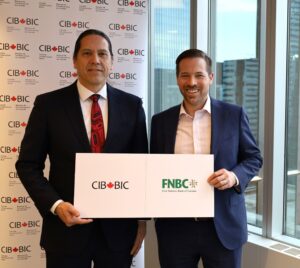
CIB partners with First Nations Bank of Canada on new loan

The Canada Infrastructure Bank (CIB) announced a new $100-million loan agreement with the First Nations Bank of Canada (FNBC) to enable new infrastructure in First Nations, Métis, and Inuit communities. The loan will offer Indigenous communities access to “affordable and flexible financing” to support improved living conditions, new economic opportunities, and residential development.

FNBC CEO Bill Lomax (left) and CIB CEO Ehren Cory. (CNW Group/Canada Infrastructure Bank)

“This new loan program will make infrastructure projects in Indigenous Nations and communities more affordable and allow for more opportunities to develop Indigenous-owned lands,” said Bill Lomax, President and CEO, First Nations Bank of Canada. “By partnering with CIB, we can leverage our expertise in working with Indigenous communities and support new projects in a way we have not seen before.”

Historically, Indigenous communities had limited access to affordable capital at flexible terms, which has impeded community development projects and led to insufficient infrastructure. Infrastructure improvement projects financed with the new loan can include site works, roadworks, water and wastewater management, utility connections, and other projects needed to support economic and community growth through residential, commercial or industrial developments.

To pair with the CIB’s commitment, FNBC will provide concurrent project lending. Together, this comprehensive financing package will enable Indigenous communities to realize their community and/or economic development plans faster.

FNBC is the largest Indigenous-owned and -led financial institution in Canada. More than 70 per cent of FNBC’s employees are Indigenous, and Indigenous clients comprise 90 per cent of its loan portfolio. FNBC provides services to First Nation, Métis and Inuit people and communities in urban areas and remote locations, including in Canada’s arctic region.

Through the CIB’s Indigenous Community Infrastructure Initiative, the CIB collaborates with First Nation, Métis and Inuit communities across Canada on infrastructure projects in partnership with, and for the benefit of Indigenous communities across Canada.

Indigenous communities interested in accessing this community development financing, can learn more at: https://www.fnbc.ca/.


B.C. funds two new Surrey school projects

Two new Surrey school projects are planned to move forward as part of B.C. Budget 2024 in an effort to mitigate overcrowding issues.

“With nearly 350,000 more people choosing B.C. as their home in the last two and a half years, the province is focused on building services for a growing population,” said Minister of Education and Child Care Rachna Singh. “We are expanding school spaces and will work on acquiring new school sites to support the school district, so we can continue to support Surrey families now and into the future.”

A new Darts Hill area elementary and an addition to Grandview Heights Secondary are supported to begin planning as part of Budget 2024, which is the largest school capital budget in the province’s history.

“Our school district has been growing at a very rapid pace, averaging over 2,400 new students annually in the past two years,” said Laurie Larsen, chair, Surrey Board of Education. “This level of growth underscores the urgent need for investments like this in new schools and expansions. We are very appreciative that these two projects can now move ahead to the business planning phase, and we look forward to continuing to work with the Province to further increase capacity in our district.”

In fall of 2023, the province also provided funding to start prefabricated additions at Walnut Road, Lena Shaw, and Woodland Park elementary schools to help meet increased enrolment in the school district. The prefabricated classrooms will deliver 875 new seats and are expected to be ready for students this fall.

Budget 2024 includes $3.75 billion for school capital projects over the next three years, including new and expanded schools, seismic upgrades and replacements, and land purchases for future schools.


Lindsay Brand named CIO at Concert Properties

Lindsay Brand is joining Concert Properties in the role of chief investment officer. She arrives with a comprehensive background in real estate development and investment, most recently as chief investment officer with Dream Unlimited Corporation, but also from the lender’s side of deals at a major Canadian financial institution.

“As a strong leader with extensive experience in senior real estate investment roles, I am confident in Lindsay’s ability to deliver long-term portfolio growth across the country and create value for our shareholders,” says Christine Bergeron, president and chief executive officer of Concert Properties.

Brand will be based in Concert’s Toronto office, where she will oversee its open-ended limited partnership Canadian fund and lead the national team responsible for income-producing properties. She assumes her new duties as of April 2.

“I am very excited to be joining Concert Properties, a reputable and progressive company that is well diversified, both by asset class and geography,” Brand says.

She holds a Bachelor degree from the Richard Ivey School of Business at Western University and a Master of Science in Real Estate Development from Columbia University, and is a member of the board of directors of two public companies.

Water next up for environmental data standards

Water is the next metric the Open Standards Consortium for Real Estate (OSCRE) is tackling in its ambitious project to forge consistency in the collection, management, reporting and transferability of environmental data. The global effort brings together the commercial real estate industry, IT systems developers/service providers and standards and compliance bodies, and has thus far developed and released standards for energy data.

That covers required baseline data for energy data management and approaches for: collecting data from various sources and keepers within an organization; collecting data from the organization’s supply chain; and managing data that is needed for multiple purposes. The energy data standard provides insight on different use cases and implementation tools to support compliance reporting, benchmarking and application programming interface (API) specifications.

Real estate organizations are now invited to participate in the in-progress scoping phase for water data standards. To begin, standards developers are gathering insight on how companies use water data to investigate or assess their operational performance, how that data is managed and reported, and any specific needs or issues they would like to see addressed. Work on developing the standards is expected to begin later this spring.

Tenant lounge reborn from vacant retail space

A former convenience store, adjacent to the lobby inside a downtown Toronto office tower, has been transformed into a private 1920s-style Art Deco lounge for tenant meetings and events. The warmth of the space evokes the intimacy of a speakeasy, but instead of being shrouded in secrecy, this spot wants to be discovered.

Interior design firm Figure3 partnered with QuadReal on the 200 King Street project in 2021, a year when many ground-floor retail spaces across the city were no longer thriving on crowds of nine-to-five workers. Many still remain vacant. Real estate companies are experimenting with activating them into amenities for tenants who wish to encourage in-person employees or entertain visitors on-site.

Reimagining this small 1,600-square-foot area would also be an opportunity for suite downsizers to host larger meetings without having to leave the tower. “When you enter the building, it’s an easy-to-miss, tucked away space off to the side,” explains Tamara Rooks, creative director of workplace, at Figure3. “We were trying to find a way to make it look appealing and inviting, where you get a little glimpse of something as you walk by.”

Ambient lighting, rich wood tones and jewel-coloured accents give an immediate speakeasy vibe. The bar is one focal point, with shelving and large format porcelain tiles covering the back. A movable island, wrapped in copper-toned metals, can be reoriented for flexible events. Figure3 procured all the accessories, down to the decanters that line the back of the bar.

Another unique feature of the Green Room is how the design plays with the different ceiling heights. A black tin ceiling at the front opens up to a double-height volume where a large-scale chandelier emphasizes the space from high above. To make the lounge feel cozier, lilac drapery wraps around the windows to bring the 17-foot-high ceilings down and soften the angular shape of the room.

Tenant lounge

Curated accessories dotted around the lounge create a warmth that opposes cold traditional spaces. Photo by Steve Tsai of Steve Tsai Photography.

While the budget-conscious design scales back on elements (using wood wallpaper, for example) it invests in other features such as lighting. Sconces dotted throughout the space reflect vintage blown glass. Inspiration for the aesthetic came partially from the lobby’s lighting fixtures and the brass accents in the elevator cabs.

Across the chevron wood-tiled floor are a variety of seating options. As Rooks explains, the layout creates different points for people to have large conversations or more intimate chats.


The eight-person boardroom table, with AV connections, can be used for team meetings. Bench seating lines the east side with bistro tables for heads-down work. The space can be booked for a team to work there for the day or for a third-party vendor. During an event, the boardroom table folds up for standing space and can be used for catering with high-top seating. A media screen drops down from the north side and is viewable from the whole room, which can hold up to 30 people for a presentation.

Creating a lounge in the lobby area not only generates more revenue in buildings where tenants are shrinking their footprints, but also energizes the space. “I’ve attended events in the QuadReal Lounge and witnessed people peek their heads in and look around with interest” says Rooks, “It’s bringing more action and intrigue to the ground level and I’m looking forward to seeing how the use of the space evolves with the needs of the business”.

Feature photo by Steve Tsai.