


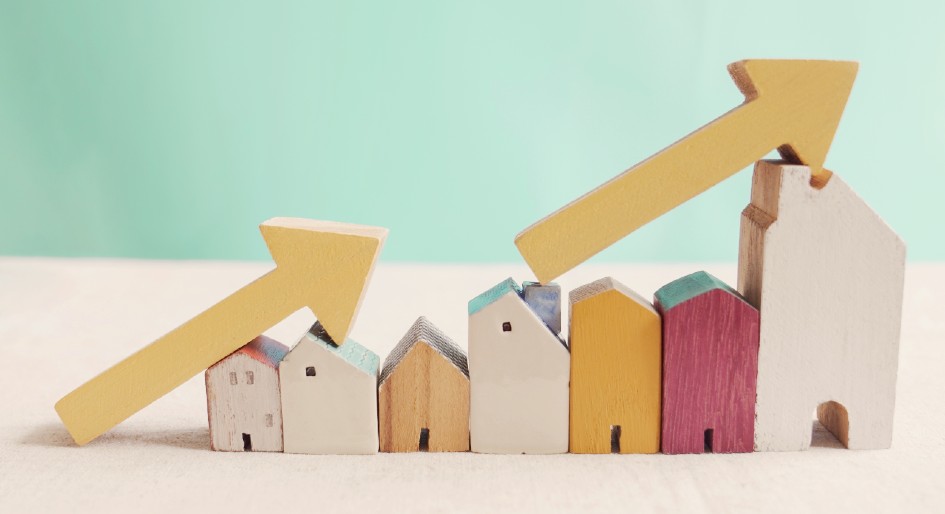
Home prices are significantly increasing across the province of Quebec due to inventory shortages and growing demand. Royal LePage forecasts the average price will rise by 7.0 per cent in the fourth quarter of 2026, compared to the same quarter last year.
The median price of a home in the province is expected to reach $485,138. A single-family detached home and condominium will increase 8.0 per cent and 3.0 per cent to reach $536,220 and $403,657, respectively.
“Although economic uncertainty has dampened consumer confidence across Canada, Quebecers have proven more resilient and maintained their home buying activity, leading to a notable appreciation in property prices,” said Dominic St-Pierre, executive vice president of business development, Royal LePage. “We anticipate steady demand and stable inventory levels in 2026, with a notable increase in prices across the province.”
In 2026, the Canadian real estate market is entering a period of recalibration. Quebec continues to demonstrate resilience in contrast to several major Canadian cities.
Montreal
Prices are projected to rise in Greater Montreal. Condominium are expected to increase 2.5% to $502,558.Montréal continues to offer relative affordability and shows no signs of a condominium surplus. Investors also tend to favour plexes, a type of property that continues to perform extremely well.
“Montréal’s relative affordability compared with other major Canadian cities, combined with a balanced supply of condominiums, makes it a particularly attractive market,” adds St-Pierre. “This momentum, despite a slight slowdown in the fall, is expected to sustain strong activity in 2026, especially in the surrounding areas where young families can still find affordable options.”
Quebec City
In 2025, Quebec City led all major Canadian regions for the second consecutive year. Analysts anticipate aggregate home prices to rise 12.0 per cent in the fourth quarter of 2026, reaching $501,984. Over the same period, the median price of a single-family detached home is forecast to increase 14.0% to $536,598, while a condominium is expected to increase 5.0% to $356,160.
The single-family home segment, which is in highest demand, is expected to see a sharp rise in prices. Neighbourhoods such as Lebourgneuf, Montcalm and Cap-Rouge are leading the market, with prices showing stronger and more sustained appreciation. Condominiums are recording more modest price gains. The market showed signs of slowing toward year-end, largely because new regulations, including Bill 16, increased compliance requirements and complicated retrofit work in older condominium buildings.
Canada-US relations and economic confidence
Trade tensions between Canada and the United States had a limited impact in Quebec. The provincial market showed no meaningful signs of slowdown.
“However, the Canadian economy as a whole would benefit greatly from a stable trade agreement,” noted St-Pierre. “Quebecers, like all Canadians, are waiting to see if such an agreement will be reached, which could lead to a general improvement in the economy and, in turn, renewed confidence in the market overall.”
Housing starts and political engagement
Obstacles to increase housing supply persist. While there are notable gains in housing starts in some regions, significant declines have been recorded elsewhere in the country. In Montreal, the new municipal administration will have to redouble its efforts to support new construction, as inventory remains low and demand strong.
“A general election is scheduled for 2026 in Quebec. “Quebecers are eagerly awaiting strong and concrete commitments on housing policy,” observed St-Pierre. “The housing crisis is a major concern, and it is crucial that the various levels of government work together to implement effective measures that will stimulate supply and ensure long-term affordability in the province.