


Restrooms are much-used, important spaces in the building, and prioritizing those spaces can improve employee and guest perception, lower costs, increase efficiency, and offer an elevated experience at your business. In past years, restrooms have often been overlooked in company budgets, but research shows that people care about these spaces, so companies should, too.
Company image
The way in which people perceive your business – whether they are guests or staff – is vital for your success, and your restrooms play a role in that perception. Your restrooms should be an extension of your brand and your business, echoing the vibe and amenities from the rest of your building.
Research shows that 60 per cent of people believe that an unclean restroom equals poor management, 56 per cent say that they leave with a diminished opinion of the facility, and about 50 per cent would not return to the business at all. Poor design, overflowing garbage cans, clogged toilets, missing supplies, and damaged or non-functioning fixtures can all result in a negative restroom experience.
83 per cent of people feel that the condition of a restroom reflects how much a company cares about employees and guests. As many companies try and get staff back to the office, negative restroom experiences can be a deterrent for staff.
Inventory management
Improved inventory management means fewer complaints and less time spent checking supply levels for teams. Technology like sensors, touchless features, and updated cleaning logs can help improve the experience by enhancing sanitization, monitoring and offering consistent inventory, and providing peace of mind to visitors, so they know that the space is regularly checked and cleaned.
RELATED: Smart technology in commercial cleaning
Improved design
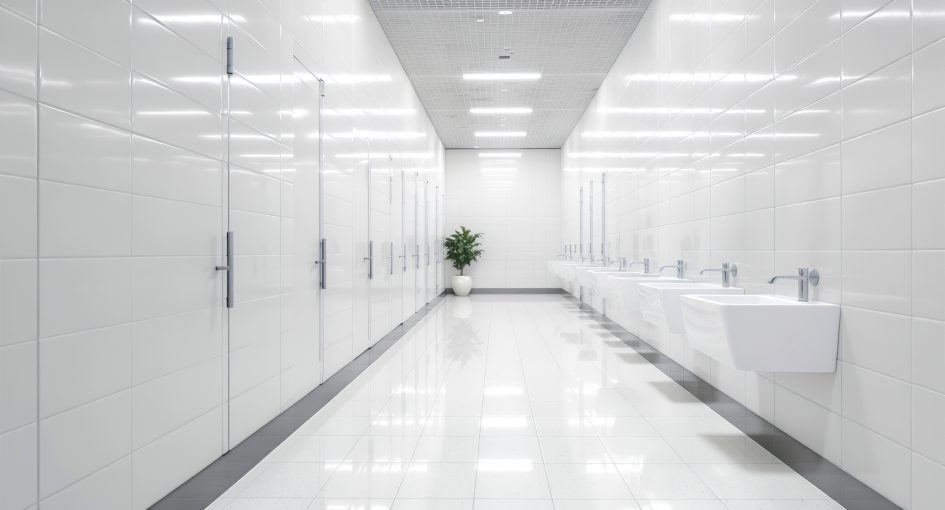
Restroom design should incorporate a balance of aesthetics, functionality, and accessibility. The space should be designed with cleaning simplicity in mind to save time and labour.
Design elements can increase hygiene along with improving the restroom experience. Adding features like touchless faucets, soap dispensers, toilet flushing, and hand dryers reduces contact points, which enhances the perception of cleanliness and safety, enhances sustainability by saving energy and water use, and shows users that your company is progressive and willing to invest in the restroom experience.
Accessibility is also a design feature that can leave a lasting positive impression on guests and staff. Features like countertops at varying heights, wide aisleways and stalls, visual cues, and tactile features for the visually impaired help make your restrooms available to and enjoyable for everyone.
Upgrading your restroom is a winning strategy for building your brand, encouraging repeat visits, standing out among your competition, improving efficiency, and providing an elevated experience for guests and staff.