



As Mould Awareness month comes to an end, it’s a good time for maintenance managers and janitorial staff to get a refresher on the signs of mould, risks of exposure, and prevention practices to make workspaces safer.
Aside from requiring an expensive repair, mould can present a health risk to building occupants. Many moulds create “mycotoxins,” which can lead to:
- Eye, nose, and throat irritation
- Cough or congestion
- Aggravation of asthma
- Fatigue
- Headaches
- Difficulty concentrating
- Exacerbation of allergy symptoms like wheezing, chest tightness, shortness of breath, nasal congestion, and eye irritation
Mould prevention
Mold starts in a commercial building when microscopic airborne spores settle on a damp surface containing organic material, staying undisturbed for 24 to 48 hours. Common causes include roof leaks, HVAC condensation, and high indoor humidity. Preventing mould means regular, scheduled building maintenance, including visual roofing assessments and indoor inspections to look for potential risks or signs, as well as monitoring and maintaining optimal levels of indoor humidity (levels between 30 and 50 per cent). Once established, mould spores can be distributed throughout a multi-storey building within 48 to 72 hours.
Mould identification
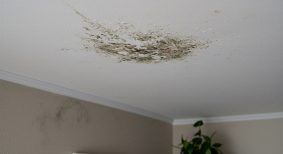
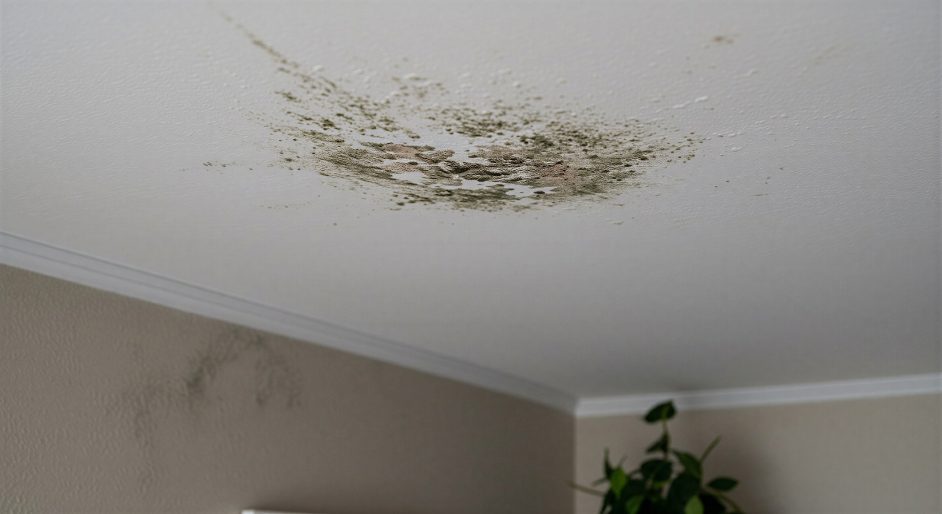
In many cases, mould is the indication of a larger problem, like a roof leak. Regularly assessing your building can help prevent and limit the spread of mould, as well as letting you know that you may have a larger (and potentially more costly) building issue to address. Signs of moisture and mould in your building include water stains on the ceiling or walls, dark spots, peeling or bubbling paint, musty odours, persistent condensation, warped or rotting building materials, or efflorescence (salt deposit on concrete walls or masonry). Identifying any of these signs means there is a good chance that you have unwanted moisture or mould inside your building, and you will need to determine the source to address the issue.
Treating mould
If you have determined that you have mould inside the building, there are some steps you can take. Start with locating the source of the moisture and resolving that issue – this will help stop the spread and growing concern. Next, contain the area with plastic sheeting, setting up negative air pressure with a HEPA air scrubber to prevent spores from spreading to clean areas of the building. Ensure that proper PPE is used, including an N-95 respirator, gloves, and eye protection, before getting near the area. Remove contaminated material like ruined drywall, insulation, ceiling tiles, and carpeting. Place them in sealed bags before removal. Next, clean and dry the area, monitoring for the return of signs of moisture.
For larger areas or areas of high contamination greater than 32 square feet, a remediation professional should be retained.
Moisture and mould in your building can cause damage, risk occupant health, and tell the story of a larger issue in your building. Remaining vigilant in inspection and prevention can help maintenance managers and janitorial staff protect the building and the people inside.